Walk through almost any neighborhood in Korea, and one thing quickly becomes impossible to ignore.
Cafés seem to be everywhere.
A single street may have several cafés standing side by side, each filled with customers despite the apparent competition. Some are large multi-story spaces overlooking busy intersections, while others are quiet neighborhood cafés hidden in residential alleys. Even apartment complexes, office districts, universities, and small towns often have multiple cafés within walking distance.
For many first-time visitors, the obvious question is simple.
How can so many coffee shops survive?
The answer has surprisingly little to do with coffee itself.
In Korea, cafés have gradually evolved into places that support everyday life. They function as temporary offices, study rooms, meeting places, creative spaces, and quiet retreats from crowded cities. Ordering a drink often feels like purchasing time and space rather than simply buying coffee.
Understanding Korean café culture reveals something much deeper about how modern Korean society balances work, relationships, and personal time.
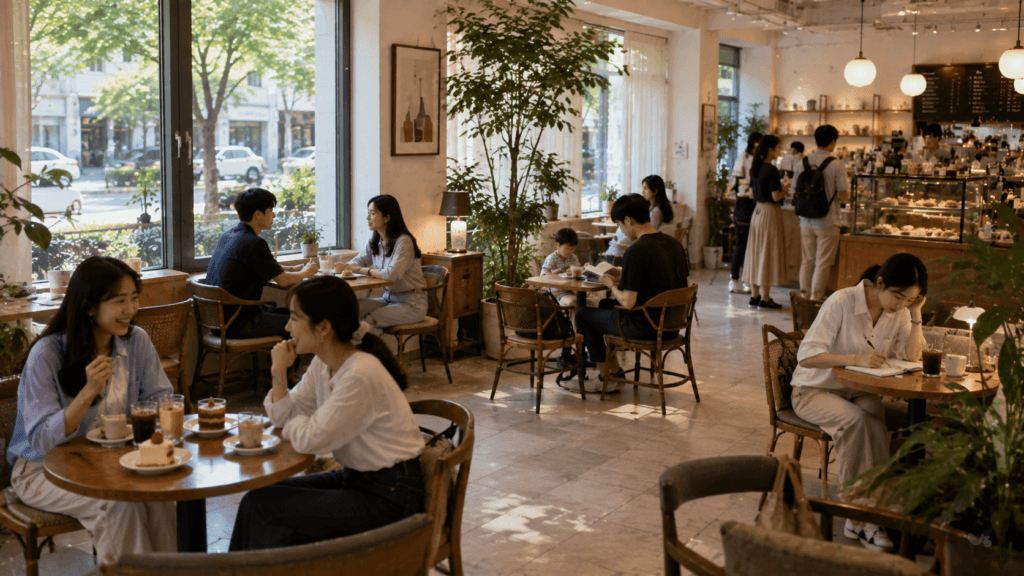
Cafés Became Korea’s Third Place
Urban life in Korea moves quickly.
Many people spend long hours at work or school before returning to relatively compact homes. While Korean apartments are designed efficiently, they are not always ideal places for group projects, casual meetings, or several uninterrupted hours of focused work.
As a result, cafés gradually filled an important gap.
Instead of thinking about cafés only as businesses selling beverages, many Koreans see them as comfortable places that exist somewhere between home and work.
Sociologists often describe this idea as the “third place”—a location where people naturally spend time outside their responsibilities at home and in the workplace.
Korean cafés embody this concept remarkably well.
Unlike restaurants, customers usually face no pressure to finish quickly after eating. Ordering one drink often allows someone to remain for hours while reading, working, or simply enjoying a slower pace.
This flexibility has quietly changed how many people organize their daily routines.
A freelancer may begin the morning in one café before moving to another after lunch. Students preparing for exams often rotate between libraries and cafés throughout the day. Parents sometimes enjoy a peaceful hour alone after dropping children at school, while retirees meet longtime friends for regular conversations.
Although these groups rarely interact directly, they comfortably share the same space.
That quiet coexistence is one reason Korean cafés feel different from many visitors’ expectations.
Coffee Is Only Part of the Experience
Ask someone why they chose a particular café, and the answer often has nothing to do with the coffee.
Instead, they might mention the natural lighting.
The comfortable chairs.
The quiet atmosphere.
The music.
The dessert menu.
The interior design.
Or simply how the space makes them feel.
Many cafés intentionally create distinct identities that appeal to different lifestyles.
Some emphasize minimal Scandinavian-inspired interiors that encourage concentration. Others use warm wooden furniture and plants to create a calming atmosphere. Dessert cafés attract visitors looking for beautifully presented cakes, while specialty coffee shops focus on carefully roasted beans and brewing methods.
Some customers visit because they genuinely enjoy coffee.
Others visit because the environment helps them accomplish something else.
The beverage becomes only one part of a much larger experience.
This explains why even neighboring cafés can attract completely different groups of regular customers despite offering similar drinks.
People often choose a café that matches their mood rather than searching for the lowest price.
Cafés Support Korea’s Study and Work Culture
One of the biggest surprises for foreign visitors is seeing so many people studying inside cafés.
University students spread textbooks across large tables.
Job seekers prepare for employment exams.
Language learners practice vocabulary with headphones.
Remote workers participate in online meetings.
Writers edit manuscripts for hours.
Designers sketch ideas while listening to music.
In many countries, these activities are expected to happen at home, in offices, or inside libraries.
In Korea, cafés comfortably accommodate all of them.
Reliable Wi-Fi, plentiful electrical outlets, spacious seating, and long opening hours make cafés practical working environments.
Some locations even include silent zones, individual study booths, or meeting rooms that can be reserved.
Rather than replacing offices or libraries, cafés complement them by offering flexibility.
A change of environment often helps people remain productive during long workdays.
For freelancers and students especially, moving between different spaces can create a healthy rhythm that breaks up otherwise repetitive routines.
This approach reflects a broader characteristic of Korean urban life.
Daily activities frequently happen across multiple locations rather than remaining inside one building.
People naturally transition between offices, restaurants, parks, public transportation, and cafés throughout the day, allowing each space to serve a different purpose.
This rhythm can also be seen in other parts of everyday life, from neighborhood convenience stores to public spaces that quietly support daily routines.
Cafés Reflect Changing Social Habits
Korean cafés also reveal how social life has evolved.
Meeting friends no longer always means gathering at someone’s home. Busy schedules, smaller apartments, and long commuting times have made cafés one of the easiest places to reconnect.
Instead of asking, “Would you like to come over?” many people simply ask, “Which café should we meet at?”
The setting feels neutral, comfortable, and accessible to everyone.
Couples often spend entire afternoons talking over coffee. Friends celebrate birthdays with desserts rather than full meals. Parents meet after dropping their children at school, while colleagues continue conversations after work without the formality of an office.
Unlike restaurants where meals naturally come to an end, cafés allow conversations to continue without feeling rushed.
The environment encourages people to slow down.
Rather than focusing on consumption, many visitors value the opportunity to spend uninterrupted time together.
This subtle difference helps explain why cafés have become woven into everyday Korean life instead of remaining occasional destinations.
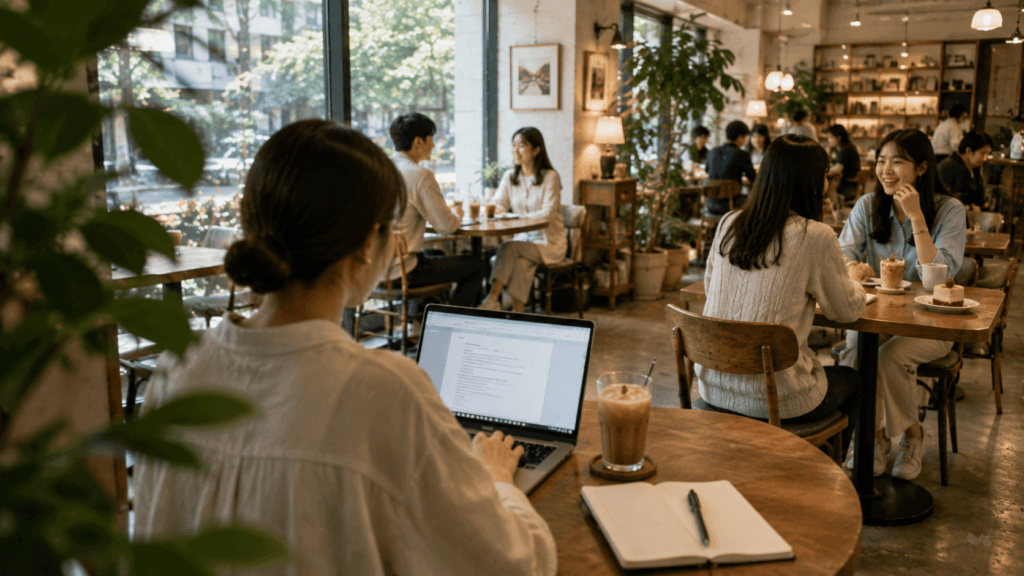
Why So Many Cafés Can Exist Together
One question continues to surprise visitors.
How can four or five cafés survive on the same street?
The answer lies in the fact that they are rarely competing for exactly the same purpose.
One café may attract students because of its large tables and quiet atmosphere.
Another becomes popular with photographers because of its unique architecture.
A third specializes in handcrafted desserts, while another appeals to remote workers through comfortable seating and reliable Wi-Fi.
Even within the same neighborhood, each café develops its own identity.
Customers often become loyal to a particular atmosphere rather than a particular drink.
This variety reflects another characteristic of Korean consumer culture.
People frequently choose experiences that match specific situations instead of searching for a single place that does everything well.
A café for studying may not be the same café for meeting friends.
A café suitable for a business meeting may not be the one chosen for a quiet Sunday morning.
Rather than replacing one another, many cafés quietly serve different roles within the same community.
More Than Coffee, It Is About Everyday Rhythm
Perhaps the most interesting aspect of Korean café culture is that people eventually stop noticing it.
Visiting a café becomes part of the rhythm of daily life.
Someone may begin the morning with coffee before work, spend the afternoon in another café finishing a project, and later meet friends in a completely different neighborhood café without thinking twice about it.
The café quietly connects different parts of the day.
This pattern reflects a broader characteristic of life in Korea.
Many everyday spaces are designed not only for their original purpose but also for the ways people naturally adapt them over time.
Parks become places for exercise, community, and relaxation.
Neighborhood convenience stores often function as informal gathering spots.
Even riverside spaces evolve into destinations where people unwind after busy weekdays.
Korean cafés belong to this same philosophy.
They succeed because they provide something increasingly valuable in modern cities:
A comfortable place where people can briefly slow down without disconnecting from everyday life.
Conclusion
At first glance, Korea’s enormous number of cafés may seem like a simple reflection of the country’s love for coffee.
In reality, they reveal something much deeper.
Korean cafés have become flexible spaces where studying, working, relaxing, creating, and socializing naturally come together. They are woven into the rhythm of everyday life, offering people a comfortable place between home and work where time often matters more than the drink itself.
For visitors, understanding Korean café culture means looking beyond the menu.
The real story is not about what people order.
It is about why they choose to stay.
FAQ
Why are there so many cafés in Korea?
Because cafés serve multiple purposes beyond selling coffee. They function as places for studying, working remotely, meeting friends, relaxing, and spending personal time.
Do Koreans spend a long time in cafés?
Yes. It is common for customers to stay for several hours after ordering a drink, especially when studying, working, or meeting friends.
Are Korean cafés popular with students?
Very much so. Many students use cafés as alternative study spaces thanks to comfortable seating, Wi-Fi, electrical outlets, and a quiet atmosphere.
Is coffee the main reason people visit Korean cafés?
Not always. Many people choose cafés based on the atmosphere, interior design, natural lighting, desserts, or the opportunity to spend uninterrupted time.
Continue Exploring
If you enjoyed this article, you may also like:
- Ice Americano in Korea: Why Koreans Drink Iced Coffee Even in Freezing Winter
- Korean Convenience Store Culture: Why Convenience Stores Are Part of Everyday Life
- Why Korean Neighborhoods Are Designed for Everyday Convenience
- Korean Park Culture: Why Parks Matter in Everyday Korean Life
- The Ultimate Guide to Everyday Life in Korea
- Why Waiting in Line Is So Common in Korea