Have you ever bought a sweater that looked amazing on someone else, only to find that it made your skin look dull the moment you put it on?
Or maybe you’ve tried a lipstick shade that everyone seemed to love, yet somehow it never looked quite right on you.
Most people assume the problem is the clothing, the makeup, or even their skin. In reality, the answer is often much simpler: the color itself.
This is the idea behind personal color analysis, a beauty method that helps identify the colors that naturally complement your unique features. While the concept has gained worldwide attention in recent years, South Korea has played a major role in turning personal color analysis into a mainstream beauty tool used by everyone from makeup artists and fashion consultants to everyday consumers.
Instead of following trends blindly, personal color analysis helps you understand which colors naturally work with your skin tone, hair color, and overall appearance.
Once you know your colors, shopping becomes easier, makeup looks more harmonious, and building a wardrobe feels far less overwhelming.
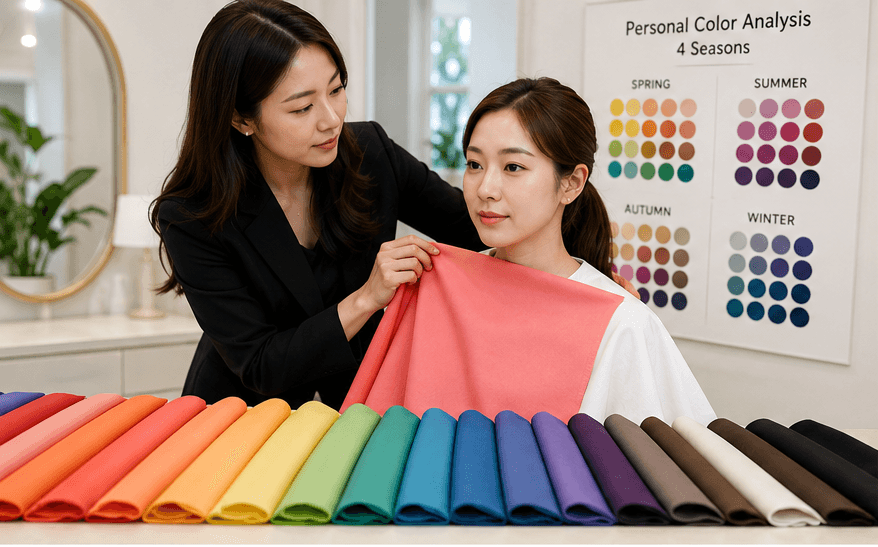
Why Some Colors Look Better on You Than Others
Most people have experienced this without realizing it.
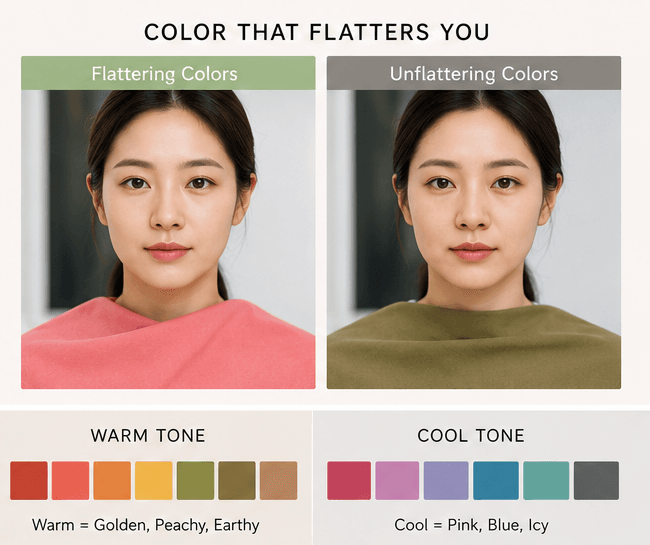
Certain colors make your complexion appear brighter, healthier, and more vibrant. Others can create shadows, emphasize redness, or make you appear tired even when you’re well rested.
The difference has little to do with fashion trends and everything to do with how colors interact with your natural features.
When a color complements your natural coloring, your face tends to appear more balanced. Your eyes may look brighter, your skin smoother, and your overall appearance more refreshed.
When a color clashes with your natural coloring, the opposite often happens.
This is why two people can wear the exact same outfit and achieve completely different results.
What Exactly Is Personal Color Analysis?
Personal color analysis is a system used to determine which colors naturally harmonize with an individual’s features.
A professional analysis typically considers factors such as:
•Skin undertone
•Hair color
•Eye color
•Contrast level
•Color depth
•Overall brightness
The goal is not to limit personal style. Instead, it helps people make more informed choices about clothing, makeup, accessories, and hair color.
Many people discover that they already gravitate toward colors that suit them. Personal color analysis simply provides a framework for understanding why.
If you’re still unsure about your season, try our Personal Color Self-Test.
Why South Korea Made Personal Color Analysis So Popular
Although color theory has existed for decades, South Korea transformed personal color analysis into a practical beauty service accessible to the general public.
Today, personal color studios can be found throughout the country. Many Korean consumers undergo personal color consultations before purchasing makeup, changing hair colors, or updating their wardrobes.
The trend became even more visible through K-beauty influencers, makeup artists, and celebrities who openly discussed their personal color types.
As Korean beauty trends gained international popularity, personal color analysis quickly followed.
What was once considered a niche consulting service has now become a global beauty phenomenon.
The Foundation: Warm Tones and Cool Tones
One of the first concepts people encounter when learning about personal color analysis is undertone.
Undertones generally fall into two categories:
Still confused about undertones? Read Personal Color vs Skin Undertone: What’s the Difference? to understand how undertones and seasonal color analysis work together.
•Warm
•Cool
Warm-toned individuals often look best in colors with golden, peachy, or earthy qualities.
Cool-toned individuals typically shine in colors with blue, pink, or icy characteristics.
Understanding your undertone creates the foundation for identifying your personal color category.
Still confused about undertones? Read Personal Color vs Skin Undertone: What’s the Difference? to understand how undertones and seasonal color analysis work together.
The Four Personal Color Seasons
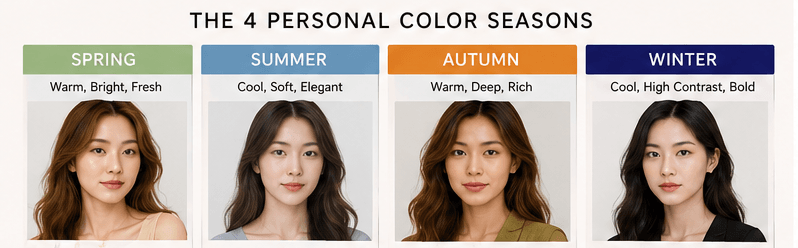
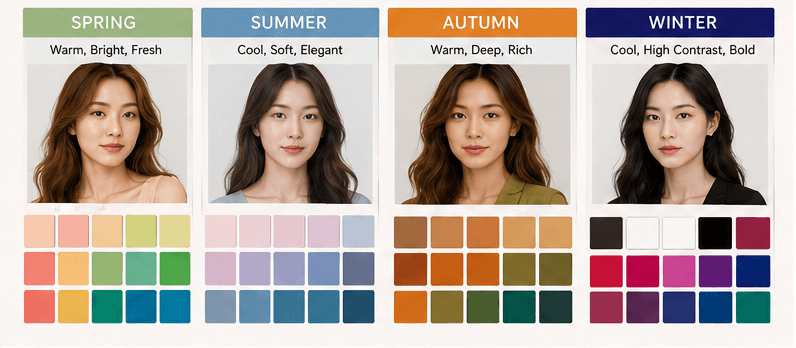
After identifying undertones, personal color analysis expands into four seasonal categories.
These seasons help explain why two warm-toned individuals may still look best in completely different colors.
Spring
Warm, bright, and fresh.
Summer
Cool, soft, and elegant.
Autumn
Warm, rich, and deep.
Winter
Cool, bold, and high contrast.
Each season contains a unique combination of temperature, brightness, and depth.
Learn more in our complete guide: What Are the 4 Personal Color Seasons?
How Personal Color Analysis Can Improve Your Style
Many people associate personal color analysis exclusively with fashion, but its applications go much further.
It can help with:
•Choosing clothing colors
•Selecting makeup shades
•Finding flattering hair colors
•Picking accessories
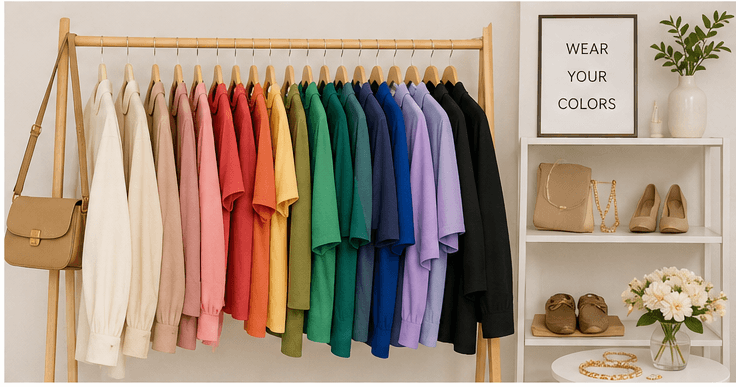
•Building a more cohesive wardrobe
Rather than buying products through trial and error, you gain a clearer understanding of what works for you from the start.
Over time, this often leads to more confident purchasing decisions and less wasted money.
Can You Discover Your Personal Color at Home?
Professional consultations remain the most accurate option, but there are several ways to explore your personal color category at home.
Simple tests involving natural lighting, fabric comparisons, and jewelry preferences can often reveal valuable clues about your undertones and seasonal characteristics.
While these methods may not provide perfect accuracy, they can be an excellent starting point.
Try our step-by-step guide: Personal Color Self-Test: 10 Easy Ways to Find Your Season at Home.
Why Personal Color Analysis Is More Than Just a Beauty Trend
The reason personal color analysis continues to grow isn’t because it’s fashionable.
It’s because the concept is practical.
Instead of chasing every new trend, it encourages people to understand their own features first.
That shift in perspective often leads to better style choices, more confidence, and a stronger sense of personal identity.
Whether you’re interested in fashion, makeup, or simply looking for ways to feel more confident in your everyday appearance, personal color analysis offers a surprisingly useful starting point.
Continue Reading
•Personal Color vs Skin Undertone