If you’ve recently started exploring personal color analysis, you’ve probably come across two terms that seem almost identical: personal color and skin undertone.
Many people use them interchangeably.
That’s where the confusion begins.
Understanding the difference between personal color and undertones is one of the most important steps in finding colors that truly flatter you. In fact, many people misidentify their season simply because they assume undertones tell the entire story.
They don’t.
Undertones are the foundation of personal color analysis, but they’re only one piece of a much larger picture.
What Is a Skin Undertone?
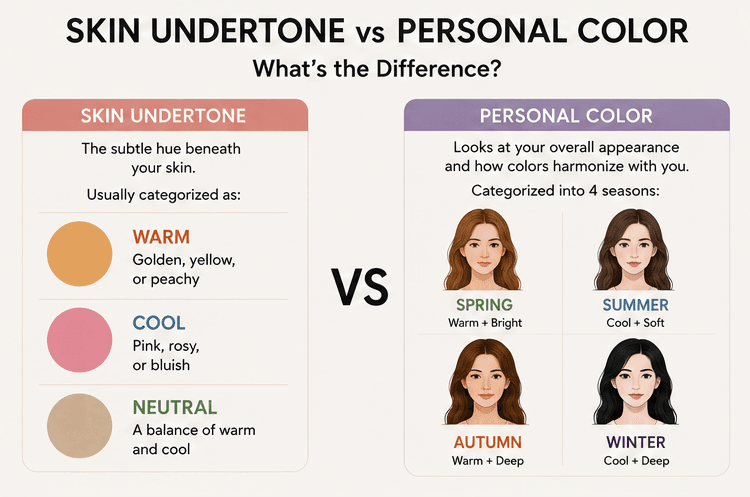
A skin undertone is the subtle hue beneath the surface of your skin.
Unlike your skin tone—which may become lighter or darker depending on sun exposure—your undertone remains relatively consistent throughout your life.
Most undertones fall into three categories:
- Warm
- Cool
- Neutral
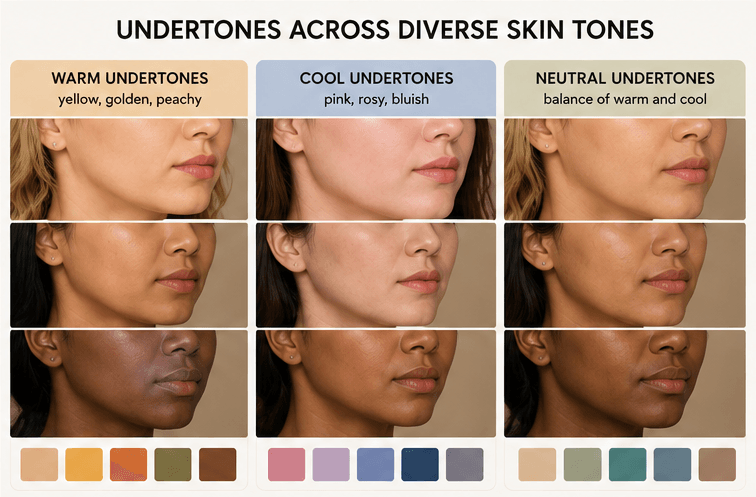
Warm undertones often contain golden, peachy, or yellow characteristics.
Cool undertones typically contain pink, rosy, or bluish characteristics.
Neutral undertones display a balance of both.
Undertones help explain why certain clothing colors, makeup shades, or jewelry metals naturally complement your complexion while others seem less flattering.
However, undertones alone cannot determine your personal color season.
What Is Personal Color Analysis?
Personal color analysis goes beyond undertones.
Instead of focusing solely on the subtle hue beneath your skin, it examines how multiple features work together.
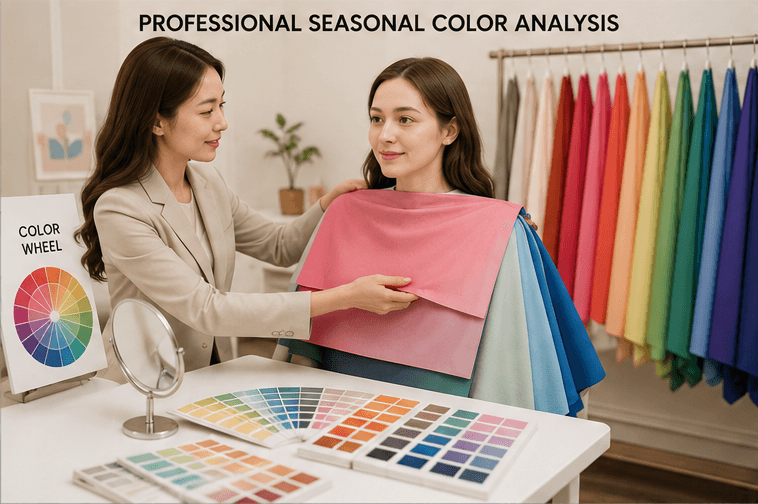
A professional color analysis may evaluate:
- Undertones
- Hair color
- Eye color
- Brightness
- Contrast level
- Color depth
The goal is to identify a palette that naturally harmonizes with your overall appearance.
This is why personal color analysis uses seasonal categories rather than simply labeling people as warm or cool.
Two people can share the same undertone yet look dramatically better in completely different colors.
That’s where seasonal color analysis becomes useful.
If you’re still trying to determine your undertone, start with our Personal Color Self-Test before identifying your season.
Why Warm Doesn’t Always Mean Autumn
One of the most common misconceptions is that warm undertones automatically mean you’re an Autumn type.
That’s not true.
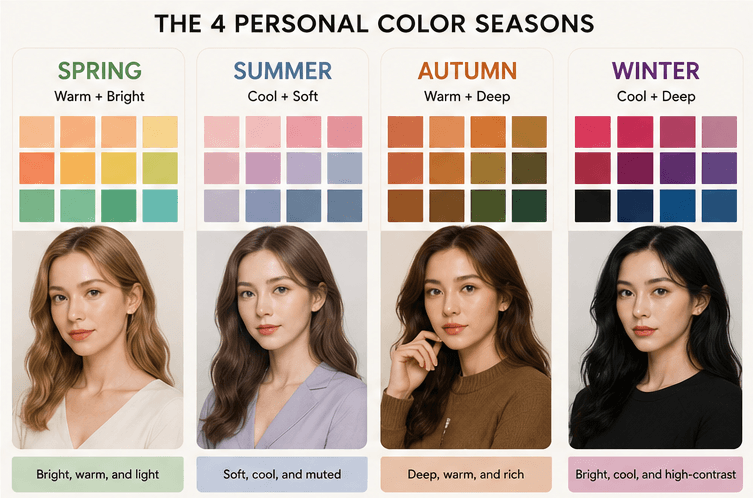
Both Spring and Autumn belong to the warm-toned family.
The difference is how that warmth is expressed.
Spring types tend to be brighter, lighter, and clearer.
Autumn types tend to be richer, deeper, and more muted.
The same principle applies to cool-toned individuals.
Summer and Winter both belong to the cool-toned family, yet their best colors can be completely different.
Summer thrives in softer, more delicate shades.
Winter excels in bold, high-contrast colors.
This is why undertones alone cannot identify your season.
Think of Undertones as the Foundation
A useful way to understand the difference is to think of undertones as the foundation of a house.
The foundation is essential.
But it doesn’t tell you what the finished house looks like.
Personal color analysis builds upon that foundation.
It takes undertones and combines them with additional characteristics such as brightness, depth, and contrast.
The result is a much more complete understanding of which colors naturally suit you.
Common Undertone Myths
One reason personal color analysis feels confusing is that many beauty myths continue to circulate online.
Let’s clear up a few of the biggest misconceptions.
Myth #1: Fair Skin Means Cool Undertones
False.
People with fair skin can have warm, cool, or neutral undertones.
Skin depth and undertones are two different characteristics.
Myth #2: Deep Skin Means Warm Undertones
Also false.
People with deeper skin tones can belong to warm, cool, or neutral categories.
Undertones exist across every skin tone.
Myth #3: Blue Eyes Automatically Mean Cool Undertones
Not necessarily.
Eye color alone doesn’t determine undertones.
People with blue, green, hazel, gray, brown, or black eyes can belong to different undertone categories.
Myth #4: Hair Color Determines Your Personal Color
Hair color provides clues, but it is only one part of the analysis.
Professional consultants evaluate how your skin, eyes, hair, brightness, contrast, and undertones work together.
Myth #5: Undertones and Personal Color Are the Same Thing
This is perhaps the most common misunderstanding.
Undertones help identify your foundation.
Personal color analysis identifies your complete seasonal palette.
They’re related, but they are not the same thing.
Why Personal Color Analysis Became So Popular
One reason personal color analysis became so popular in South Korea—and later around the world—is that it provides practical guidance.
Instead of simply telling someone they are warm-toned or cool-toned, personal color analysis offers actionable recommendations.
It can help you choose:
- Clothing colors
- Hair colors
- Makeup shades
- Accessories
- Seasonal palettes
The result is a more personalized approach to style.
Rather than following trends, people learn which colors naturally enhance their appearance.
Which One Should You Learn First?
If you’re just beginning your personal color journey, start with undertones.
Understanding whether you lean warm, cool, or neutral provides a useful starting point.
From there, you can move on to seasonal color analysis and identify whether your features align more closely with Spring, Summer, Autumn, or Winter.
Once you understand both concepts, choosing colors becomes significantly easier.
Conclusion
Skin undertones and personal color analysis are closely connected, but they are not the same thing.
Undertones describe the subtle hue beneath your skin.
Personal color analysis evaluates your entire appearance, including undertones, brightness, depth, and contrast.
Think of undertones as the foundation and personal color as the complete picture.
Understanding both concepts will help you make smarter decisions about clothing, makeup, accessories, and personal style.
FAQ
Is skin undertone the same as personal color?
No. Undertones are only one factor used in personal color analysis. Personal color also considers contrast, brightness, depth, hair color, and eye color.
Can two people have the same undertone but different personal color seasons?
Yes. Two warm-toned individuals may belong to Spring or Autumn, while two cool-toned individuals may belong to Summer or Winter.
Can I determine my personal color from an undertone test alone?
Not completely. Undertone tests provide a useful starting point, but they don’t reveal your entire seasonal color profile.
What if I have neutral undertones?
People with neutral undertones can belong to multiple personal color seasons. Additional analysis is usually needed to determine the best match.
Why do some colors make me look tired?
Colors that clash with your undertones, contrast level, or seasonal palette can create shadows and make your complexion appear dull.
Continue Reading
Best Colors for Summer Personal Color Types
Personal Color Self-Test: 10 Easy Ways to Find Your Season at Home
What Are the 4 Personal Color Seasons? Complete Beginner’s Guide
Best Colors for Spring Personal Color Types