Although both types are designed to protect your skin from ultraviolet rays, they don’t do it in exactly the same way.
Chemical sunscreens use UV filters that absorb ultraviolet energy before it can affect the skin. This approach allows many formulas to feel lightweight and blend seamlessly into a daily skincare routine.
Mineral sunscreens use ingredients such as zinc oxide and titanium dioxide to provide broad-spectrum UV protection. Modern Korean mineral sunscreens have become much more elegant than older formulas, with many brands working to reduce the heavy texture and visible white cast that people often associate with mineral sunscreen.
The important thing to remember is that both types are effective when used correctly.
Choosing between them isn’t about finding the stronger sunscreen.
It’s about finding the formula you’ll enjoy using every day.
If you’re still unsure how sunscreen labels work, it’s worth understanding SPF vs PA ratings before comparing sunscreen types. Those ratings explain how much protection a sunscreen provides, while chemical and mineral formulas explain how that protection is delivered. Together, they make sunscreen labels much easier to understand.
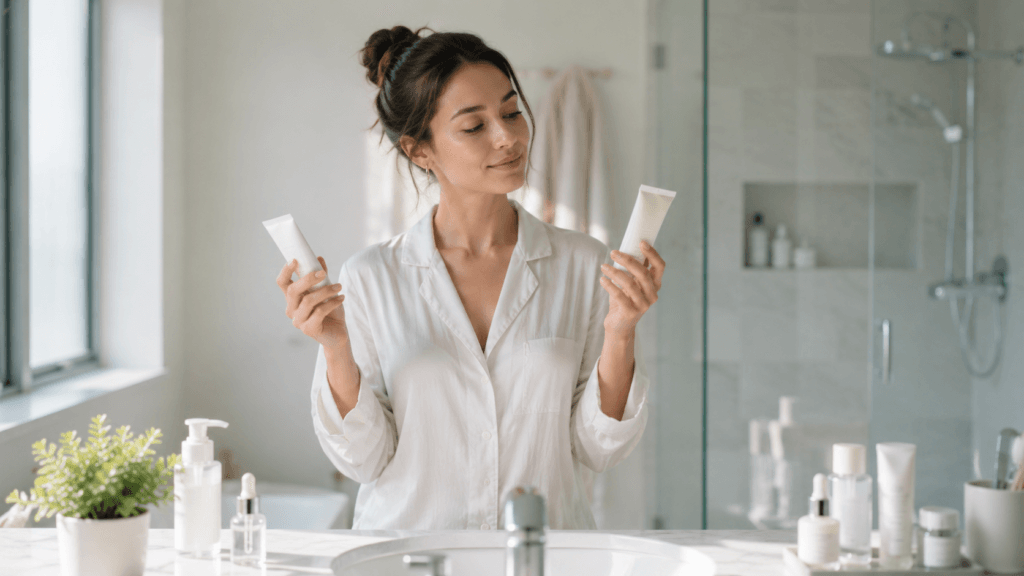
Why the Word “Chemical” Causes So Much Confusion
One reason this topic generates so much debate is the name itself.
The word chemical often sounds negative.
Many people assume it means artificial, harsh, or unsafe.
That’s a misunderstanding.
Everything around us—including water, oxygen, and the ingredients found in plants—is made of chemicals.
In sunscreen, the term chemical sunscreen simply refers to the type of UV filters used in the formula. It doesn’t describe the overall quality of the product or whether it’s suitable for your skin.
The same is true for mineral sunscreen.
Choosing a mineral formula doesn’t automatically guarantee a better experience.
Two mineral sunscreens can feel completely different depending on the ingredients, texture, and formulation. The same is true for chemical sunscreens.
That’s why experienced skincare users rarely choose a sunscreen based on one label alone.
Instead, they look at the complete formula and ask practical questions.
Does it feel comfortable?
Does it work well with the rest of my skincare routine?
Will I enjoy wearing it every morning?
These questions usually lead to a much better decision than simply choosing “chemical” or “mineral.”
If you’re still learning what works best for your skin, identifying your skin type first can make sunscreen shopping much easier. Guides such as Discover Your True Skin Type and Korean skincare diagnostic: Global Hunter’s Ultimate Roadmap to Glass Skin provide a useful starting point before comparing individual sunscreen formulas. Once you understand your skin’s needs, choosing between chemical and mineral sunscreen becomes much more straightforward.
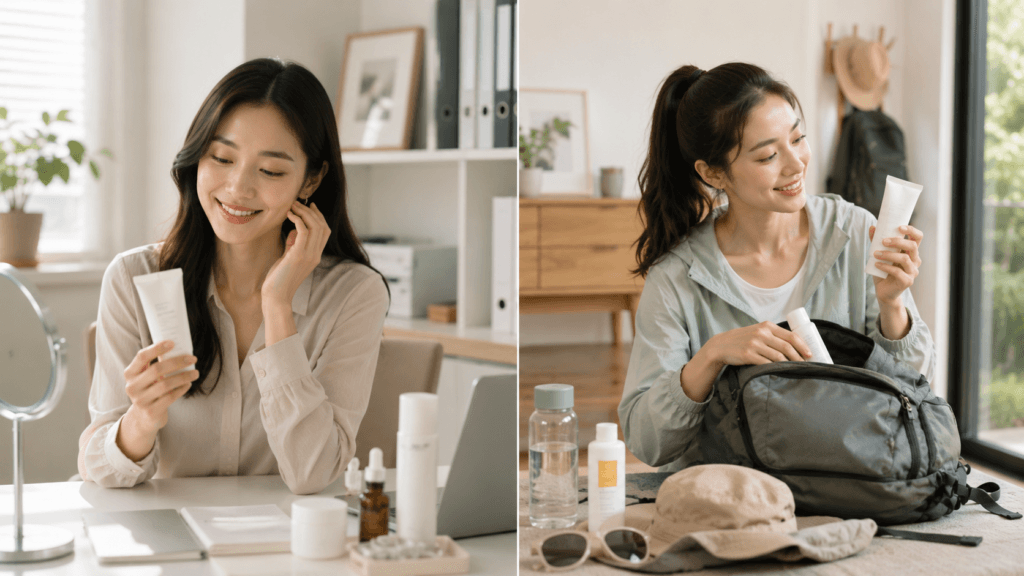
When a Chemical Sunscreen May Be the Better Choice
Chemical sunscreens have become especially popular in Korean skincare because they make it easier to create lightweight, elegant formulas.
For many people, comfort is just as important as protection. If sunscreen feels heavy or interferes with makeup, it’s less likely to become part of a daily routine.
A chemical sunscreen may be a good option if you:
- Prefer lightweight skincare products
- Wear makeup most days
- Have oily or combination skin
- Want a sunscreen that blends quickly without leaving a visible finish
These aren’t strict rules, but they reflect why many people enjoy modern Korean chemical sunscreens.
The key is finding a formula that works well with your lifestyle.
A sunscreen that feels comfortable every morning is much easier to use consistently than one that feels like an extra step.

When a Mineral Sunscreen May Be the Better Choice
Mineral sunscreens have also changed significantly over the past few years.
Older formulas often had a reputation for leaving a white cast or feeling thick on the skin. Many newer Korean formulations are much lighter and more comfortable than people expect.
Some people simply prefer the feel of a mineral sunscreen, while others choose one because it works well with their personal skincare routine.
If your skin is easily irritated or you’re introducing a new sunscreen into your routine, trying a mineral formula may be worth considering.
However, it’s important to remember that mineral sunscreen isn’t automatically the best choice for sensitive skin.
Sensitivity can be influenced by many factors, including the complete ingredient list, fragrance, alcohol content, and your individual skin condition.
That’s why patch testing a new sunscreen is always a good idea, regardless of which category it belongs to.
The goal isn’t to find the “perfect” type of sunscreen.
It’s to find one your skin responds well to.

Don’t Compare Categories—Compare Formulas
One of the biggest mistakes people make is deciding they will only buy chemical sunscreens or only buy mineral sunscreens.
That approach often overlooks what matters most.
Two chemical sunscreens can perform very differently.
Two mineral sunscreens can also feel completely different.
The formulation, texture, finish, and supporting ingredients all influence how a sunscreen performs on your skin.
Instead of choosing a category first, compare the product as a whole.
Ask yourself questions like:
- Does this formula suit my skin type?
- Will it fit into my morning routine?
- Does the finish match my personal preference?
- Will I enjoy wearing it every day?
Those questions are far more useful than asking which category is “better.”
If you’ve already learned What Makes Korean Sunscreens Different?, you’ll notice the same principle here. Korean sunscreen development focuses on creating products people genuinely enjoy using every day, while understanding SPF vs PA Rating Explained helps you evaluate the level of protection each formula provides. Once those two pieces come together, choosing between chemical and mineral sunscreen becomes much less complicated.
Ultimately, the best sunscreen isn’t defined by its category.
It’s the one that consistently earns a place in your daily routine.
Frequently Asked Questions
Which type of sunscreen is better for everyday use?
Neither type is automatically better. The best sunscreen is the one that matches your skin type, feels comfortable to wear, and fits naturally into your daily routine. Consistent use is more important than choosing a specific category.
Can I switch between chemical and mineral sunscreens?
Yes. Many people use different sunscreens depending on the season, weather, or activity. For example, you might prefer one formula for everyday commuting and another for long days outdoors.
Do mineral sunscreens always leave a white cast?
Not necessarily. Many modern Korean mineral sunscreens are formulated to reduce or minimize white cast. The finish varies from product to product, so it’s worth reading product descriptions and reviews rather than judging all mineral sunscreens the same way.
Is one type safer than the other?
Both chemical and mineral sunscreens are regulated and tested before being sold. Rather than assuming one category is safer, focus on choosing a formula that suits your skin and use it as directed.
Conclusion
The choice between chemical and mineral sunscreen isn’t about finding a winner.
It’s about understanding which formula works best for your skin.
Chemical sunscreens are often chosen for their lightweight feel and seamless finish, while mineral sunscreens remain a popular option for people who prefer a different type of formulation. Both can provide excellent sun protection when used correctly.
Instead of asking, “Which type is better?”, try asking a more useful question:
“Which sunscreen will I enjoy wearing every morning?”
That simple change in mindset usually leads to a better decision.
Because the most effective sunscreen isn’t the one with the strongest marketing claims.
It’s the one that becomes part of your everyday routine.
In the next guide, we’ll move from choosing a sunscreen to using it correctly with How Koreans Apply Sunscreen Every Day, where you’ll learn how sunscreen fits into a Korean morning skincare routine and the small habits that make daily sun protection effortless.
Continue Exploring
Keep building your Korean skincare knowledge with these published and completed guides: