Choosing a sunscreen should be simple.
Yet for many people, the label creates more confusion than confidence.
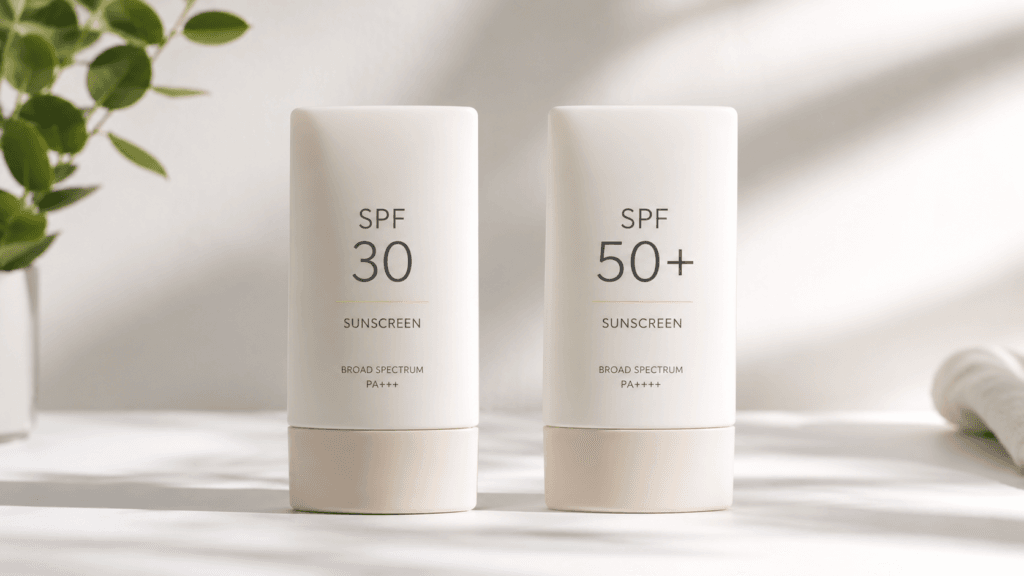
SPF 30 or SPF 50+?
PA+++ or PA++++?
The higher the numbers, the better the sunscreen—right?
Not always.
One of the biggest misconceptions is that SPF tells you everything you need to know about sun protection. In reality, SPF is only one part of the label. The PA rating provides another piece of information that’s just as important, yet many shoppers don’t know what it means.
Once you understand how these two ratings work together, comparing sunscreens becomes much easier. Instead of choosing the product with the biggest numbers, you’ll be able to choose one that’s appropriate for your skin and your daily routine.
SPF Measures Protection Against UVB Rays
SPF stands for Sun Protection Factor.
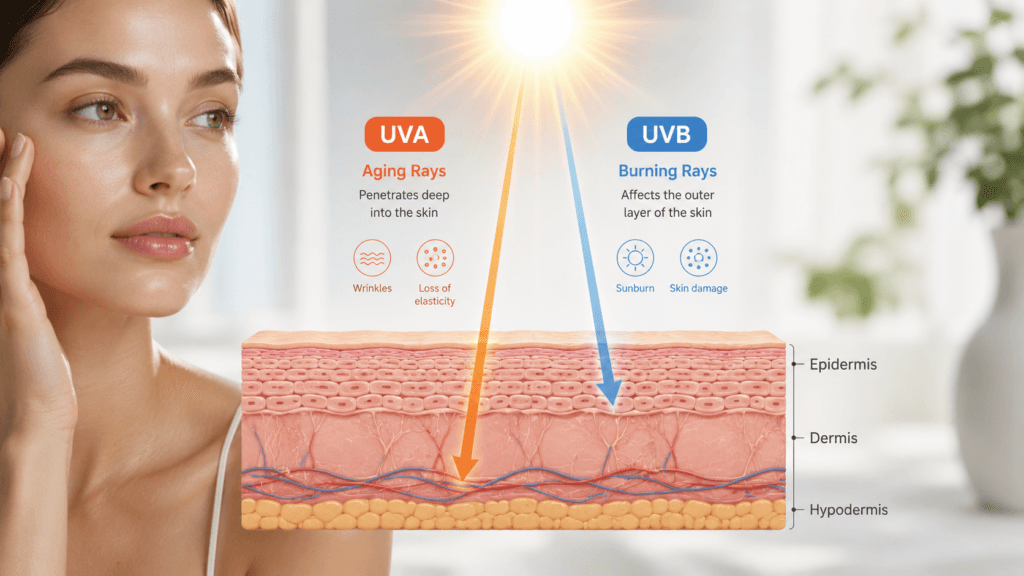
It measures how effectively a sunscreen helps protect your skin from UVB rays, the type of ultraviolet radiation most closely associated with sunburn.
If you’ve ever spent too much time outside on a sunny day and returned home with red, painful skin, UVB rays were likely responsible.
That’s why SPF has always been the most recognizable number on a sunscreen bottle.
However, many people misunderstand what the number actually represents.
A common assumption is that SPF 50 provides dramatically more protection than SPF 30.
The difference is much smaller than most people expect.
Higher SPF does increase protection, but no sunscreen blocks all UV rays. Even products with very high SPF ratings still allow a small amount of ultraviolet radiation to reach the skin.
This is why dermatologists continue to recommend applying sunscreen generously and reapplying it throughout the day, especially after sweating, swimming, or prolonged outdoor activity.
SPF is important—but it’s not designed to do the entire job on its own.
The PA Rating Completes the Picture
If SPF measures protection against UVB rays, the PA rating measures protection against UVA rays.
Unlike UVB rays, UVA rays usually don’t cause an immediate sunburn.
Instead, they penetrate deeper into the skin and contribute to long-term changes caused by repeated UV exposure over time.
Because their effects develop gradually, they’re easy to overlook.
Yet UVA exposure happens more often than many people realize.
Walking to work.
Driving.
Sitting near a large office window.
Enjoying lunch on an outdoor terrace.
These everyday moments all contribute to your skin’s cumulative UV exposure.
That’s why Korean sunscreens almost always display both SPF and PA ratings.
Rather than focusing on only one type of protection, they aim to provide balanced daily protection against both UVB and UVA rays.
You’ll commonly see one of these PA ratings:
- PA+
- PA++
- PA+++
- PA++++
In general, more plus signs indicate a higher level of UVA protection.
That doesn’t mean everyone needs PA++++ in every situation.
The right choice depends on your lifestyle, the amount of time you spend outdoors, and the type of sunscreen you’ll actually use consistently.
Understanding both ratings gives you a much clearer picture of how a sunscreen is designed to perform.
Why Looking at Only One Number Can Lead to the Wrong Choice
Imagine comparing two sunscreens.
The first has SPF 50 but offers lower UVA protection.
The second has SPF 30 with stronger UVA protection that’s better suited to your daily routine.
If you only compare the SPF numbers, the first sunscreen appears to be the obvious winner.
Once you understand the PA rating, the decision becomes much more balanced.
Choosing sunscreen isn’t about finding the highest number on the shelf.
It’s about understanding what those numbers actually measure.
That’s exactly why both ratings appear on Korean sunscreens.
They help you make an informed decision instead of relying on a single number.
If you’re trying to build a complete Korean skincare routine, understanding sunscreen labels is just as important as understanding cleansing, hydration, or skin barrier care. Articles such as K-Beauty Layering Routine for Beginners: The 5-Step Guide to Glass Skin, Korean skincare diagnostic: Global Hunter’s Ultimate Roadmap to Glass Skin, and K-beauty slow aging: Why Prevention is Better Than Correction all reinforce the same idea: healthy skin comes from consistent daily habits, and sunscreen is one of the most important of those habits.
The next step is learning how to use this information when choosing between different SPF and PA combinations.
How to Choose the Right SPF and PA for Your Daily Routine
Now that you know what SPF and PA measure, the next question is practical:
Which ratings are right for you?
The answer depends less on your skin type and more on how much UV exposure your typical day includes.
Someone who spends most of the day indoors has different needs than someone who works outside or enjoys outdoor sports every weekend. That’s why there isn’t a single SPF or PA combination that’s perfect for everyone.
Instead of asking, “What’s the highest SPF available?”, ask yourself these questions first:
- How much time do I spend outdoors on a normal day?
- Will I be in direct sunlight for long periods?
- Do I wear makeup over my sunscreen?
- Can I reapply sunscreen during the day?
These questions will help narrow your choices much more effectively than comparing SPF numbers alone.
For many people, choosing a sunscreen that feels comfortable enough to wear every morning is more valuable than choosing one with the highest possible rating.

Common Mistakes When Reading Sunscreen Labels
Once you understand SPF and PA, it’s easier to avoid some of the most common sunscreen mistakes.
Mistake 1: Choosing Only by SPF
SPF is important, but it doesn’t tell the whole story.
Ignoring the PA rating means you’re overlooking protection against UVA rays, which are also part of everyday UV exposure.
Looking at both ratings provides a more complete picture of how a sunscreen is designed to perform.
Mistake 2: Thinking Higher Numbers Last Longer
Many people assume SPF 50 lasts twice as long as SPF 25.
It doesn’t.
SPF measures the level of UVB protection under testing conditions. It doesn’t mean the sunscreen will continue working all day without reapplication.
Sweat, natural skin oils, touching your face, and normal daily activity gradually reduce sunscreen coverage.
That’s why reapplication is recommended, regardless of the SPF printed on the bottle.
Mistake 3: Buying a Sunscreen You Don’t Enjoy Wearing
The most effective sunscreen isn’t always the one with the highest ratings.
It’s the one that becomes part of your daily routine.
If a sunscreen feels too greasy, pills under makeup, or leaves an uncomfortable finish, there’s a good chance you’ll start skipping it.
Comfort isn’t a luxury.
It’s one of the reasons people build consistent skincare habits.
Understanding the Label Makes Shopping Much Easier
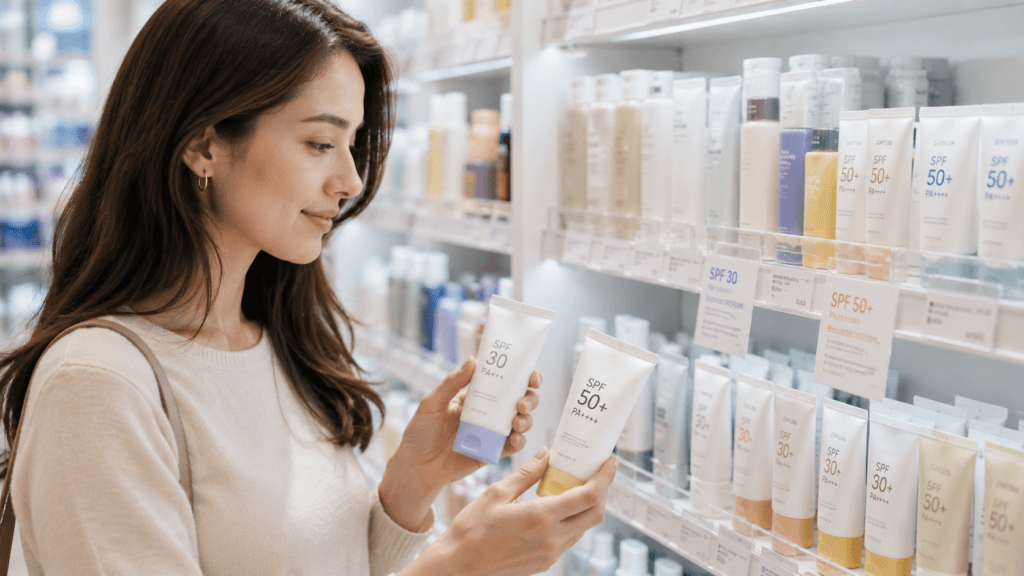
Walk into any skincare store and you’ll probably see dozens of sunscreens.
At first, the labels can seem overwhelming.
But once you understand what SPF and PA actually measure, those numbers become useful instead of confusing.
Rather than searching for the highest rating, you can compare products with a clearer purpose.
Does this sunscreen provide balanced UV protection?
Does it match my daily routine?
Will I enjoy wearing it every morning?
Those questions lead to better decisions than simply choosing the biggest number on the shelf.
And that’s exactly what sunscreen labels are meant to help you do.
Not persuade you to buy the strongest-looking product—
but help you choose the one you’ll actually use consistently.
Frequently Asked Questions
Is SPF 50 always better than SPF 30?
Not necessarily. Both can provide excellent protection when applied correctly. The better choice depends on your daily UV exposure, whether you can reapply sunscreen, and how consistently you’ll use it.
Should I always choose PA++++?
PA++++ offers a high level of UVA protection, but it isn’t automatically the right choice for everyone. Consider your daily routine, time spent outdoors, and personal preferences when choosing a sunscreen.
Does makeup with SPF replace sunscreen?
No. Makeup containing SPF can provide additional protection, but it isn’t usually applied in the amount needed to replace sunscreen. It’s best used as a supplement rather than your primary source of UV protection.
Does a higher SPF mean I can apply less sunscreen?
No. SPF testing assumes the sunscreen is applied in the recommended amount. Applying too little significantly reduces the level of protection, regardless of the SPF printed on the label.
Conclusion
Understanding SPF and PA isn’t about memorizing sunscreen labels.
It’s about knowing what those labels are trying to tell you.
SPF measures protection against UVB rays, while PA indicates the level of UVA protection. Together, they provide a more complete picture of how a sunscreen performs.
Instead of automatically choosing the highest number, think about how you’ll actually use the product.
A sunscreen that matches your daily routine, feels comfortable on your skin, and encourages consistent use will usually serve you better than one chosen simply because of its label.
Once you can confidently read SPF and PA ratings, comparing sunscreens becomes much easier—and you’ll be able to choose products based on your needs instead of marketing claims.
In the next guide, we’ll look at another question that often confuses shoppers:
Chemical vs Mineral Korean Sunscreen: Which Is Better?
You’ll learn how each type works, who they’re best suited for, and how to decide which formula fits your skin and lifestyle.
Continue Exploring
Continue building your Korean skincare knowledge with these published guides:
- Korean skincare diagnostic: Global Hunter’s Ultimate Roadmap to Glass Skin
- K-Beauty Layering Routine for Beginners: The 5-Step Guide to Glass Skin
- K-beauty slow aging: Why Prevention is Better Than Correction
- Discover Your True Skin Type
- Best Korean Sunscreens for Slow Aging: Top 3 Must-Have Products for Glass Skin