Imagine finishing a long day, washing your face, and reaching for your sunscreen before bed.
Technically, nothing is stopping you.
But does your skin actually need it?
Not really.
This is one of those questions that seems simple until you understand why sunscreen exists in the first place.
Many people think sunscreen is simply another skincare product.
In Korean skincare, it’s viewed a little differently.
Sunscreen is designed to protect your skin during the day, while your evening routine has an entirely different purpose.
Understanding that difference makes it much easier to build a routine that feels both simple and effective.
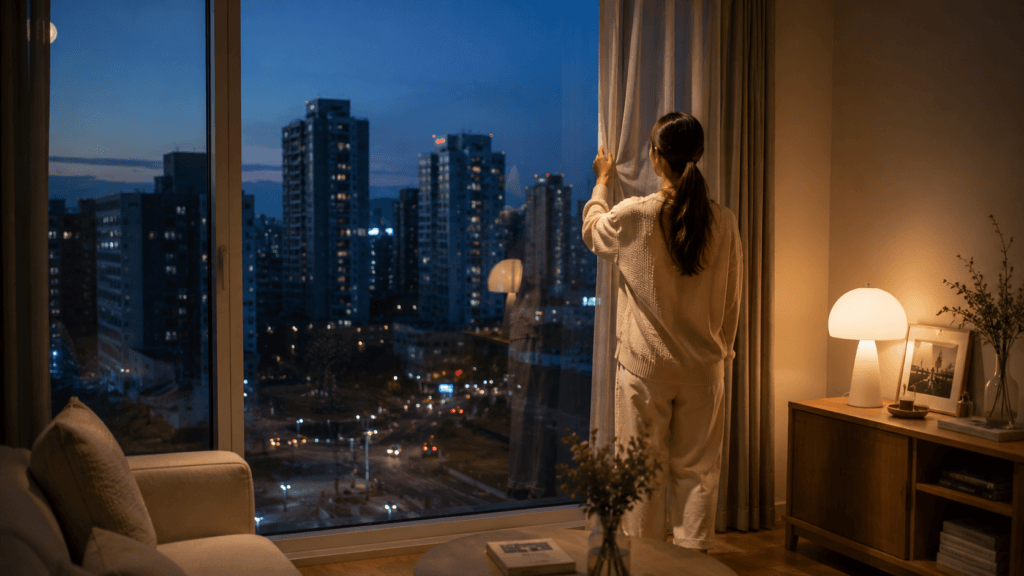
Daytime and Nighttime Have Different Jobs
Think about your morning routine.
You’re preparing your skin for everything the day brings.
Walking outside.
Commuting.
Sitting near windows.
Spending time under changing levels of daylight.
Your evening routine begins with a completely different question.
How can your skin feel comfortable after the day is over?
Once the sun has set and UV exposure is no longer part of your routine, sunscreen has already completed the job it was designed to do.
At night, Korean skincare shifts its attention from protection to comfort, cleansing, and recovery.
That’s why daytime and nighttime products are rarely interchangeable.
They’re built for different moments of the day.
Sunscreen Works Best When It Has a Purpose
One of the biggest misconceptions in skincare is that using more products automatically creates better results.
Korean skincare takes a more intentional approach.
Every product should have a reason for being there.
A cleanser removes the day.
A moisturizer supports comfort.
Sunscreen protects against UV exposure.
Each product has its own role.
Once the role has ended, adding more doesn’t necessarily make the routine better.
This is why sunscreen isn’t treated as a 24-hour product.
Its purpose is connected to daylight.
Using it simply because it’s a skincare product misses the reason it exists in the first place.
Healthy routines aren’t built by adding unnecessary steps.
They’re built by understanding why each step belongs.

Korean Skincare Changes With the Rhythm of the Day
One of the most interesting differences in Korean skincare is that routines are built around daily rhythms rather than fixed product counts.
Morning routines prepare.
Evening routines restore.
Neither routine tries to do everything.
Each simply focuses on what your skin needs most at that moment.
If you’ve already explored How Koreans Apply Sunscreen Every Day, Can Sunscreen Replace Moisturizer?, and Do You Need Sunscreen Indoors?, you’ll recognize this same philosophy throughout the series.
The goal isn’t to use more skincare.
It’s to use the right skincare at the right time.
The next question naturally becomes:
So what should replace sunscreen in a healthy nighttime routine?
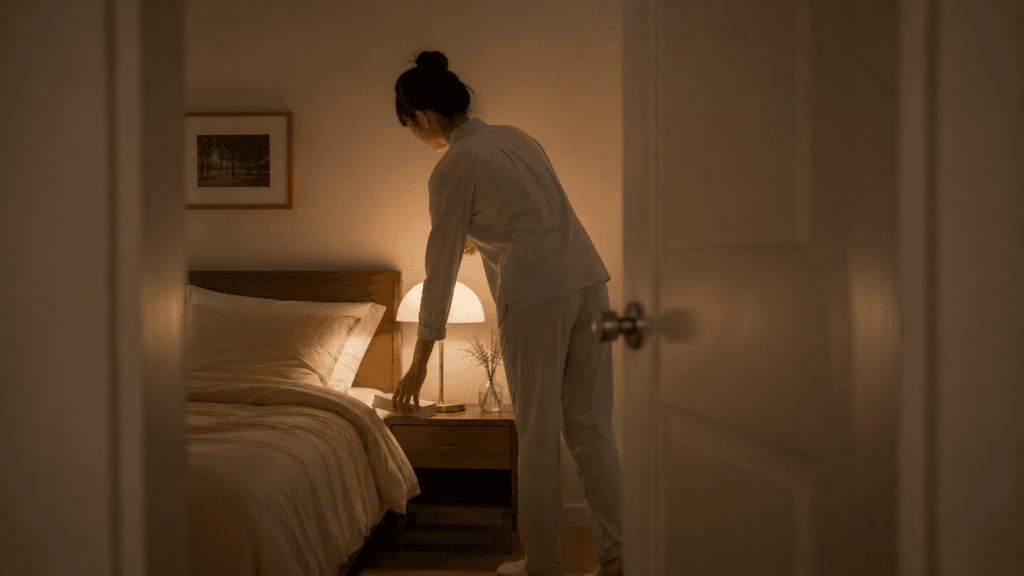
Nighttime Is When Your Routine Changes Direction
Think about what happens throughout the day.
Your skin is exposed to sunlight.
Wind.
Heat.
Air conditioning.
Pollution.
Hours spent indoors and outdoors.
By evening, those experiences are behind you.
Your skincare routine naturally shifts from preparing for the day to helping your skin feel comfortable after it.
That’s why sunscreen no longer has a role once UV exposure is gone.
Instead of adding another layer of daytime protection, Korean skincare encourages simplifying your evening routine and allowing each product to do the job it was designed for.
A thoughtful nighttime routine isn’t about using more products.
It’s about using products with the right purpose.
More Skincare Doesn’t Always Mean Better Skincare
It’s easy to believe that wearing sunscreen overnight might offer extra protection.
But skincare doesn’t work by simply adding more layers.
One of the defining ideas behind Korean skincare is that every step should have a clear purpose.
Morning products prepare your skin for the day.
Evening products help complete the day.
When those roles become blurred, routines often become more complicated than they need to be.
This philosophy encourages asking a simple question before applying any product:
“What job is this product meant to do right now?”
If there’s no UV exposure overnight, sunscreen has already fulfilled its purpose.
Understanding when not to use a product is just as important as knowing when to use it.
Good Routines Follow Your Lifestyle, Not the Clock
The interesting thing about Korean skincare isn’t that it recommends a morning routine and a night routine.
It’s why those routines are different.
Your skincare changes because your environment changes.
The products you use should support the life you’re living at that moment.
That’s why sunscreen belongs naturally in the daytime.
And that’s why your nighttime routine focuses on comfort instead of protection.
If you’ve already explored How Koreans Apply Sunscreen Every Day, How Often Should You Reapply Sunscreen?, and Can Sunscreen Replace Moisturizer?, you’ve probably noticed the same idea connecting each guide.
Healthy skincare isn’t about following the longest routine.
It’s about understanding what your skin needs right now—and letting every product play its own role.
Frequently Asked Questions
Is it harmful to wear sunscreen at night?
Wearing sunscreen at night isn’t usually harmful, but it generally isn’t necessary. Sunscreen is designed to protect your skin from UV exposure, so once the day is over, it has already completed its intended role. A nighttime routine is usually better focused on cleansing and skin comfort.
Should I wash off sunscreen before going to bed?
Yes. After wearing sunscreen throughout the day, it’s generally a good idea to cleanse your skin before starting your evening routine. This allows your nighttime skincare products to become the focus instead of leaving your daytime protection on overnight.
Can I skip my nighttime skincare if I wore sunscreen all day?
Not really. Sunscreen and nighttime skincare serve different purposes. Sunscreen helps protect your skin during the day, while your evening routine is an opportunity to cleanse your skin and prepare it for the hours ahead.
What should I apply instead of sunscreen at night?
Rather than replacing sunscreen with another “protective” product, think about what your skin needs after the day ends. Many evening routines focus on cleansing, maintaining the skin barrier, and keeping the skin comfortable before sleep.
Conclusion
Can you wear sunscreen at night?
You can.
But in most cases, there’s simply no reason to.
The more useful question isn’t whether sunscreen can be worn after dark.
It’s whether it still has a job to do.
Once UV exposure disappears, Korean skincare naturally shifts its focus.
Morning is about preparing your skin for the day ahead.
Evening is about helping your skin leave the day behind.
That’s why sunscreen belongs comfortably in one routine—but not necessarily the other.
Understanding why each product exists makes skincare feel much simpler.
You stop adding products just because they’re good.
Instead, you begin choosing products because they make sense for that moment.
And that’s one of the quiet principles behind Korean skincare:
Not more products.
Just the right products, at the right time.
In the next guide, we’ll answer another question that often surprises people who are new to daily sun protection:
Can You Skip Sunscreen if Your Makeup Has SPF?
You’ll learn why SPF in makeup isn’t always the same as dedicated sun protection and how Korean skincare approaches layering products without making your routine more complicated.
Continue Exploring
Continue learning how Korean skincare fits sunscreen into everyday life: