Visitors to South Korea often notice something surprising within their first few days.
People walk everywhere.
Whether commuting to work, meeting friends, shopping, or simply running daily errands, walking is deeply integrated into Korean life. What many locals consider completely normal can feel unusual to visitors from countries where cars dominate daily transportation.
While fitness trends come and go, one of Korea’s most effective wellness habits may be hiding in plain sight.
The secret is not a miracle diet, expensive gym membership, or complicated health program.
It’s walking.
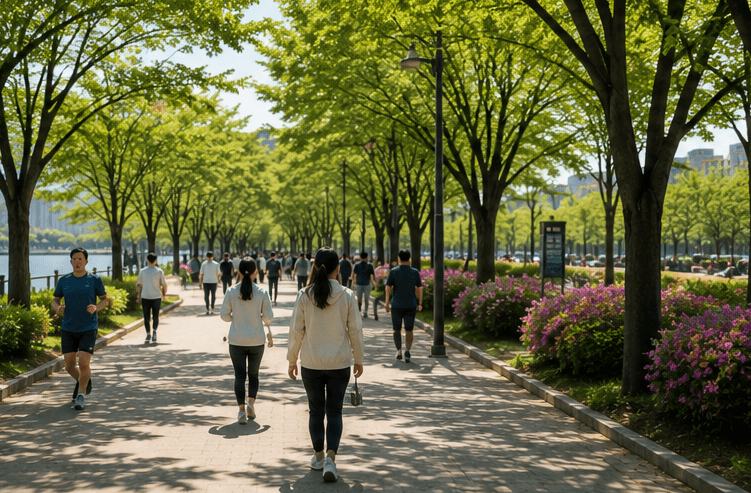
A City Designed for Walking
One reason Koreans walk so much is simple: Korean cities are designed for it.
Major cities such as Seoul, Busan, and Daejeon feature extensive public transportation systems that encourage people to walk throughout the day.
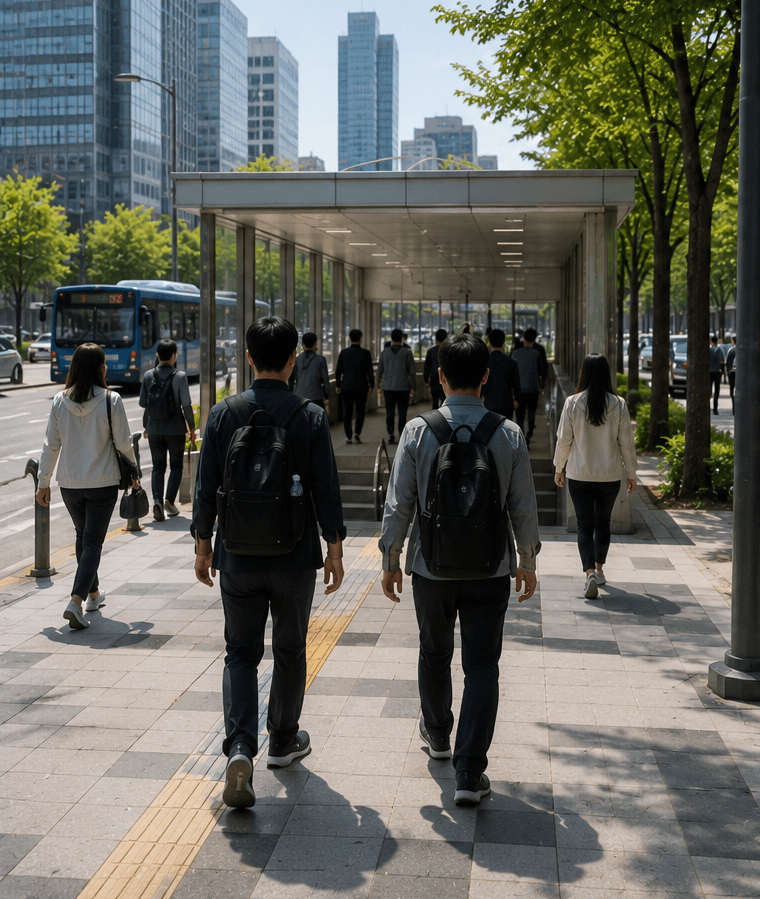
A typical commute often includes:
- Walking to the subway station
- Transferring between stations
- Walking from the station to work
- Walking to restaurants or cafes during lunch
- Walking back home
Even people who never intentionally exercise can accumulate thousands of steps through their daily routines.
In many Western cities, daily activities often require driving. In Korea, daily life naturally creates opportunities for movement.
The Hidden Exercise Most People Ignore
Many people think exercise only happens in a gym.
Korean lifestyle culture often demonstrates a different reality.
Walking may not feel intense, but health experts consistently recognize it as one of the most sustainable forms of physical activity.
Regular walking has been associated with:
- Improved cardiovascular health
- Better weight management
- Reduced stress
- Increased energy levels
- Improved mental well-being
The key advantage is sustainability.
Most people can maintain a walking habit for years, while many intense fitness programs are abandoned after only a few months.
Walking Opportunities Are Everywhere
Another reason Koreans walk so much is that walking-friendly spaces are everywhere.
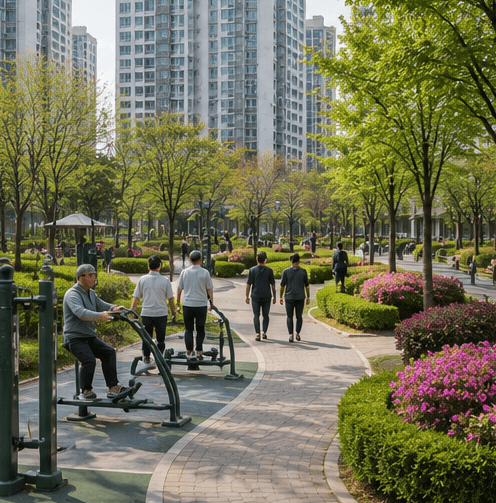
In many Korean cities, residential neighborhoods are designed with parks, walking trails, and outdoor exercise areas located within easy reach of residents. Large apartment complexes often include landscaped pathways, small gardens, playgrounds, and outdoor fitness equipment that encourage people to stay active throughout the day.
A simple evening walk can easily become a complete workout.
Many public parks feature exercise stations where residents can stretch, use strength-training equipment, and continue walking along dedicated paths. This allows physical activity to become a natural part of daily life rather than something that requires a gym membership or special planning.
Korea’s commitment to walkable communities makes it easier for people of all ages to remain active, whether they are students, office workers, parents, or retirees.
Korea’s Unique Hiking Culture
Walking culture in Korea extends far beyond city streets.
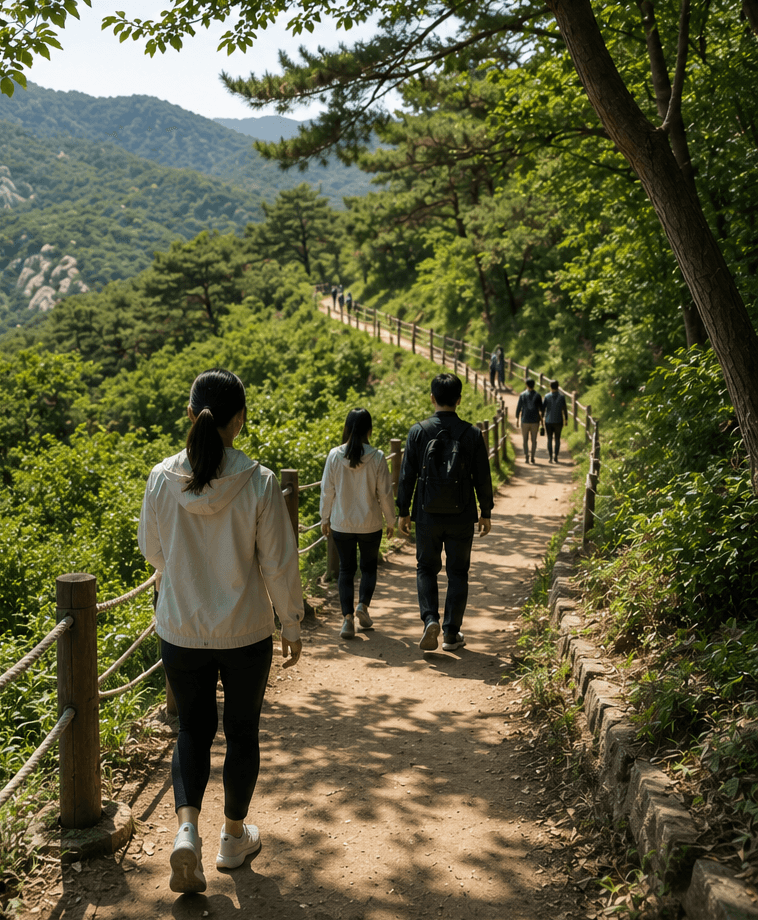
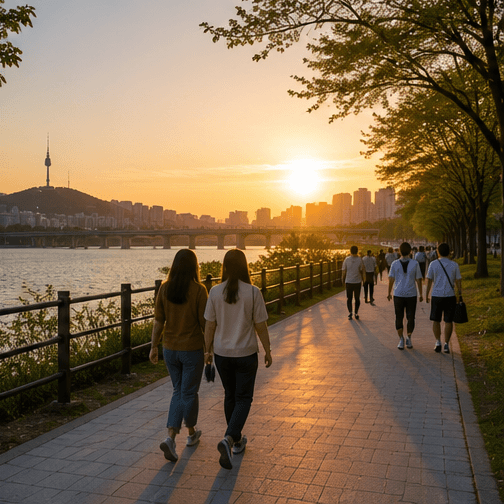
Despite being one of the world’s most urbanized countries, South Korea is also filled with mountains, forest trails, riverside paths, and scenic walking routes known as “Dulle-gil.”
Weekend hiking is a popular activity across generations. Families, retirees, office workers, and young adults regularly visit nearby mountains to enjoy nature, exercise, and spend time together.
Many trails are designed to be accessible for beginners, with clear signage, rest areas, observation decks, and well-maintained paths. Even people who do not consider themselves serious hikers often participate in weekend walks through forests and mountain parks.
For many Koreans, hiking is not simply exercise. It is a way to recharge mentally, connect with nature, and maintain an active lifestyle throughout life.
Walking and Korea’s Wellness Culture
Walking fits perfectly into Korea’s broader wellness philosophy.
Rather than focusing on dramatic short-term results, many Korean health habits emphasize consistency.
This mindset can also be seen in:
- Daily skincare routines
- Balanced meals
- Regular social interaction
- Preventive health habits
Walking becomes another example of a small action repeated consistently over time.
While no single habit guarantees health or longevity, the combination of these routines creates a lifestyle that supports long-term well-being.
If you’re interested in Korea’s approach to wellness, be sure to explore our guide to Korean food philosophy and slow aging.
Why Walking Improves More Than Physical Health
The benefits of walking extend beyond fitness.
Many Koreans use walking as an opportunity to clear their minds, reduce stress, and disconnect from daily pressures.
Parks, riverside trails, and pedestrian-friendly neighborhoods provide spaces where people can enjoy fresh air and social interaction.
Walking also encourages spontaneous experiences.
A short walk may lead to discovering a new cafe, meeting friends, or simply enjoying a change of scenery.
These small moments contribute to quality of life in ways that are often difficult to measure.
What Other Countries Can Learn From Korea
The lesson is surprisingly simple.
Many people search for complicated health solutions while overlooking one of the most accessible forms of movement available.
Korea demonstrates how city design, public transportation, and daily habits can naturally encourage physical activity without requiring special effort.
Walking is not treated as a separate task.
It is simply part of everyday life.
For those looking to improve their health, the Korean example offers a valuable reminder that small, consistent habits often produce the biggest long-term results.
Conclusion
The reason Koreans walk so much is not necessarily because they are more fitness-focused than everyone else.
Instead, Korean cities and daily routines naturally encourage movement. From public transportation and walkable neighborhoods to apartment-complex parks, outdoor exercise facilities, scenic riverside trails, and mountain hiking routes, opportunities for walking are built into everyday life.
In Korea, staying active often does not require a gym membership or a strict workout schedule. Physical activity becomes part of daily routines through commuting, socializing, enjoying nature, and exploring local communities.
In a world increasingly focused on quick fixes and complicated wellness trends, Korea’s walking culture highlights a powerful truth:
Sometimes the simplest habit is also the most effective.
FAQ
Why do Koreans walk so much?
Koreans often walk more because cities are designed around public transportation, walkable neighborhoods, parks, and outdoor recreational spaces that encourage daily movement.
Is walking considered exercise in Korea?
While many Koreans walk for exercise, much of their daily walking happens naturally through commuting, shopping, and everyday activities.
What is a Dulle-gil?
Dulle-gil refers to scenic walking trails that circle mountains, forests, rivers, or communities, making outdoor walking accessible to people of all ages.
Does walking contribute to Korean wellness culture?
Yes. Walking aligns closely with Korea’s emphasis on consistency, sustainable habits, and long-term well-being.
Are Korean cities walkable?
Many Korean cities are highly walkable thanks to extensive public transportation systems, pedestrian-friendly streets, parks, and walking paths.
Related Article
Korean Lifestyle Guide: Daily Habits Behind Korea’s Global Fascination
Korean Food Philosophy Slow Aging: The Secret of Korean “Yak-Sik-Dong-Won”
Next Article
The Korean Morning Routine: Small Habits That Make a Big Difference