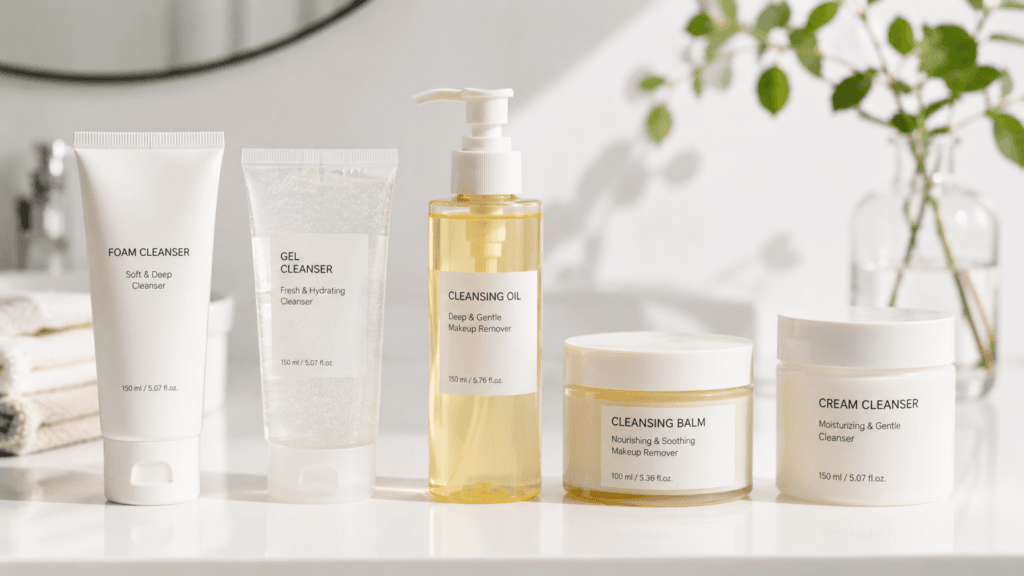
Walk into any Korean beauty store or browse an online K-beauty shop, and you’ll quickly notice one thing—there are hundreds of cleansers to choose from.
Foam cleansers, gel cleansers, cleansing oils, cleansing balms, cream cleansers, powder cleansers, and low-pH formulas all promise healthier skin.
With so many options, it’s easy to assume that finding the “best” cleanser is simply about choosing the most popular product.
In reality, the best cleanser is the one that matches your skin’s needs.
Korean skincare doesn’t encourage everyone to use the same cleanser. Instead, it focuses on choosing formulas that support your skin barrier while removing daily impurities comfortably.
Once you understand what your skin needs, selecting the right cleanser becomes much easier.
Start by Understanding Your Skin Type
Before choosing any cleanser, identify how your skin behaves throughout a typical day.
Ask yourself a few simple questions.
Does your face feel tight after washing?
Does your forehead become shiny by lunchtime?
Do your cheeks feel dry while your T-zone stays oily?
Does your skin become easily irritated by new products?
Your answers provide valuable clues.
A cleanser should work with your skin—not against it.
Choosing a cleanser without understanding your skin type often leads to unnecessary trial and error.
Choosing a Cleanser for Dry Skin
Dry skin benefits from cleansers that protect moisture while removing daily buildup.
Look for formulas that cleanse gently without leaving your face feeling tight.
Cream cleansers, hydrating gel cleansers, and nourishing cleansing balms are often comfortable choices.
Avoid products that create an overly squeaky-clean feeling, as this may indicate that too much of your skin’s natural moisture has been removed.
Choosing a Cleanser for Oily Skin
People with oily skin often think they need the strongest cleanser available.
In reality, harsh cleansers can encourage even more oil production.
A lightweight cleansing oil followed by a gentle low-pH foam cleanser is often enough to remove excess sebum while keeping the skin balanced.
The goal isn’t to eliminate oil completely.
Healthy skin always needs some natural oils.

Choosing a Cleanser for Combination Skin
Combination skin requires balance rather than extremes.
A gentle cleanser that removes oil from the T-zone without drying the cheeks is usually the best choice.
Many people with combination skin find that adjusting the amount of cleanser—or focusing extra cleansing around the oily areas—works better than buying multiple products.
Choosing a Cleanser for Sensitive Skin
Sensitive skin responds best to simple formulas.
Fragrance-free cleansers with shorter ingredient lists are often a safer starting point.
Gentle cleansing matters more than strong cleansing.
If your skin frequently becomes red or irritated after washing, switching to a milder cleanser may improve comfort more than adding additional skincare products.
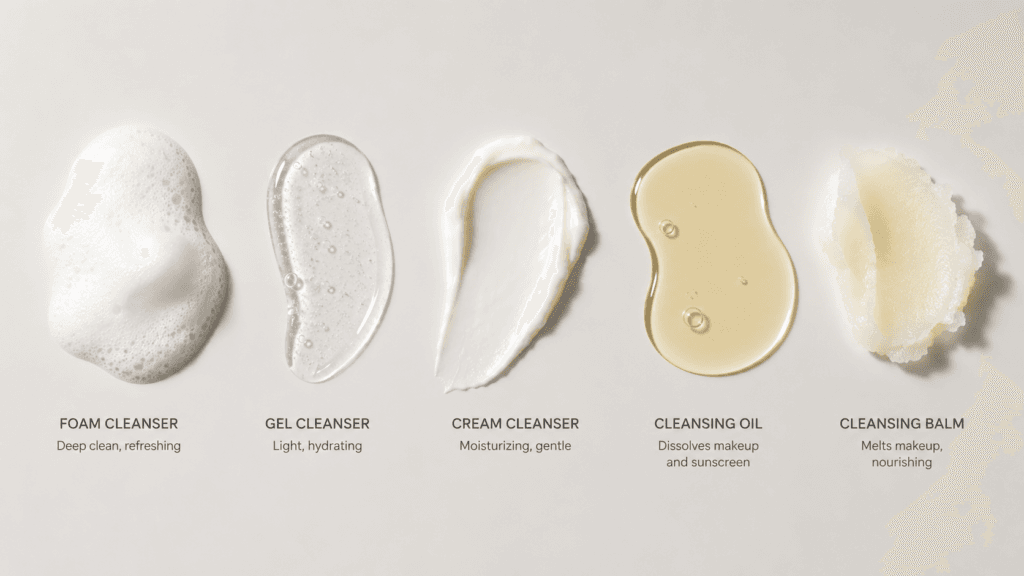
Understanding Different Cleanser Types
Each cleanser has a different purpose.
Cleansing Oil
Best for removing sunscreen, makeup, and excess sebum.
Cleansing Balm
Works similarly to cleansing oil but offers a richer texture and is often preferred for travel.
Foam Cleanser
Removes remaining water-based impurities after the first cleanse.
Gel Cleanser
Usually provides gentle daily cleansing without excessive dryness.
Cream Cleanser
Often suitable for dry or mature skin because it focuses on comfort and hydration.
Choosing the right type depends on both your skin and your daily routine.
Ingredients Matter More Than Marketing
Beautiful packaging doesn’t guarantee a better cleanser.
Instead of focusing only on brand names, pay attention to how your skin feels after cleansing.
A good cleanser should leave your skin feeling:
•Clean
•Comfortable
•Soft
•Balanced
•Ready for the next skincare steps
If your skin feels tight, itchy, or irritated after every wash, it may be time to reconsider your cleanser.
How to Test a New Cleanser
When trying a new cleanser, avoid changing multiple skincare products at once.
Use the cleanser consistently for a couple of weeks while keeping the rest of your routine the same.
Pay attention to how your skin feels after cleansing rather than expecting dramatic overnight changes.
Healthy skin usually improves gradually through consistency.

Conclusion
Finding the right Korean cleanser isn’t about buying the most expensive product or following every social media trend.
It’s about understanding your skin and choosing a formula that cleanses effectively while protecting your skin barrier.
Dry skin, oily skin, combination skin, and sensitive skin all have different needs.
Once you choose a cleanser that suits your skin type, the rest of your skincare routine becomes much easier to build.
The best cleanser is simply the one that keeps your skin healthy, comfortable, and balanced every day.
FAQ
What type of cleanser is best for oily skin?
A lightweight cleansing oil followed by a gentle low-pH foam cleanser is often a good choice.
Is foam cleanser bad for dry skin?
Not necessarily. Gentle, hydrating foam cleansers can work well for dry skin.
Can sensitive skin use cleansing oil?
Yes. Many fragrance-free cleansing oils are suitable for sensitive skin.
How long should I test a new cleanser?
Using a cleanser consistently for two to four weeks often provides a better understanding of how your skin responds.
Should I choose products based on skin type or ingredients?
Both matter, but choosing a cleanser designed for your skin type is usually the best starting point.
Continue Reading
•What Is Double Cleansing? The Korean Skincare Method Explained
•Oil Cleanser vs Cleansing Balm: Which One Should You Use?
•Korean Cleansing Routine for Dry, Oily, and Combination Skin