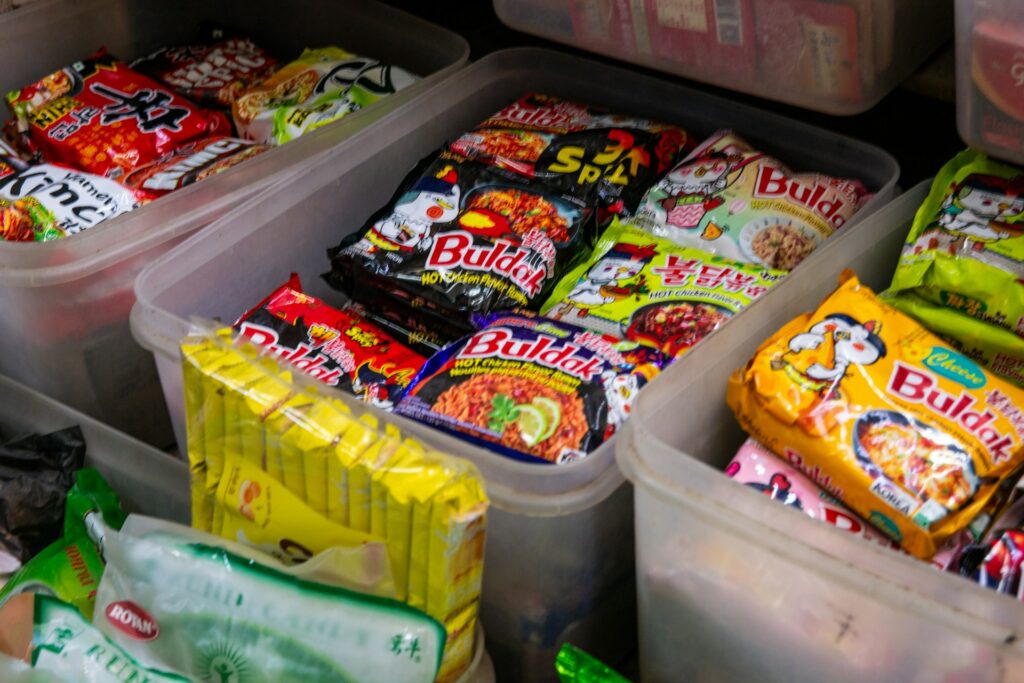
The global fascination with K-food has reached an astronomical peak, and at the absolute center of this culinary revolution is the Buldak Noodles Craze. What started as a viral internet challenge has now transformed into a massive cultural phenomenon, dominating supermarket shelves from New York to London. If you’ve visited a local Walmart, Costco, or Trader Joe’s recently, you’ve likely seen empty shelves where the famous black-and-red packages used to be. The global craving for this intense Korean spice shows no signs of slowing down, turning a simple instant noodle brand into a dominant force in international food culture.
## The Rise of a Global Sensation: TikTok and Z-Generation Culture
The driving force behind the current Buldak Noodles Craze is undoubtedly social media, particularly short-form video platforms like TikTok and Instagram Reels. Millions of creators worldwide are actively participating in the infamous “Spicy Noodle Challenge,” testing their limits against the intense, fiery heat of Korean ramen. These videos routinely garner tens of millions of views, creating a powerful loop of digital word-of-mouth marketing that money simply cannot buy.
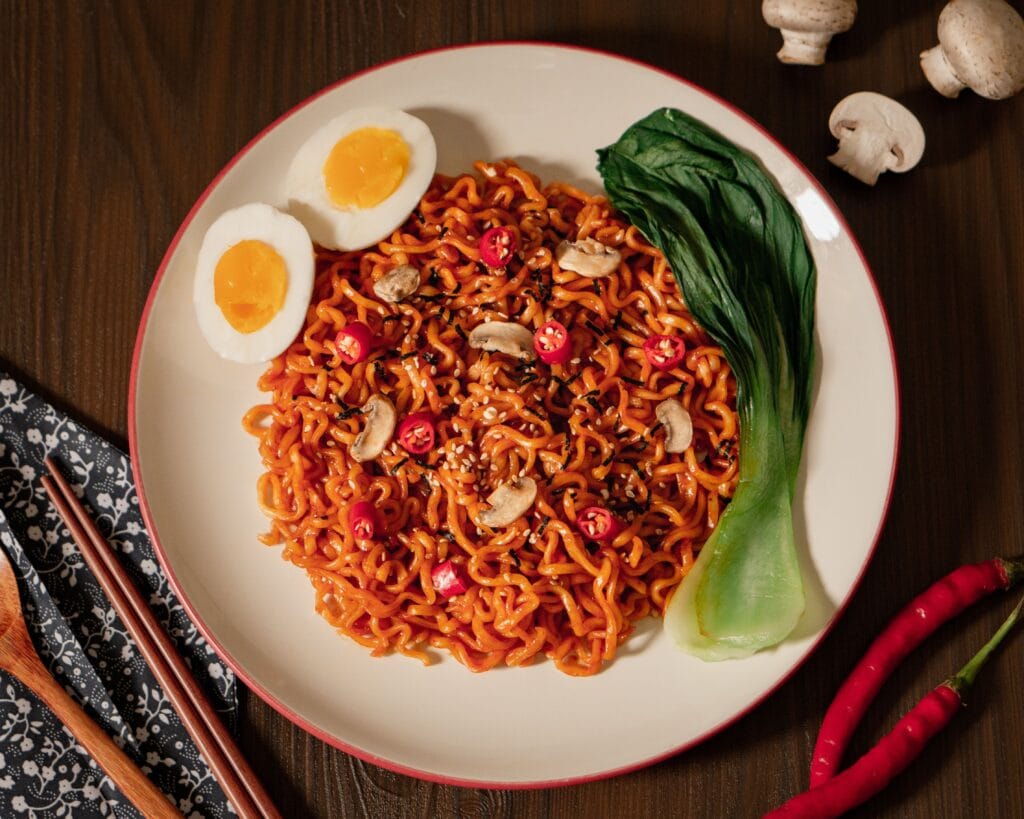
What makes this trend so unique is that it is no longer just a one-time internet dare for views. Gen Z and millennial consumers have genuinely integrated these spicy noodles into their weekly comfort food routines. Major US and European retailers report that sales have surged exponentially, making Buldak a household name across the Western hemisphere. Young consumers enjoy documenting their cooking process, often customizing their noodles with heavy cream, mozzarella cheese, soft-boiled eggs, and green onions to create a visually appealing, gourmet-style instant meal.
## From Hollywood to Global Supermarket Shortages
The hype reached a fever pitch when Buldak officially crossed over into mainstream western entertainment and pop culture. Hollywood celebrities, top-tier internet influencers, and even professional athletes have been spotted testing their palates on camera. This continuous celebrity endorsement has successfully pushed the product past the niche Asian market and directly into the global mainstream spotlight.
Due to this unprecedented exposure, supply chains simply cannot keep up with demand. Retail giants across North America and Europe are constantly scrambling to restock their inventories, yet full pallets of noodles often vanish within minutes of hitting the sales floor. Financial media outlets like Fortune have highlighted how parent company Samyang Foods saw its stock price and global revenue skyrocket to historic highs due to this explosive Western demand. In major cosmopolitan areas, finding specific flavors has become so difficult that some consumers have resorted to buying them in bulk online at premium prices. It is no longer just a quick grocery item; it has become a valuable global commodity that people are actively hoarding.
## Why the World Can’t Get Enough of the Extreme Heat
Food critics and market analysts point out that the Buldak Noodles Craze is sustained by brilliant flavor innovation and psychological appeal. Humans are naturally wired to seek thrilling experiences, and consuming extremely spicy food releases endorphins and dopamine, creating a natural high. Samyang, the manufacturer, capitalized on this perfectly by turning a meal into an interactive, adventurous experience.
Furthermore, instead of sticking to just one ultra-spicy original flavor, the brand introduced highly successful global spin-offs. Industry analysis from Euromonitor International notes that flavors like Carbonara (a creamy, cheesy variation), Habanero Lime, and Stew Type have effectively lowered the entry barrier for those who cannot tolerate extreme heat. By blending authentic Korean spice with familiar western flavor profiles, they have managed to keep the brand exciting, fresh, and highly accessible to diverse palates around the globe.
## The Psychological Thrill of the Spicy Noodle Challenge
Beyond the delicious taste, there is a deep psychological and social element driving the Buldak Noodles Craze. In an increasingly digital world, global consumers—especially the younger demographic—are constantly looking for shared cultural experiences. Participating in the spicy noodle challenge gives them a sense of community and shared accomplishment.
When a consumer uploads a video of themselves conquered by the heat, they are not just sharing a meal; they are participating in a global conversation. This experiential eating aspect is exactly why the trend has survived for years instead of fading away like a typical internet fad. It provides entertainment, a physical thrill, and a delicious meal all at the exact same time.
## A Lasting Cultural Shift in Global Palates
What the Buldak Noodles Craze ultimately proves is that Western palates are changing rapidly. For decades, Western food manufacturers assumed that mainstream consumers preferred mild, safe flavor profiles. The skyrocketing success of Korean spicy noodles has completely shattered that assumption, forcing global food companies to rethink their product development strategies.
As Korean cultural exports like K-Pop, K-Dramas, and K-Beauty continue to dominate the globe, K-Food stands as a powerful pillar of this soft power. Buldak noodles have successfully opened the floodgates, making international consumers more adventurous and eager to explore authentic, bold flavors from East Asia. The crave-worthy heat is here to stay, and it will undoubtedly continue to shape global grocery trends for years to come.
Continue Exploring
If you enjoyed this article, you may also like:
Korean Convenience Store Culture: Why Convenience Stores Are Part of Everyday Life
How Koreans Balance Work, Wellness, and Social Life
Why Picnics Are So Popular in Korea: The Rise of Korean Picnic Culture