For many visitors, lunch in Korea is expected to be simple.
People work all morning, find something to eat, and return to their day.
That part is true.
What surprises many foreigners is how differently lunch fits into everyday life.
In Korea, lunch is rarely just about satisfying hunger.
It is a scheduled pause that brings classmates together, strengthens workplace relationships, introduces new restaurants, and briefly slows the rhythm of an otherwise busy day.
Whether it takes place inside a crowded office district, a quiet neighborhood restaurant, or a university cafeteria, lunch often follows unspoken social patterns that visitors notice almost immediately.
Understanding Korean lunch culture isn’t simply about learning what people eat.
It’s about understanding why the meal itself has become an important part of daily life.
Lunch Is Often a Shared Experience
One of the biggest cultural differences appears before anyone even orders.
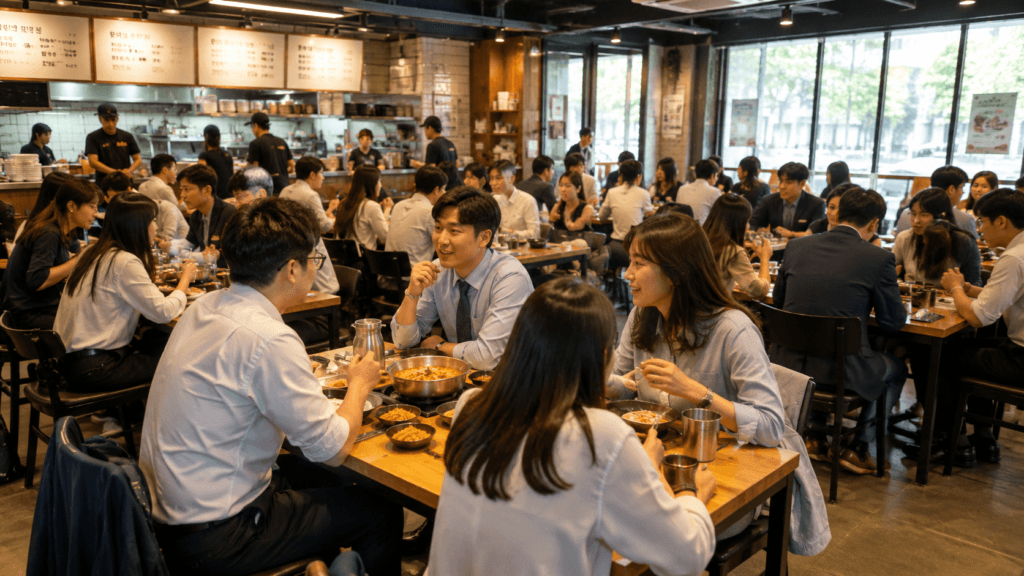
Many Korean meals are designed to be shared.
Instead of every person receiving a completely separate meal with individual side dishes, the center of the table often fills with food that everyone enjoys together.
Kimchi.
Soup.
Vegetables.
Shared dishes.
Additional side plates.
The table quickly becomes something everyone participates in rather than something divided into personal spaces.
Even when each person orders a different main dish, sharing side dishes naturally becomes part of the meal.
For visitors accustomed to individual plates, this cooperative style of eating can feel surprisingly welcoming.
The meal becomes less about individual choices and more about enjoying time together.
This approach reflects a broader pattern throughout Korean culture.
Many daily activities place value on the group while still allowing individuals to express themselves.
Lunch quietly reinforces that balance every weekday.
Lunch Breaks Move Quickly
Foreign visitors are often surprised by another characteristic of Korean lunches.
Everything happens remarkably fast.
Restaurants are prepared for the lunchtime rush long before customers arrive.
Menus are familiar.
Orders are placed almost immediately.
Food often arrives within minutes.
Tables turn over efficiently without making guests feel unwelcome.
Office workers usually have limited time before returning to work, and restaurants have adapted to that rhythm.
Even busy restaurants maintain an impressive pace.
Despite the speed, lunch rarely feels rushed emotionally.
People continue talking, laughing, and catching up while eating.
The efficiency simply allows more people to enjoy their break without sacrificing conversation.
Many first-time visitors leave wondering how restaurants can serve so many customers in such a short period.
The answer lies in years of experience serving neighborhoods that follow nearly identical lunchtime schedules every weekday.
Company Lunches Create Everyday Connections
For many office workers, lunch is also a social activity.
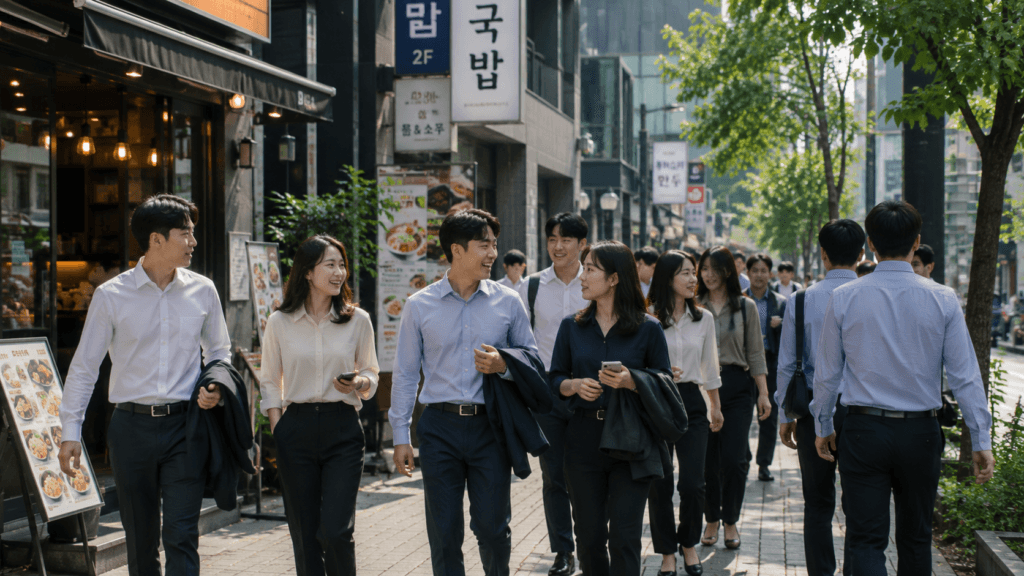
Coworkers often leave the office together, discussing projects, weekend plans, or completely unrelated topics while walking to nearby restaurants.
Some companies eat together almost every day.
Others allow more flexibility.
Either way, lunchtime frequently becomes one of the few relaxed moments during the workday.
The office hierarchy often feels less formal around the dining table.
People who spend meetings discussing deadlines may spend lunch recommending restaurants or talking about travel, sports, or family life.
These conversations gradually build familiarity that carries back into the workplace.
Rather than viewing lunch as lost productivity, many workplaces recognize that informal conversations strengthen teamwork over time.
For foreigners joining Korean companies, these shared lunches often become one of the fastest ways to understand workplace culture beyond formal meetings.
Lunch Is Also a Way to Discover New Places
Another interesting part of Korean lunch culture is how often people use it to explore new restaurants.
Ask an office worker where they had lunch yesterday, and the answer may be completely different from today.
Rather than visiting the same place every afternoon, many people enjoy rotating between nearby restaurants throughout the week.
One day might be bibimbap.
The next could be noodle soup.
Another day might be pork cutlets, kimchi stew, or a neighborhood Chinese restaurant serving Korean-style jajangmyeon.
This variety keeps lunch from becoming repetitive while also supporting local businesses.
In many office districts, restaurant owners know exactly when customers will arrive.
They prepare lunch specials, seasonal menus, and quick-service options that fit the rhythm of the neighborhood.
For visitors, this constant movement can make Korean cities feel surprisingly lively around noon.
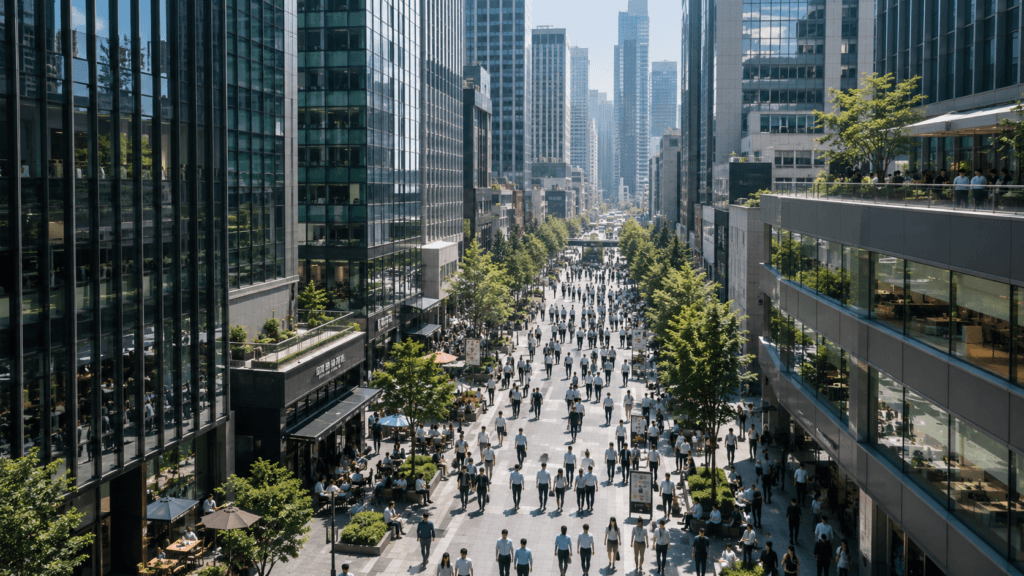
Streets that were quiet only an hour earlier suddenly fill with people walking together, scanning restaurant signs, and discussing where to eat.
The lunch break becomes part of the city’s daily rhythm rather than simply a pause in the workday.
Lunch Reflects Everyday Community
Perhaps the biggest surprise for foreigners is that lunch often feels less like a personal routine and more like a shared daily event.
People naturally move through similar schedules.
Students leave campus together.
Office workers step outside at nearly the same time.
Restaurant staff greet familiar customers.
Neighbors recognize one another.
Even people eating alone become part of the same lunchtime atmosphere.
No one plans this collective rhythm.
It simply develops through everyday life.
This helps explain why lunch feels different in Korea.
It is not only about food.
It is about sharing a small part of the day with the people around you, whether they are friends, coworkers, classmates, or complete strangers eating at the next table.
The meal quietly connects individuals to the community they live and work in.
Conclusion
At first, Korean lunch culture may seem surprisingly fast and highly organized.
Look a little closer, however, and it reveals something much more meaningful.
Lunch is one of the few moments when busy schedules briefly slow down, allowing people to reconnect with coworkers, classmates, friends, and their local neighborhood.
Shared dishes, efficient restaurants, familiar routines, and casual conversations all contribute to an experience that goes beyond eating.
For many Koreans, lunch is not simply a meal placed between work and dinner.
It is a small but important part of everyday life that quietly strengthens relationships and gives each day its own rhythm.
FAQ
Why do Korean coworkers often eat lunch together?
Many workplaces view lunch as an opportunity to build stronger relationships outside formal meetings. Casual conversations during meals often improve teamwork and communication.
Why is Korean lunch service so fast?
Restaurants are accustomed to serving large numbers of customers during a limited lunch break. Familiar menus, efficient kitchens, and experienced staff help meals arrive quickly.
Is sharing food common during Korean lunch?
Yes. Many Korean meals include shared side dishes, soups, or dishes placed in the center of the table, making the meal feel more communal.
Do people always eat out for lunch in Korea?
Not always. Some people use company cafeterias, school cafeterias, or bring lunch from home, but eating at nearby restaurants is very common, especially in business districts.
Continue Exploring
If you enjoyed this article, you may also like: