You’ve probably heard the same reaction countless times.
Someone tries a Korean sunscreen for the first time, pauses for a moment, and says,
“Wait… that’s sunscreen?”
It doesn’t feel thick.
It doesn’t leave the skin greasy.
Sometimes it absorbs so quickly that people instinctively touch their face again, wondering whether they actually applied enough.
For many international users, this experience is genuinely surprising.
In countries where sunscreen has traditionally been associated with heavy creams, sticky skin, or visible white residue, Korean formulas often seem almost too comfortable to provide serious protection.
That assumption, however, misses the reason Korean sunscreens feel different in the first place.
Their lightweight texture isn’t an accident.
It isn’t simply the result of adding more water or making thinner creams.
Instead, it reflects years of product development shaped by one simple idea:
People are far more likely to protect their skin if sunscreen feels good enough to wear every single day.
That philosophy has influenced nearly every aspect of modern Korean sunscreen development—from formulation and texture to how products fit into a complete skincare routine.
The goal has never been to create the strongest-feeling sunscreen.
The goal has been to create one that quietly disappears into everyday life.
Lightweight Texture Begins With a Different Way of Thinking
To understand why Korean sunscreens feel so light, it’s helpful to look beyond the product itself.
The biggest difference begins with how sunscreen is viewed.
In many countries, sunscreen has traditionally been associated with specific occasions.
A day at the beach.
A family vacation.
A long afternoon outdoors.
People often apply it only when they expect prolonged sun exposure.
As a result, formulas have historically emphasized durability, water resistance, and maximum protection under demanding conditions.
Those priorities naturally influence how a sunscreen feels on the skin.
Korea developed a different habit.
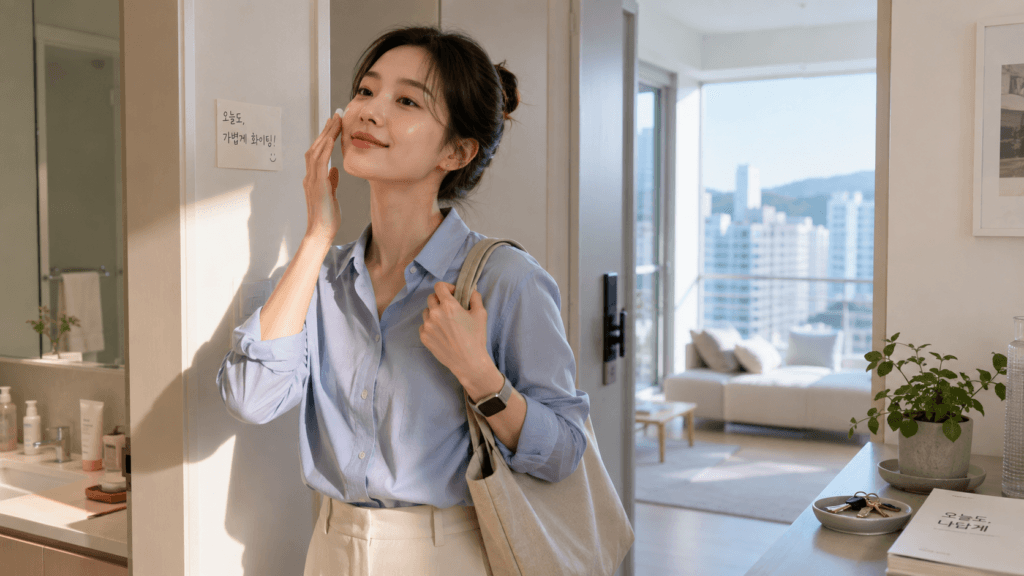
Sunscreen gradually became part of an everyday skincare routine rather than something reserved for special occasions.
It sits beside cleansers, toners, serums, and moisturizers as another daily step before leaving the house.
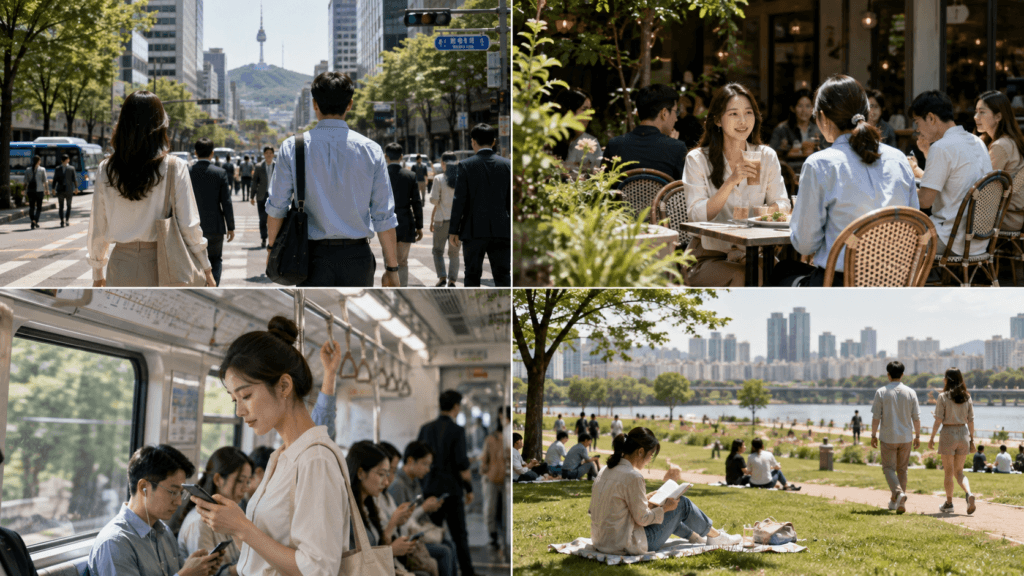
Whether someone plans to commute to work, attend university classes, stop by a neighborhood café, or simply run errands, sunscreen is often applied without much thought.
That change in purpose created a completely different challenge for cosmetic companies.
If people are expected to wear sunscreen every morning, they won’t tolerate a product that feels uncomfortable.
A heavy formula might perform well at the beach, but few people would enjoy wearing it beneath makeup or throughout an ordinary workday.
The product therefore needed to become lighter—not because lighter automatically meant better, but because comfort encourages consistency.
As discussed in Why You Should Wear Korean Sunscreen Every Day, daily protection depends less on dramatic one-time applications and more on building a habit that people actually maintain.
Texture became one of the most important ways to support that habit.
Comfort Encourages Consistency
Imagine two sunscreens offering similar levels of UV protection.
One feels thick, leaves noticeable residue, and remains sticky for hours.
The other spreads easily, absorbs quickly, and becomes almost unnoticeable after a minute or two.
Which one would you honestly choose every morning?
For most people, the answer is obvious.
The more comfortable product is usually the one that becomes part of a long-term routine.
Korean skincare brands recognized this simple truth years ago.
Instead of treating texture as a secondary feature, they began treating it as one of the product’s most important functions.
A sunscreen that feels pleasant is far less likely to be skipped.
That idea influences everything from how the formula spreads across the skin to how it behaves under makeup or during a busy workday.
Many products are designed to leave little or no heavy finish, allowing users to continue with the rest of their skincare and makeup routine without feeling like sunscreen has changed the texture of their skin.
This approach also explains why international users often describe Korean sunscreens using unexpected comparisons.
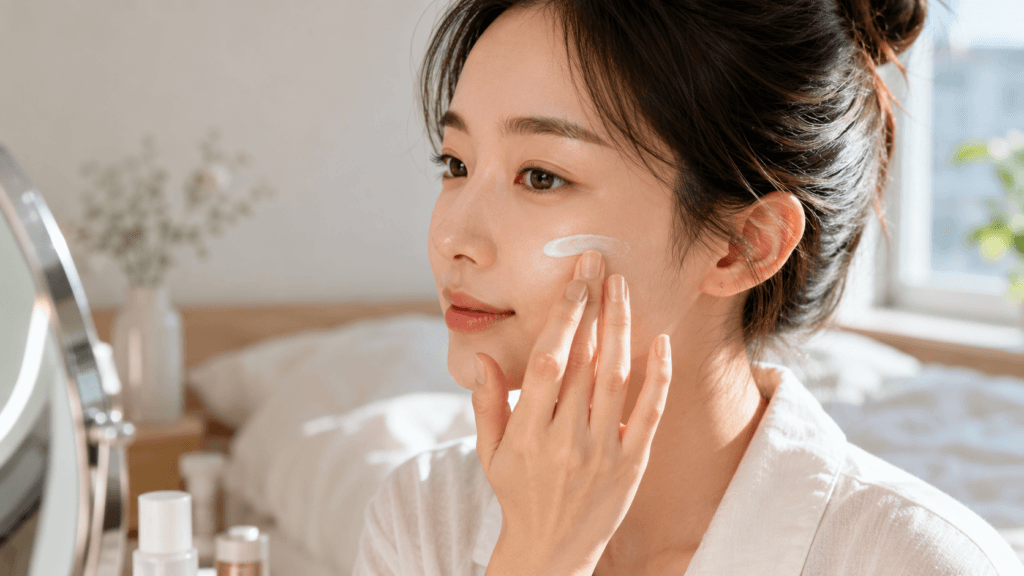
Rather than saying a sunscreen “feels protective,” many people say it feels like a lightweight moisturizer, a hydrating lotion, or even a skincare essence.
Those descriptions highlight an important shift in design philosophy.
Instead of asking people to tolerate sunscreen, Korean brands aim to make wearing it feel completely natural.
That subtle difference has played a major role in changing how people around the world think about daily sun protection.
Lightweight Doesn’t Mean Less Protection
One of the most common misunderstandings about Korean sunscreen is that a lighter texture must provide weaker protection.
The idea seems logical at first.
If a sunscreen feels thick, people often assume it creates a stronger barrier against ultraviolet rays.
If it feels almost weightless, some wonder whether enough protection is actually present.
In reality, texture and UV protection are not the same thing.
Modern sunscreen performance depends on carefully selected UV filters, how those filters are combined, and how evenly they form a protective film across the skin.
A lightweight formula can still deliver high SPF and broad-spectrum protection when it is properly designed and tested.
This is why many Korean sunscreens successfully combine a comfortable texture with strong daily protection.
Rather than forcing users to choose between effectiveness and wearability, formulators work to achieve both at the same time.
As explored in SPF vs. PA Ratings Explained: Understanding Korean Sunscreen Labels, protection is measured through standardized testing—not by how heavy or thick a product feels after application.
Understanding that distinction helps explain why Korean sunscreens often surprise first-time users.
The formula may feel lighter than expected, but its purpose remains exactly the same:
to protect the skin while making daily use feel effortless.
Korean Sunscreens Are Designed to Work With Your Entire Routine
Another reason Korean sunscreens feel so lightweight is that they are rarely designed to work alone.
Instead, they are expected to become the final step of a complete skincare routine.
For many people in Korea, the morning routine already includes cleansing, hydration, and moisturizing before sunscreen is applied.
That means sunscreen cannot behave like a thick, heavy cream that overwhelms everything underneath.
It needs to layer comfortably over skincare without causing pilling, stickiness, or an uneven finish.
It also needs to work beneath makeup.
Many office workers, students, and professionals apply sunscreen shortly before foundation or cushion makeup.
If the sunscreen leaves a greasy surface or takes too long to absorb, the rest of the routine becomes more difficult.
For cosmetic formulators, this creates a unique challenge.
A successful sunscreen must protect the skin while remaining almost invisible within the larger skincare routine.
Rather than becoming the product people notice most, it should quietly support everything that comes after it.
This layered approach explains why Korean sunscreens are often described as skincare first and sun protection second—not because UV protection is less important, but because comfort is considered essential for long-term daily use.
As discussed in Can Korean Sunscreen Replace Your Moisturizer?, many modern formulas include hydrating ingredients that help them blend naturally into an existing skincare routine without feeling like an additional heavy layer.
The Science Behind a Lightweight Formula
Creating a sunscreen that feels almost weightless is far more complicated than simply making the product thinner.
In fact, reducing thickness without carefully balancing the formula could make sunscreen less pleasant to use.
Korean cosmetic laboratories spend significant time refining the relationship between UV filters, moisturizers, emulsifiers, and texture-enhancing ingredients.
The goal is to create a formula that spreads evenly across the skin while leaving behind a smooth, flexible protective layer.
Many Korean sunscreens also use lightweight humectants and modern emulsion technologies that help the product absorb quickly without creating the heavy sensation people often associate with traditional sunscreens.
This is why textures vary so widely.
Some products feel like watery essences.
Others resemble lightweight lotions or gel creams.
Although their consistency differs, they all pursue the same objective.
Protection should feel effortless.
Another important factor is finish.
Instead of leaving an obvious layer sitting on top of the skin, many Korean sunscreens aim for a natural finish that works comfortably throughout the day.
That makes them easier to wear beneath makeup, during long commutes, or in humid summer weather.
For consumers, the science remains largely invisible.
They simply notice that the sunscreen feels pleasant.
Behind that experience, however, are years of formulation research focused on making daily sun protection something people actually enjoy.

Why International Users Notice the Difference So Quickly
Ask someone who has switched from a traditional sunscreen to a Korean formula what surprised them most, and the answers are remarkably consistent.
“It doesn’t feel sticky.”
“I forgot I was wearing sunscreen.”
“It feels more like skincare.”
These comments appear repeatedly in online reviews, skincare communities, and beauty discussions.
Interestingly, many first-time users are not comparing SPF ratings.
They are comparing how the product fits into everyday life.
For someone who previously avoided sunscreen because it felt heavy or uncomfortable, a lightweight formula changes more than texture.
It changes behavior.
Morning routines become simpler.
Reapplication feels less frustrating.
Wearing sunscreen beneath makeup no longer feels like a compromise.
In other words, people are not impressed simply because Korean sunscreens feel different.
They are impressed because those differences remove barriers that previously discouraged daily sun protection.
That may be the greatest achievement of Korean sunscreen development.
Instead of asking consumers to tolerate discomfort for better protection, the industry asked a different question.
What if sunscreen felt so comfortable that people actually wanted to wear it?
That single question has influenced product development for years, helping Korean sunscreens earn a reputation for textures that many international users now actively seek.
Lightweight Texture Reflects Korea’s Skincare Philosophy
Perhaps the biggest misconception is that lightweight texture is simply a marketing trend.
In reality, it reflects a much broader philosophy within Korean skincare.
Products are rarely designed only to solve one problem.
They are expected to fit naturally into everyday life.
That same idea explains why cleansers avoid leaving skin feeling stripped.
Why moisturizers focus on layering.
Why serums are often lightweight rather than overly rich.
And why sunscreen has evolved into something people barely notice after application.
The objective has never been to make sunscreen feel impressive.
It has been to make wearing sunscreen feel ordinary.
When protection becomes comfortable, consistency becomes easier.
When consistency improves, long-term skin health becomes much more achievable.
That connection between product design and daily habits is one of the reasons Korean skincare has attracted so much global attention.
The products are not only formulated differently.
They are designed around the way people actually live.
Conclusion
The lightweight feel of Korean sunscreen is not the result of weaker protection or clever marketing alone.
It is the outcome of years of product development centered around one simple goal:
Make sunscreen comfortable enough that people never want to skip it.
That philosophy has shaped everything from formulation technology and texture to how sunscreen fits within a complete skincare routine.
Instead of creating products that people wear only for vacations or outdoor activities, Korean brands developed formulas designed for ordinary mornings, busy commutes, office hours, and everyday life.
When sunscreen feels pleasant, applying it becomes a habit instead of a chore.
That small shift changes everything.
People become more consistent.
Daily protection becomes easier.
And sunscreen quietly transforms from something people remember only on sunny days into something they naturally reach for every morning.
Perhaps that is why Korean sunscreens have earned such a loyal global following.
They don’t simply protect the skin.
They make protecting the skin feel effortless.
Frequently Asked Questions
Why do Korean sunscreens feel lighter than many Western sunscreens?
Many Korean sunscreens are formulated for daily use rather than occasional outdoor activities. Cosmetic companies focus heavily on creating lightweight textures that encourage people to wear sunscreen comfortably every day.
Does lightweight sunscreen provide enough UV protection?
Yes. A lightweight texture does not automatically mean lower protection. UV protection depends on the sunscreen’s tested SPF, PA rating, and formulation—not how thick or heavy it feels.
Why do Korean sunscreens work well under makeup?
Many Korean formulas are designed to layer smoothly with skincare and cosmetics. They absorb quickly and leave a comfortable finish that helps foundation and other makeup products apply more evenly.
Are all Korean sunscreens lightweight?
Not all of them. Korean brands offer gel, lotion, cream, and essence textures to suit different skin types and preferences. However, many products prioritize comfortable daily wear.
Why do so many people switch to Korean sunscreen?
Many international users appreciate that Korean sunscreens combine effective sun protection with comfortable textures, making daily sunscreen use easier to maintain over the long term.
Continue Exploring
If you enjoyed this article, you may also like: