To many casual listeners, a new K-pop album seems to appear overnight.
Fans listen to the songs.
Watch the music video.
Share it on social media.
Then life moves on.
For dedicated fandoms, however, a comeback begins long before the first song is released.
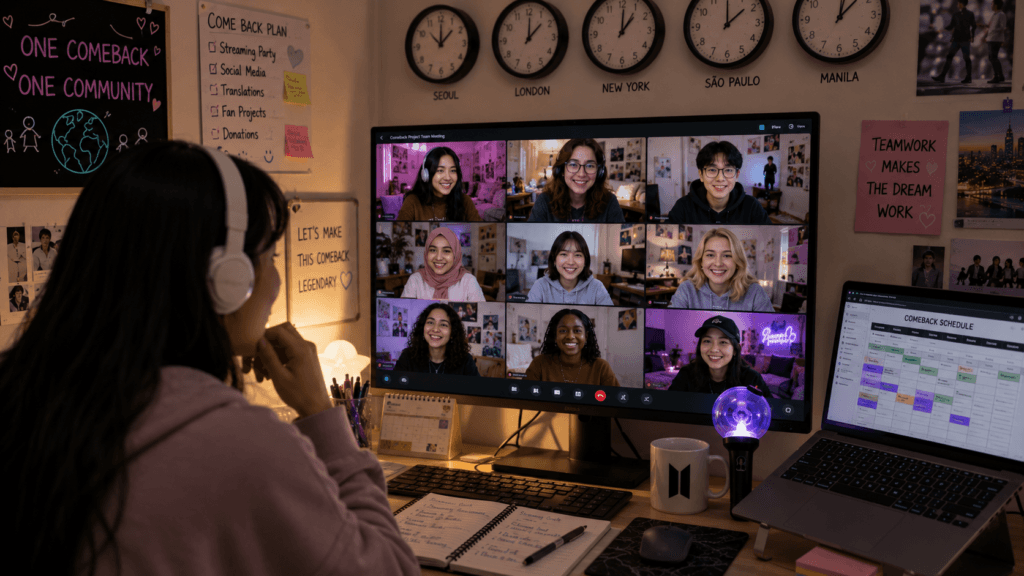
Weeks in advance, fan communities across different countries quietly begin preparing.
Volunteers translate announcements.
Regional fan leaders coordinate schedules across multiple time zones.
Designers create easy-to-follow guides.
Experienced fans answer questions from newcomers.
By the time an album officially launches, thousands of people already understand how they plan to support it together.
To outsiders, this level of organization can seem surprising.
Why would fans invest so much time before a song is even available?
The answer reveals something unique about Korean fandom culture.
Global streaming events are not simply about increasing numbers.
They are about creating a shared experience where fans around the world participate in the same moment, despite living thousands of kilometers apart.
Streaming Events Begin Long Before Release Day
One of the biggest misconceptions about K-pop streaming events is that they begin when a music video is uploaded.
In reality, preparation often starts much earlier.
As comeback announcements appear, fan communities begin sharing countdown schedules, time-zone conversions, artwork, and practical guides that help members understand what to expect.
This preparation serves an important purpose.
K-pop fandoms are global.
A release scheduled for midnight in Korea may happen during the afternoon in Europe or early morning in North America.
Without planning, many fans would miss the shared experience altogether.
Careful coordination allows people from dozens of countries to celebrate together even though they are separated by geography.
That international cooperation has become one of the defining characteristics of modern K-pop fandom.
Thousands of Small Contributions Create One Global Event
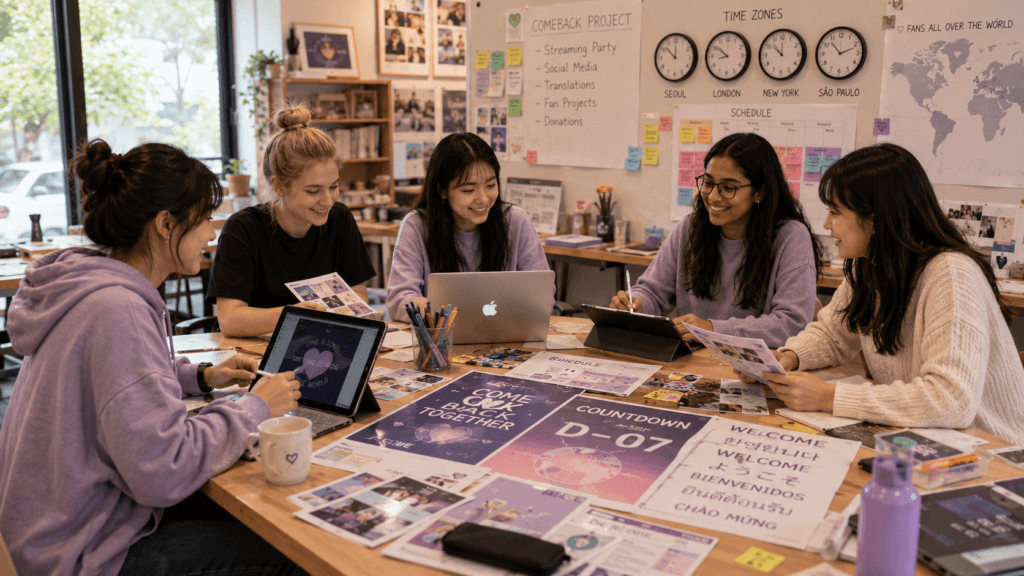
Large streaming campaigns rarely depend on a few organizers.
Instead, they succeed because thousands of fans contribute in different ways.
Some create graphics.
Others translate announcements.
Experienced members explain platform features to newcomers.
Community leaders answer questions throughout the event.
Many participants simply join at the scheduled time and enjoy the music together.
None of these individual actions seems extraordinary on its own.
Together, however, they create something much larger than any single person could organize alone.
This collaborative approach reflects one of the core ideas explored in Why Korean Fandom Culture Is Different From Western Fandom—support is often viewed as a shared community effort rather than an individual activity.
Streaming Events Are About Community, Not Competition
One of the biggest misunderstandings about K-pop streaming events is the belief that fans participate only to increase numbers.
Streaming statistics certainly matter, but they are rarely the whole story.
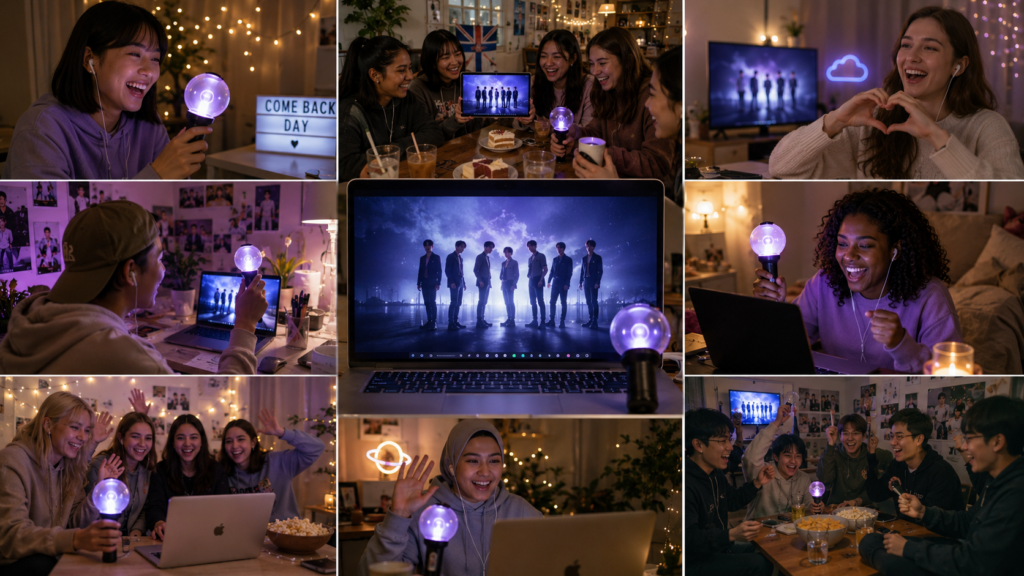
For many fans, these events have become shared celebrations.
Friends gather online.
Communities chat in real time.
People from different countries experience the same comeback together, even if they have never met in person.
The atmosphere often feels closer to watching the final match of an international sporting event than quietly listening to music alone.
Fans celebrate favorite moments.
Share reactions.
Recommend B-side tracks.
Welcome newcomers who are experiencing a comeback for the first time.
The numbers may attract media attention, but the sense of belonging is often what keeps people returning for the next event.
Global Organization Happens Without a Central Headquarters
Unlike official marketing campaigns, most fan-organized streaming events operate through decentralized communities.
There is rarely one organization directing every activity.
Instead, local fan communities communicate with one another, adapt schedules for different regions, and share helpful resources that fit their own languages and audiences.
This flexible structure allows thousands of independent groups to work toward the same goal while still maintaining their own identities.
One community may create beginner-friendly streaming guides.
Another may translate official announcements.
Others focus on accessibility, ensuring that fans from different countries can participate comfortably.
Rather than following a rigid hierarchy, these communities succeed because people voluntarily contribute the skills they already have.
That collaborative model has become one of the defining strengths of Korean fandom culture.
Streaming Events Strengthen Long-Term Fan Communities
Interestingly, the impact of a streaming event often continues long after release day.
Many fans first meet through comeback activities before remaining active within the same community for months or even years.
Some later organize charity projects.
Others become translators, photographers, event volunteers, or moderators who help welcome new members.
In this way, a streaming event becomes more than a promotional activity.
It becomes an entry point into a larger community.
That long-term relationship explains why Korean fandoms often remain active between album releases.
People are not simply waiting for the next song.
They are maintaining friendships and shared traditions that continue throughout the year.
As discussed in Why Korean Fandom Culture Is Different From Western Fandom, this ongoing sense of community is one of the characteristics that distinguishes many Korean fan communities from more casual entertainment audiences.
Why Entertainment Companies Pay Attention
Entertainment companies certainly notice successful streaming campaigns, but their value extends beyond impressive numbers.
Highly organized fan communities demonstrate something even more important.
They show long-term trust.
A fandom that consistently collaborates across countries is far more likely to support future albums, concerts, merchandise, and other creative projects.
From an industry perspective, streaming events reveal the strength of a community rather than simply the popularity of a single song.
That is one reason Korean entertainment companies increasingly invest in communication, fan platforms, multilingual content, and community-building initiatives.
The strongest fandoms are not built overnight.
They grow through years of shared experiences that create lasting relationships between artists and audiences.
Conclusion
Global K-pop streaming events are often misunderstood as coordinated efforts focused only on numbers.
In reality, they reflect something much deeper.
They demonstrate how modern fan communities can collaborate across languages, cultures, and time zones while creating meaningful shared experiences.
For many participants, streaming is only one small part of a much larger journey.
The real value lies in the friendships formed, the traditions maintained, and the feeling of celebrating important moments together.
Understanding these events helps explain why Korean fandom has become more than a cultural trend.
It has become a model of global community participation that continues influencing entertainment audiences around the world.
Frequently Asked Questions
What is a K-pop streaming event?
A K-pop streaming event is a fan-organized activity where supporters around the world listen to new music or watch official releases together while celebrating an artist’s comeback.
Why do K-pop fans organize streaming events?
Many fans enjoy experiencing important releases together, supporting artists, welcoming new community members, and participating in shared celebrations.
Are streaming events officially organized by entertainment companies?
Most are organized independently by fan communities, although companies may provide schedules and official promotional content that fans use as references.
Do fans from different countries participate together?
Yes. Many streaming events involve participants from multiple countries who coordinate across different time zones using online communities and multilingual resources.
Are streaming events only about increasing view counts?
No. While streaming statistics receive attention, many fans value the community experience, friendships, and shared celebration just as much as the numbers themselves.
Continue Exploring
If you enjoyed this article, you may also like:
- Why Korean Fandom Culture Is Different From Western Fandom
- How Korean Fandom Culture Is Revolutionizing the Global Entertainment Industry
- The Future of Korean Entertainment Beyond Netflix
- Why Korean Dramas Dominate Netflix Global Rankings
- How Korean Webtoons Become Hit Dramas
- Why Global Companies Study Korean Fandom