For many visitors, a Korean home can feel both familiar and surprisingly different.
There is a living room, bedrooms, a kitchen, and a bathroom, just as you would expect in many countries.
Yet after spending even a short time inside, you begin noticing small details that quietly shape everyday life.
Shoes stay at the entrance.
The floor feels unusually warm during winter.
The kitchen seems smaller than expected.
Laundry happens in a hidden utility space.
A second refrigerator stores only kimchi.
None of these choices exist on their own.
Together, they reveal something much larger than interior design.
They reflect Korean home culture—a way of living that has been shaped by family traditions, limited urban space, changing technology, and the practical realities of modern life.
Understanding Korean homes isn’t simply about learning why rooms look different.
It’s about understanding how millions of people organize their daily routines, care for their families, and create comfortable living spaces within one of the world’s most densely populated countries.
Whether you plan to visit Korea, move there, or are simply curious about everyday Korean life, the home offers one of the clearest windows into Korean culture itself.
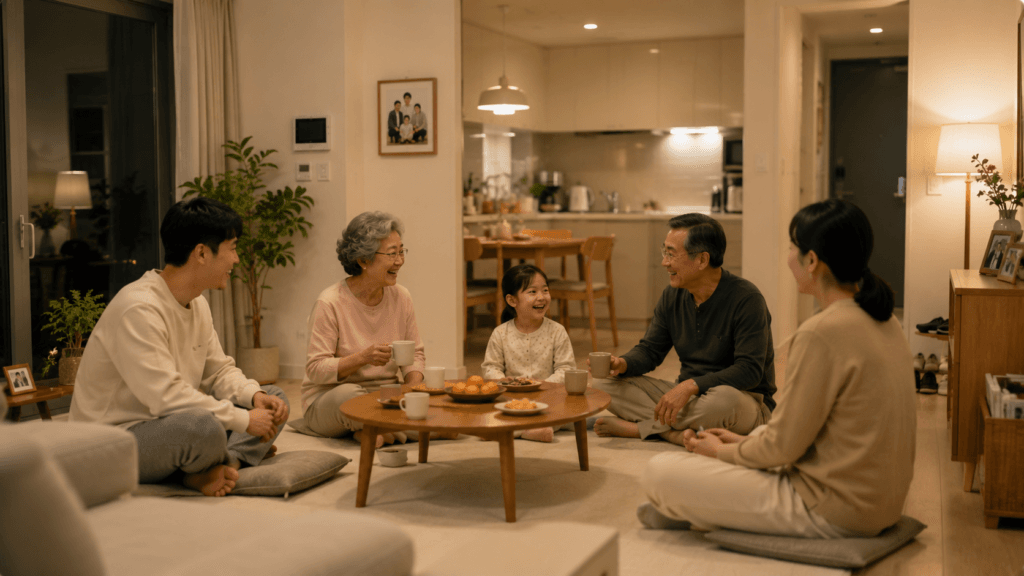
Every Korean Home Reflects Everyday Life
Unlike historical palaces or traditional villages, most Korean homes were never designed to impress visitors.
They were designed to make ordinary life easier.
That practical mindset appears almost everywhere.
The entrance separates outdoor life from indoor comfort.
Storage keeps compact homes organized.
The kitchen focuses on efficiency rather than size.
Specialized appliances solve specific daily problems.
Even spaces that guests rarely notice—such as utility balconies—exist because they quietly support household routines.
Rather than adding unnecessary rooms, Korean homes often give each space a clear purpose.
Over time, these practical decisions became cultural habits.
Children naturally learn to remove their shoes.
Families gather on the warm floor during winter.
Laundry, recycling, and cleaning happen away from the main living space.
Food storage reflects traditions that have existed for generations while adapting to modern technology.
Each habit may seem small by itself.
Together, they create a home that feels distinctly Korean.
Many of these features are especially visible in today’s apartment buildings, where thoughtful design helps families make the most of limited urban space.
As explored in Korean Apartment Culture: Why Apartments Shape Everyday Life in Korea, modern housing has influenced not only where Koreans live but also how everyday routines have evolved.
Tradition and Modern Living Exist Side by Side
One of the most interesting aspects of Korean home culture is the way old traditions continue inside modern homes.
A newly built apartment may include smart home controls, digital security systems, and energy-efficient appliances.
Yet many daily customs would still be recognizable to previous generations.
Families continue removing shoes before entering.
The floor remains an important gathering place.
Meals are often shared from the center of the table.
Respect for cleanliness continues to shape how different parts of the home are used.
Rather than replacing tradition, modern technology often supports it.
Ondol heating, for example, has evolved dramatically over time.
The original heating system relied on wood-fired flues beneath the floor.
Today’s apartments use advanced heating technology, but the experience remains remarkably similar.
Warm floors continue encouraging family members to sit, relax, and spend time together close to the ground.
Likewise, the kimchi refrigerator represents an old food tradition supported by modern engineering rather than replacing it.
This balance between tradition and innovation appears throughout Korean homes.
New technology rarely changes the underlying philosophy.
Instead, it makes familiar routines more comfortable, efficient, and convenient.
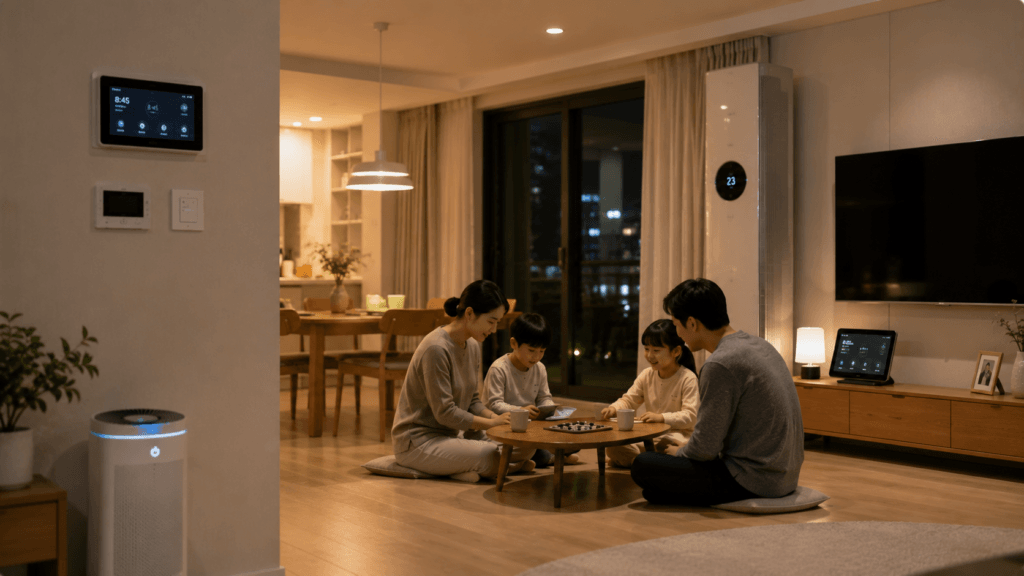
Home Design Tells the Story of Korean Priorities
Many features inside Korean homes become much easier to understand once viewed through the lens of everyday priorities.
Comfort often takes precedence over display.
Efficiency matters more than unnecessary space.
Cleanliness influences the layout of nearly every room.
Storage is carefully integrated rather than added later.
Instead of asking why Korean homes are different, a better question may be:
“What daily problem is this feature trying to solve?”
That simple perspective explains many of the design decisions visitors notice.
Removing shoes helps keep the living space clean.
Built-in shoe cabinets prevent clutter at the entrance.
Compact kitchens reduce unnecessary movement during cooking.
Utility balconies separate household work from family spaces.
Specialized refrigerators improve long-term food storage.
None of these features are isolated ideas.
They work together to support daily life.
The result is a home designed less around appearance and more around how people actually live.
Everyday Habits Matter More Than Individual Rooms
One reason Korean homes feel different is that they are designed around routines rather than individual rooms.
Visitors sometimes focus on what they can immediately see—a shoe cabinet, heated floors, or a smaller kitchen.
Residents, however, experience these features as part of one continuous flow through the day.
The morning begins by stepping onto a warm floor.
Shoes are put on only when leaving the entrance.
Laundry quietly runs in a utility area while breakfast is prepared.
Packages arrive at the apartment building during the afternoon.
Family members return home in the evening, naturally gathering in the living room without giving much thought to the design choices surrounding them.
The house supports these routines so well that most people hardly notice them anymore.
That is perhaps the greatest success of Korean home design.
Good design disappears into everyday life.
Rather than demanding attention, it quietly removes small inconveniences before they become problems.
This practical philosophy explains why so many seemingly unrelated features work together so naturally.
As explored throughout this Home & Apartment series, each element solves a different everyday challenge.
Why Koreans Always Take Off Their Shoes Indoors explains how cleanliness begins at the entrance.
How Ondol Heating Shaped Korean Home Culture shows why the floor remains central to family life.
Why Korean Kitchens Are Smaller Than You Expect demonstrates how efficient layouts often matter more than large spaces.
Why Korean Apartments Have Hidden Utility Spaces Behind the Kitchen reveals how household work is carefully separated from the main living area.
Individually, these choices may seem minor.
Together, they create a home that supports daily life with remarkable efficiency.
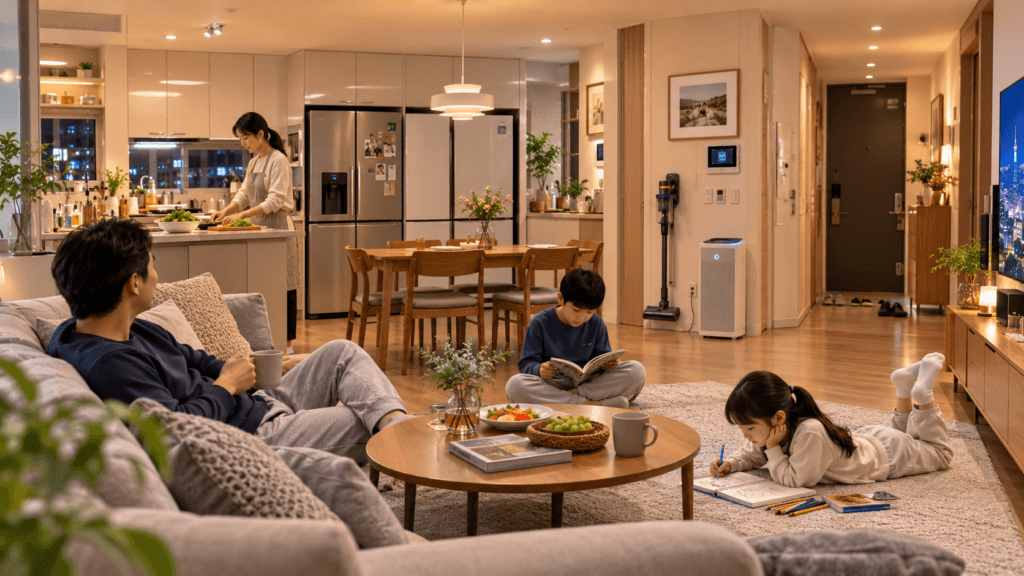
Why Korean Homes Continue to Evolve
Korean homes have never remained completely unchanged.
As lifestyles evolve, homes evolve with them.
Over the past few decades, rapid urbanization, smaller family sizes, and advances in technology have gradually reshaped domestic life.
Smart home systems now allow residents to control lighting, heating, and security from their phones.
Parcel lockers make online shopping more convenient.
Energy-efficient appliances reduce household costs.
Apartment buildings increasingly include fitness centers, cafés, community rooms, and landscaped gardens that extend daily life beyond the apartment itself.
Yet despite these changes, the fundamental philosophy remains remarkably consistent.
Comfort still matters.
Practicality still guides design.
Shared family life continues to influence how space is organized.
Modern technology has not replaced Korean home culture.
Instead, it has quietly strengthened many of the routines that already existed.
A smart heating system still supports ondol living.
Digital entry systems still protect the clean separation between public and private space.
Improved storage solutions continue helping families make the most of relatively compact homes.
This balance between innovation and continuity is one reason Korean homes often feel both modern and deeply rooted in tradition at the same time.
Why Understanding Korean Homes Helps You Understand Korea
It is easy to think of a home as simply the place where people sleep.
In Korea, it often represents something much broader.
A home reflects how people value cleanliness without unnecessary rules.
It shows how limited space can become comfortable through thoughtful design.
It demonstrates how technology works best when it quietly supports everyday life instead of constantly demanding attention.
Most importantly, it reveals how family routines shape the spaces people build around themselves.
When visitors first notice warm floors, shoe cabinets, kimchi refrigerators, or compact kitchens, they are really seeing the visible results of much deeper cultural priorities.
Efficiency.
Comfort.
Respect for shared space.
And the belief that a well-designed home should make ordinary life feel a little easier every day.
Understanding Korean home culture is therefore not simply about architecture or interior design.
It is about understanding how millions of people experience daily life inside the place that matters most—their home.
Frequently Asked Questions
What makes Korean home culture unique?
Korean home culture emphasizes cleanliness, efficient use of space, family-centered living, and practical design that supports everyday routines.
Why do Koreans remove their shoes indoors?
Removing shoes helps keep living spaces clean, especially because families often sit, relax, and sometimes sleep on the floor.
Are traditional customs still common in modern Korean homes?
Yes. While modern homes include advanced technology, many traditional habits—such as floor-centered living, ondol heating, and shared family meals—remain part of everyday life.
Do most Koreans live in apartments?
Yes. Apartments are the dominant housing type in Korea, and many features of modern Korean home culture have developed alongside apartment living.
Why do Korean homes seem so organized?
Built-in storage, efficient layouts, specialized spaces, and practical design help families keep homes comfortable without requiring large amounts of living space.
Continue Exploring
If you enjoyed this article, you may also like:
- Korean Apartment Culture: Why Apartments Shape Everyday Life in Korea
- Inside a Typical Korean Apartment: What Every Room Reveals About Korean Life
- Why Koreans Always Take Off Their Shoes Indoors
- How Ondol Heating Shaped Korean Home Culture
- Why Korean Families Still Use Kimchi Refrigerators
- Why Korean Apartments Have Hidden Utility Spaces Behind the Kitchen