If you visit a Korean home for the first time, you may notice something surprising in the kitchen or utility area.
There isn’t just one refrigerator.
There are two.
For many visitors, the obvious question comes immediately:
“Why would a family need another refrigerator?”
At first glance, it seems unnecessary. Modern refrigerators are already large enough to hold fresh vegetables, frozen food, drinks, leftovers, and snacks. Adding an entirely separate refrigerator appears excessive.
But once you begin to understand Korean food culture, the second refrigerator starts to make perfect sense.
A kimchi refrigerator isn’t simply extra storage. It reflects how Korean families cook, eat, and preserve traditions every single day. Even as apartments become smarter and kitchens become more modern, this appliance continues to hold an important place in everyday life.
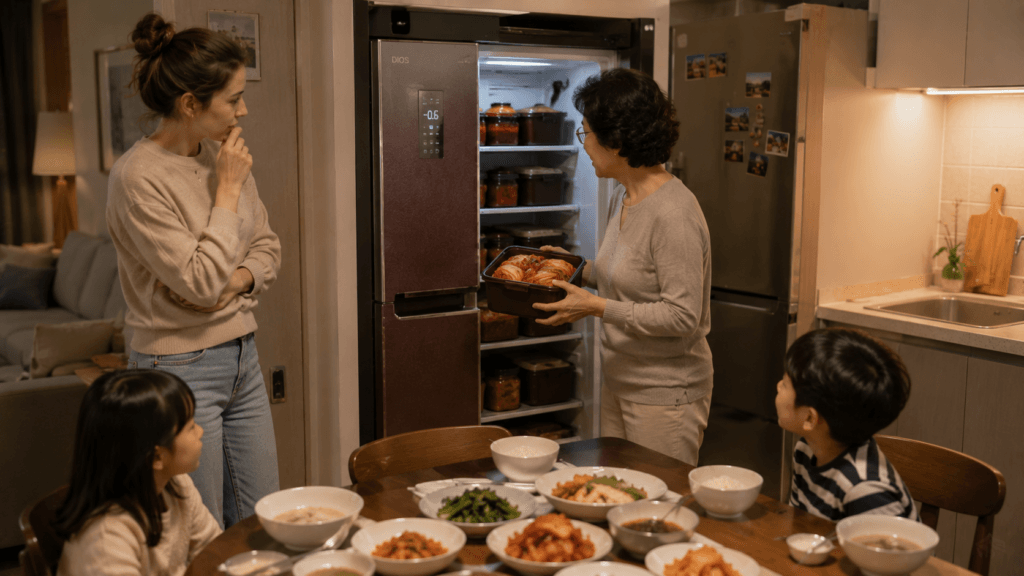
Kimchi Is Always Changing
One reason a standard refrigerator isn’t ideal is that kimchi is never completely finished.
Unlike many foods that simply become cold after being refrigerated, kimchi continues to ferment. Temperature affects how quickly that process happens, influencing flavor, texture, and aroma.
Small temperature differences can produce noticeably different results over time.
A traditional refrigerator is designed to store many different kinds of food at once. Every time someone opens the door to grab milk, fruit, or drinks, warm air briefly enters the refrigerator before cooling again.
For vegetables or beverages, these small temperature changes usually don’t matter.
For fermenting kimchi, however, consistency matters.
Kimchi refrigerators were specifically designed to maintain stable temperatures that help preserve flavor over longer periods. Instead of slowing fermentation randomly, they carefully support the process so the kimchi develops naturally without becoming overly sour too quickly.
This allows families to enjoy kimchi at different stages depending on their personal preference.
For many households, the appliance isn’t about making kimchi—it helps keep homemade kimchi tasting the way the family likes it for weeks or even months.
Every Family Has More Than One Kind of Kimchi
Many people outside Korea imagine kimchi as a single dish.
In reality, most Korean households enjoy several different varieties throughout the year.
A family refrigerator may contain:
- Napa cabbage kimchi
- Radish kimchi (kkakdugi)
- Young radish kimchi (yeolmu kimchi)
- Water kimchi
- White kimchi
- Seasonal homemade kimchi
Each variety has its own ingredients, moisture level, fermentation speed, and ideal serving time.
Some are meant to be eaten almost immediately.
Others continue developing flavor over several weeks.
During autumn, many families prepare large batches of kimchi together in a tradition known as kimjang. Instead of making enough for only a few days, they often prepare enough to last through much of the winter.
That amount of food simply doesn’t fit comfortably inside an ordinary kitchen refrigerator alongside everything else the family needs.
A kimchi refrigerator provides dedicated space where multiple containers can be organized without competing with everyday groceries.
For Korean families, this organization feels practical rather than luxurious.
It Protects More Than Just Kimchi
Anyone who has stored kimchi inside a regular refrigerator knows one common challenge.
The aroma spreads easily.
Although modern food containers seal remarkably well, fermented foods naturally produce distinctive smells over time.
Keeping kimchi in a separate refrigerator helps reduce the transfer of odors to fresh fruit, cakes, desserts, dairy products, and beverages.
At the same time, it protects the kimchi itself.
Fresh produce often releases moisture or ethylene gas as it ripens. Separating different foods helps maintain better storage conditions for both.
The goal isn’t simply isolation.
It’s creating an environment where every ingredient can stay fresh for as long as possible.
This practical approach reflects a broader philosophy found throughout many Korean homes. Living spaces are often designed around everyday routines rather than appearance alone. Features such as built-in shoe cabinets, heated ondol floors, and dedicated utility balconies quietly support daily life without drawing attention to themselves.
The kimchi refrigerator follows exactly the same principle.
It exists because it makes everyday family life easier.
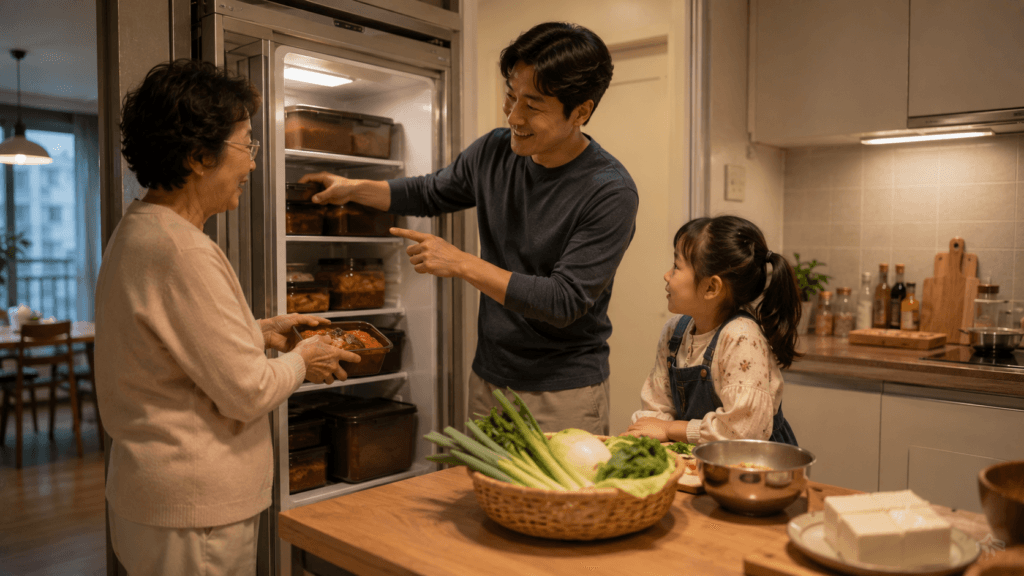
The Kimchi Refrigerator Became Part of Family Life
Over time, the appliance has become more than a place to store fermented vegetables.
It has quietly become part of family routines.
Before dinner, someone naturally opens the kimchi refrigerator.
During holidays, larger containers are taken out for shared meals.
Children grow up watching parents choose different kimchi depending on the menu.
No one stops to think about the appliance itself.
It’s simply another step in preparing dinner.
Visitors often notice the second refrigerator because it looks unusual.
Korean families rarely notice it anymore because it has become part of ordinary life.
The appliance quietly disappears into the background—exactly as good household design often does.
Its success isn’t measured by how impressive it looks.
It’s measured by how naturally it fits into everyday routines.
Modern Homes Still Make Space for It
Many countries have embraced open kitchens and minimalist interiors.
Korean homes have also become more modern.
Smart appliances, compact apartments, and efficient layouts are now common across the country.
Despite these changes, kimchi refrigerators haven’t disappeared.
Instead, manufacturers have adapted them to modern lifestyles.
Today’s models often feature cleaner designs, flexible storage compartments, and quieter operation that blend naturally into contemporary apartments.
Some families place them in utility spaces.
Others integrate them into kitchen cabinetry.
Some younger households even use them for storing vegetables, rice cakes, beverages, or ingredients that benefit from carefully controlled temperatures.
Even when their role expands beyond kimchi, the original purpose remains the same:
Supporting everyday family meals.
The appliance has evolved with Korean homes instead of becoming outdated.
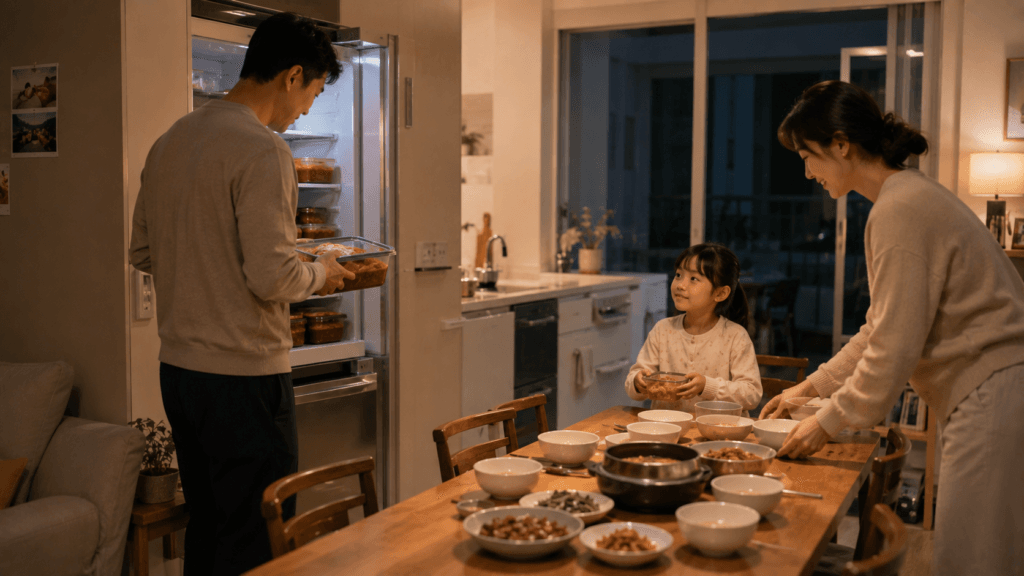
More Than an Appliance, It’s Part of Korean Food Culture
Looking at a kimchi refrigerator purely as a household appliance misses the bigger picture.
Its continued popularity isn’t driven by technology alone.
It’s driven by habits.
Families continue making homemade kimchi.
Shared meals remain an important part of everyday life.
Different generations still gather around the dinner table.
The appliance supports those traditions without asking for attention.
That may be why visitors often find it fascinating.
It isn’t simply a second refrigerator.
It represents a food culture that values preparation, patience, sharing, and preserving flavors across seasons.
While many household trends come and go, the kimchi refrigerator has remained surprisingly consistent because it continues solving the same everyday need.
For millions of Korean families, it quietly belongs exactly where it has always been—right beside the kitchen, ready for another family meal.
Conclusion
The question isn’t really why Korean families own two refrigerators.
The better question is why one refrigerator was never enough for the way Korean families eat.
Kimchi is more than a side dish. It changes over time, appears in countless varieties, and plays a central role in everyday meals. A dedicated refrigerator helps preserve those traditions while making daily life simpler and more organized.
To visitors, it may look like an unusual appliance.
To Korean families, it’s simply another part of home.
That quiet difference explains why the kimchi refrigerator continues to be found in so many homes, even as Korean lifestyles become increasingly modern.
FAQ
Why do Korean families have two refrigerators?
One refrigerator stores everyday groceries, while the kimchi refrigerator provides stable conditions for fermenting and preserving kimchi and other foods that benefit from carefully controlled temperatures.
Do all Korean homes have a kimchi refrigerator?
Not every household owns one, but they are extremely common, particularly among families who regularly prepare or eat homemade kimchi.
Can a kimchi refrigerator store other foods?
Yes. Many families also use it for vegetables, rice cakes, fermented foods, and seasonal ingredients that stay fresher under stable temperature conditions.
Is a kimchi refrigerator only for older generations?
No. Although it has long been associated with traditional households, many younger families continue using kimchi refrigerators because they fit naturally into modern Korean cooking habits.
Continue Exploring
If you enjoyed this article, you may also like: