If you have sensitive skin, your relationship with traditional heavy moisturizers is likely a love-hate story. You slather on a thick, expensive cream before bed to fight dryness, only to wake up with clogged pores, random tiny bumps, or that frustrating, burning redness.
Most people think the answer is to buy an even heavier cream. But according to modern skin science, that is exactly where the mistake happens.
Heavy creams often just sit on top of the skin, acting as a temporary blanket. They don’t actually fix a damaged stratum corneum (your outermost skin barrier). This is why the modern skincare industry is shifting toward liquid barrier support, specifically targeting the best Korean milky toner for sensitive skin to heal from within.
If your skin easily freaks out from harsh ingredients or environmental changes, here is why a milky toner is the missing puzzle piece in your routine.
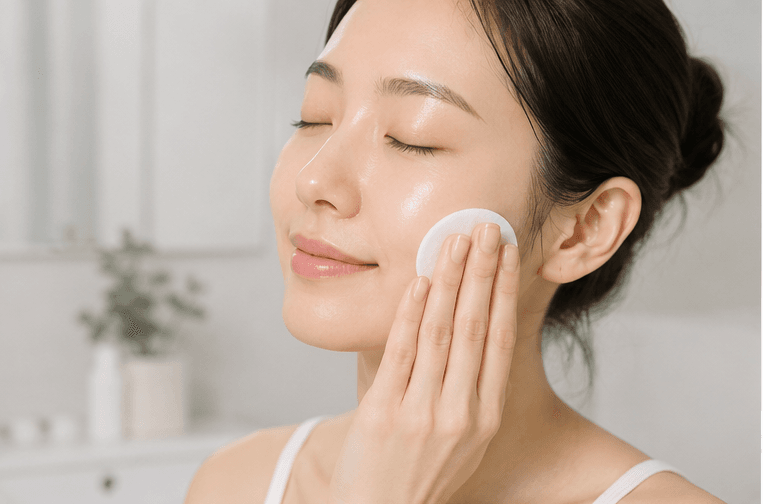
The Root Problem: Why Thick Creams Fail Sensitive Skin
When your skin barrier is compromised, it develops microscopic cracks. If you apply a thick, emollient-heavy cream directly over these cracks, it can trap dead skin cells and bacteria, leading to irritation and breakouts.
This is especially true for sensitive and acne-prone skin types. Your skin doesn’t need to be suffocated; it needs to be replenished with bio-compatible moisture.
This is where Korean formulation science shines. K-beauty introduced the concept of the milky toner—a hybrid liquid packed with ceramides, panthenol, and fermented rice extracts. Because it has a lightweight, emulsified milk texture, it flows effortlessly into those microscopic cracks, delivering deep hydration without relying on heavy waxes or pore-clogging oils.
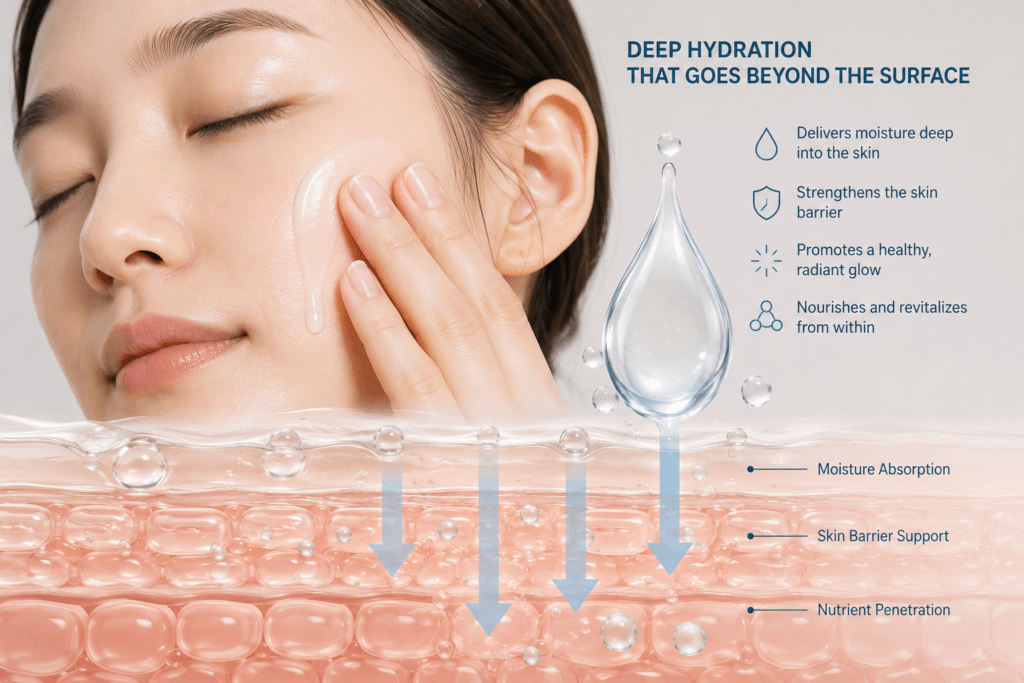
How “Skin Layering” Rebuilds a Damaged Barrier
The real magic of using a Korean milky toner lies in the technique known as skin layering (or the 3-skin method for sensitive types).
Instead of putting one suffocating layer of cream on your face, you apply 2 to 3 paper-thin layers of a soothing milky toner.
- Layer 1: Instantly calms post-cleansing tightness and balances your skin’s pH.
- Layer 2: Penetrates deeper to flood the skin cells with amino acids and fatty acids.
- Layer 3: Creates a weightless, breathable moisture shield that mimics your natural skin barrier.
By the time you finish layering, your skin feels deeply plumped and bouncy, completely eliminating the need for a heavy, greasy topcoat.
What to Look for if Your Skin Easily Flushes
When hunting for the best Korean milky toner for sensitive skin, you must bypass the marketing fluff and look straight at the ingredient list. True barrier-repairing liquids avoid synthetic fragrances, drying alcohols, and essential oils.
Instead, look for these three gold-standard ingredients:
•Ceramides & Panthenol: The ultimate duo for locking in moisture and physically repairing cellular gaps.
•Rice Bran Extract / Rice Water: A traditional Korean staple that naturally brightens dullness while soothing reactive, eczema-prone skin.
•Centella Asiatica (Cica) or Milk Peptides: Essential for reducing instant redness and cooling down skin that feels hot to the touch.
What’s Next?
Understanding the why is only half the battle. Now that you know how a milky toner structurally changes your skin barrier, the next step is choosing a formula that won’t cause a reaction.
In our next guide, we will break down the actual cult-favorite products dominating the U.S. market—including a deep dive into viral options like the Anua Rice 70 Glow Milky Toner and Tirtir Milk Skin—so you can find your exact skin match.
You May Also Like
•The $3 Skincare Revolution: Why Viral Daiso Beauty Products Are Conquering the U.S.
•Haven’t checked your skin diagnosis results yet? Take the free test here.
•The New Era of Skincare: How ‘K-Beauty Tech Trends’ are Revolutionizing Global Aesthetics
•Personal Color Analysis: The Complete Beginner’s Guide
•K-beauty slow aging: Why Prevention is Better Than Correction
•Korean food philosophy slow aging: The Secret of Korean “Yak-Sik-Dong-Won” (Food as Medicine)