When a K-pop artist reaches the top of an international music chart, headlines often focus on one question.
“How did this happen?”
Many people assume the answer is simple.
More streams.
More album sales.
More fans.
Those numbers certainly matter—but they don’t explain why Korean artists consistently appear on charts once dominated by Western musicians.
Behind every successful comeback is something much larger than individual listeners.
Across dozens of countries, thousands of fans quietly organize translations, countdown schedules, streaming guides, charity projects, and online communities that help millions of people participate together.
The result isn’t simply higher numbers.
It’s a global network of highly engaged audiences who transform individual support into collective momentum.
Understanding how this happens reveals something important about modern entertainment.
Today’s music charts no longer measure popularity alone.
They also reflect how effectively communities around the world can organize, communicate, and remain engaged over time.
Music Charts Reflect More Than Listening Habits
Many people think music charts simply measure which songs people enjoy the most.
In reality, modern charts combine many different forms of audience activity.
Streaming.
Digital downloads.
Physical album sales.
Radio airplay.
Fan voting.
Social engagement.
Each platform uses its own methodology, but together they create a broader picture of public interest.
This is one reason dedicated fan communities have become increasingly important.
Rather than focusing on only one form of support, many Korean fandoms encourage participation across multiple activities that help artists remain visible throughout an entire promotional period.
Understanding these systems doesn’t mean “gaming” the charts.
It means recognizing that modern music success depends on many forms of audience engagement rather than passive listening alone.
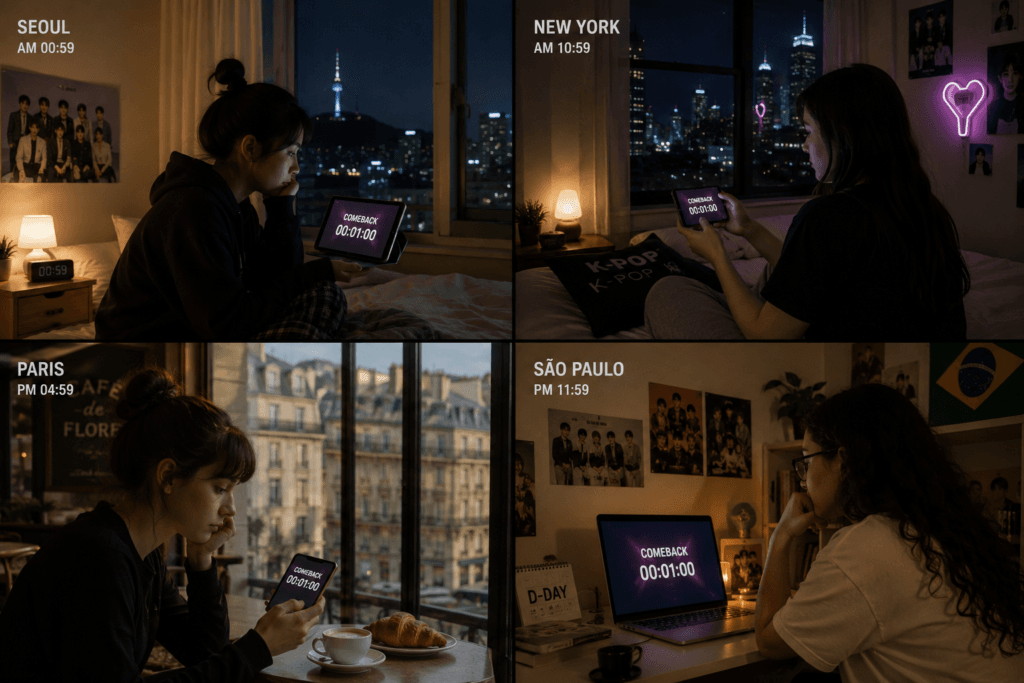
Thousands of Small Actions Create Global Visibility
One fan streaming a new song has almost no measurable impact on global rankings.
Millions of fans acting independently—but with shared information—create something very different.
Some people translate announcements into multiple languages.
Others explain release schedules for different regions.
Community volunteers answer questions from new fans.
Designers create countdown graphics.
Regional leaders organize local participation without controlling the entire community.
Most participants simply enjoy the music.
Yet each small contribution makes it easier for someone else to discover the artist.
This decentralized collaboration has become one of Korean fandom’s greatest strengths.
Rather than depending on a single organization, communities grow because thousands of people voluntarily contribute whatever skills they already have.
As explored in How K-pop Fans Organize Global Streaming Events, these efforts usually begin long before an album or music video is officially released.

Long-Term Communities Matter More Than Viral Moments
A song may go viral for a few days.
A strong fandom can support an artist for years.
This is one of the biggest differences between temporary online trends and sustainable global success.
When Korean artists consistently appear on international charts, it is rarely because of one successful promotional campaign.
Instead, it reflects years of trust built between artists and their communities.
Fans who participate in one comeback often return for the next.
They introduce new listeners.
Help newcomers understand the artist’s music.
Share translated interviews.
Recommend performances and older albums.
Over time, these small efforts create a community that continues growing naturally rather than depending on constant advertising.
That long-term relationship is one reason Korean entertainment companies increasingly invest in fan communication instead of focusing only on traditional marketing.
Global Charts Are Also Cultural Conversations
Music charts measure more than commercial success.
They also reveal how culture travels across borders.
A listener in Brazil may discover a Korean artist because a local fan community translated an interview.
Someone in France may become interested after watching a subtitled performance shared online.
A student in Canada may join a comeback discussion because friends introduced them to the group months earlier.
None of these moments appears directly on a chart.
Yet together they help explain why Korean artists continue reaching new audiences.
Behind every international ranking is a much larger story about people sharing culture, language, and enthusiasm across continents.
This is why many researchers now view K-pop fandom as a form of global cultural participation rather than simply a music audience.

Influence Comes From Participation, Not Size Alone
It is easy to assume that the largest fandom automatically has the greatest influence.
In practice, participation often matters more than numbers.
Communities that communicate effectively, welcome new members, and remain active throughout the year usually have a greater long-term impact than communities that appear only during major releases.
This is one of the reasons Korean fandom has attracted attention from researchers, marketers, and entertainment companies around the world.
The focus is no longer simply on how many fans exist.
The more interesting question is how those fans interact with one another.
When communities share knowledge, organize projects, and maintain relationships over time, their collective influence naturally becomes stronger.
As discussed in Why Korean Fandom Culture Is Different From Western Fandom, collaboration has become one of the defining characteristics of Korean fan communities.
The Future of Global Music Charts
As streaming platforms continue expanding internationally, music charts will likely become even more global.
Artists are no longer limited by national borders.
Fans can discover new music almost instantly, regardless of where they live.
This means that community participation will become increasingly important.
Translation teams.
Volunteer organizers.
Creative fan projects.
International discussions.
All of these contribute to making music accessible to audiences who may never have encountered it otherwise.
Korean fandom has demonstrated that modern music success depends not only on talented artists, but also on communities capable of connecting people across languages and cultures.
That model is now influencing how entertainment industries around the world think about audience engagement.
Conclusion
Korean fans influence global music charts through far more than streaming numbers.
Their greatest contribution lies in building organized, welcoming, and highly collaborative communities that help music reach audiences across the world.
Every translation, discussion, fan project, and shared recommendation makes it easier for someone new to discover an artist.
Over time, these individual contributions combine into something much larger than any marketing campaign could achieve alone.
Global music charts ultimately reflect more than popularity.
They reveal how communities connect people, share culture, and sustain long-term enthusiasm across countries and generations.
Understanding that broader picture helps explain why Korean fandom has become one of the most influential forces in today’s global entertainment industry.
Frequently Asked Questions
How do Korean fans influence global music charts?
They contribute through long-term community participation, including streaming events, translations, fan projects, and collaborative promotional activities that help artists reach wider audiences.
Do streaming numbers alone determine music chart rankings?
No. Modern music charts typically consider multiple factors such as streaming, sales, radio airplay, audience engagement, and other platform-specific metrics.
Why are Korean fan communities so effective internationally?
Many communities organize across languages and time zones, making it easier for international audiences to participate and discover new artists.
Can international fans influence Korean artists’ global success?
Yes. Fans around the world help introduce Korean artists to new audiences through translations, recommendations, community events, and shared online experiences.
Why are entertainment companies interested in fandom communities?
Strong communities often build long-term relationships with artists, encouraging sustainable engagement that extends far beyond individual album releases.
Continue Exploring
If you enjoyed this article, you may also like:
- Why Korean Fandom Culture Is Different From Western Fandom
- How K-pop Fans Organize Global Streaming Events
- How Korean Fandom Culture Is Revolutionizing the Global Entertainment Industry
- The Future of Korean Entertainment Beyond Netflix
- Why Korean Dramas Dominate Netflix Global Rankings
- Why Global Companies Study Korean Fandom