Many people assume that double cleansing simply means washing your face twice.
In reality, the technique matters just as much as the products you choose.
A cleansing oil used incorrectly may leave residue behind, while over-cleansing with harsh products can damage your skin barrier instead of protecting it.
The goal of double cleansing isn’t to scrub your skin until it feels squeaky clean. The goal is to remove sunscreen, makeup, excess sebum, and daily buildup gently while keeping your skin comfortable and healthy.
When performed correctly, double cleansing leaves your skin feeling fresh, balanced, and ready for the rest of your skincare routine.
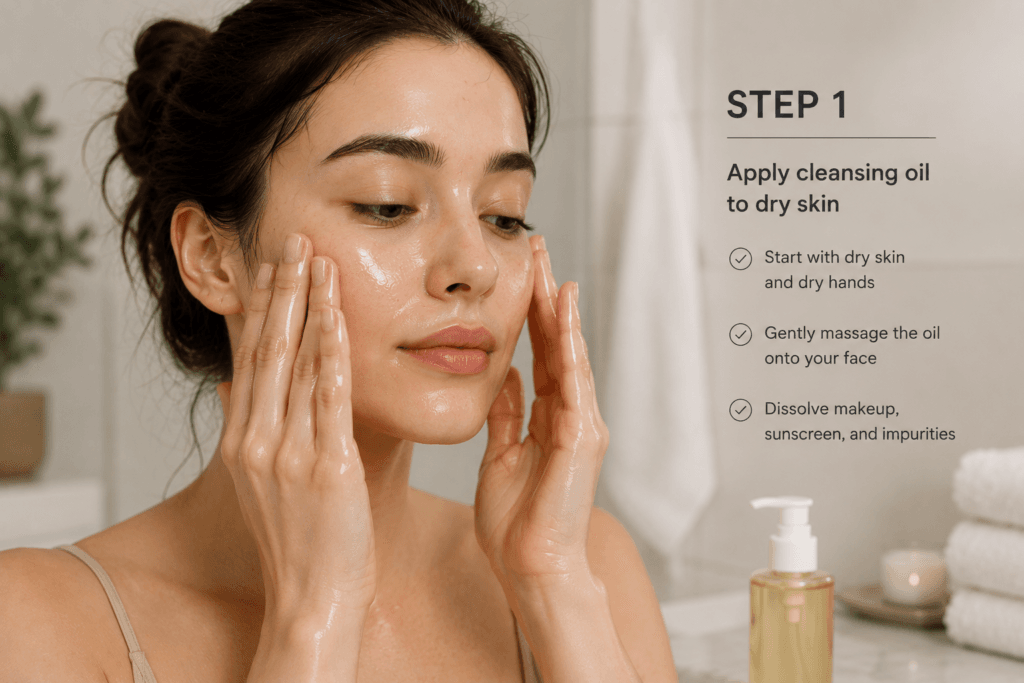
[Image Placement: Person applying cleansing oil to dry skin with clean dry hands before adding water]
Why Proper Technique Matters
Double cleansing became popular because it removes different types of impurities without relying on harsh scrubbing.
However, many beginners unknowingly make small mistakes that reduce its effectiveness.
Using too much pressure, skipping emulsification, or washing with hot water can all leave your skin feeling dry and irritated.
Learning the proper technique allows your cleansers to do the work for you instead of forcing your skin to endure unnecessary friction.
Step 1: Start With Dry Hands and Dry Skin
The first cleanse should always begin with completely dry hands and a dry face.
Oil cleansers work by attaching to oil-based impurities such as sunscreen, makeup, and excess sebum.
If your skin is already wet, the cleanser cannot dissolve these impurities as effectively.
Dispense an appropriate amount of cleansing oil—or scoop a small amount of cleansing balm—and spread it evenly across your dry face.
Avoid rushing this step.
Think of it as giving the cleanser enough time to loosen everything that has built up throughout the day.
Step 2: Massage Gently for About One Minute
Once the cleanser has been applied, gently massage your face using small circular motions.
There’s no need to press hard.
Instead, let the cleanser dissolve makeup and sunscreen naturally.
Pay extra attention to areas where product tends to build up, such as:
•Around the nose
•Along the hairline
•Under the chin
•Around the jawline
If you’re wearing eye makeup, massage that area gently without excessive rubbing.
The cleanser should do the work—not your fingers.
Step 3: Emulsify Before Rinsing
This is one of the most overlooked steps in double cleansing.
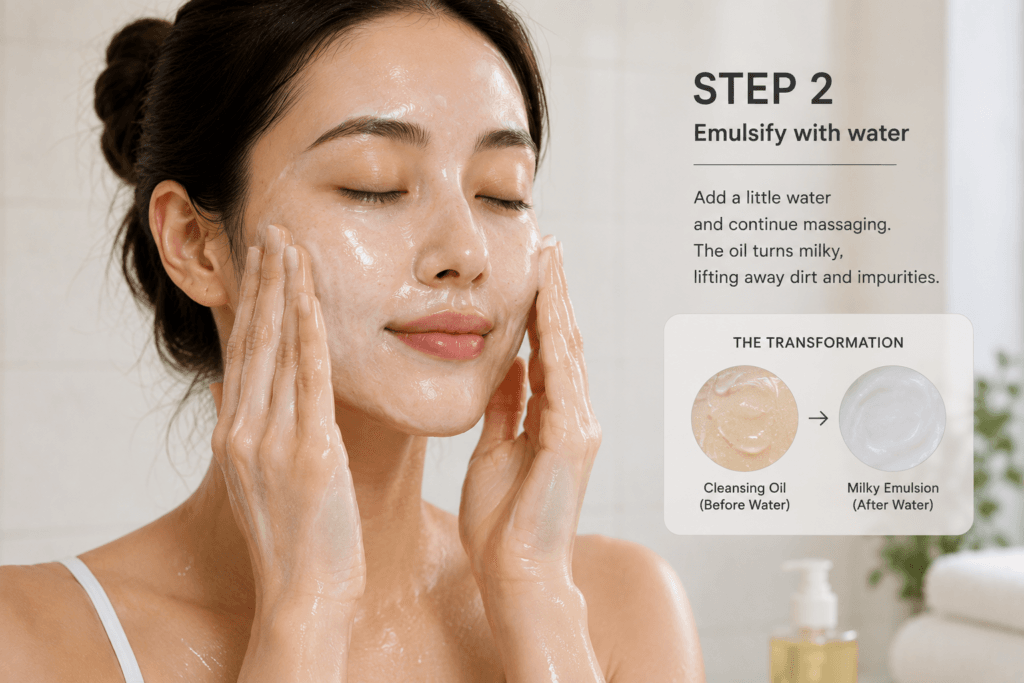
Before rinsing, wet your fingertips with a small amount of lukewarm water and continue massaging your face.
The cleanser will gradually transform into a light, milky texture.
This process is called emulsification.
It allows the oil to mix with water so it can rinse away cleanly without leaving behind greasy residue.
Many people skip this step and wonder why their skin still feels oily afterward.
Taking an extra 20 to 30 seconds to emulsify properly often makes a noticeable difference.
Step 4: Rinse Thoroughly With Lukewarm Water
Once the cleanser has emulsified, rinse your face thoroughly using lukewarm water.
Avoid very hot water.
Hot water may remove too much of your skin’s natural protective oils and leave your face feeling tight.
Cool water isn’t ideal either, since it doesn’t help dissolve oils as effectively.
Lukewarm water provides the best balance between effective cleansing and skin comfort.
Step 5: Follow With a Gentle Water-Based Cleanser
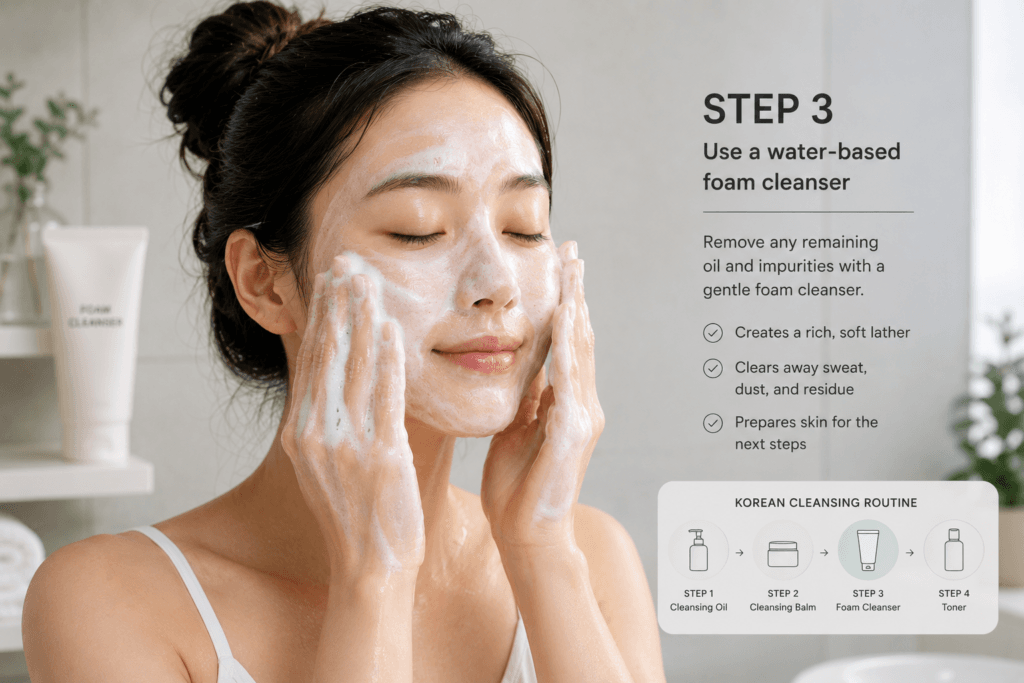
After rinsing away the oil cleanser, it’s time for the second cleanse.
Use a gentle water-based cleanser to remove any remaining residue, sweat, or water-soluble impurities.
You don’t need a large amount of product.
Massage the cleanser gently for about 30 to 60 seconds before rinsing.
Your skin should feel clean, but never dry or squeaky.
If your face feels tight immediately after cleansing, your cleanser may be too harsh for daily use.
Step 6: Continue Your Skincare Routine Without Waiting Too Long
After cleansing, gently pat your skin dry with a soft towel.
Avoid rubbing your face.
Once your skin is dry, continue with the rest of your skincare routine while your skin still feels slightly hydrated.
For many Korean skincare routines, the order is simple:
•Toner
•Essence or serum
•Moisturizer
If you’re still building your routine, starting with consistent cleansing is far more important than adding multiple expensive products.
Common Double Cleansing Mistakes
Even a good cleanser won’t produce the best results if the technique is incorrect.
Some of the most common mistakes include:
•Applying the cleanser to wet skin
•Rushing through the massage step
•Skipping emulsification
•Using very hot water
•Scrubbing aggressively
•Using harsh cleansers twice
•Double cleansing every morning and night without considering your skin type
Remember that double cleansing should feel gentle.
If your skin feels irritated every evening, it’s worth adjusting your products or your technique rather than cleansing more aggressively.
Conclusion
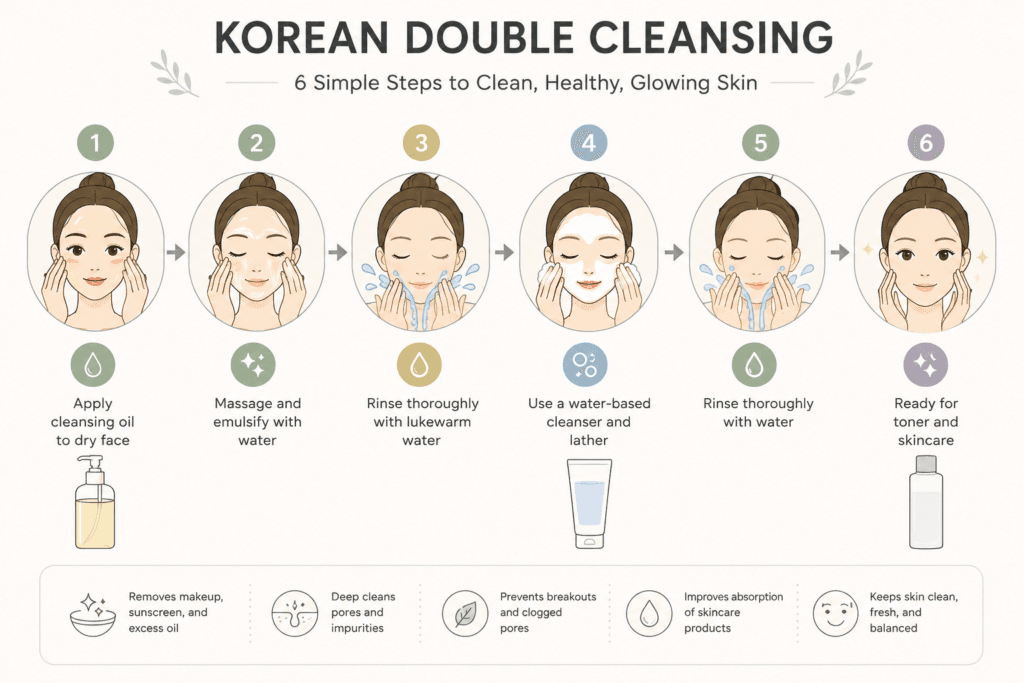
Double cleansing isn’t just about using two cleansers.
It’s about using the right technique to remove daily buildup while respecting your skin barrier.
Starting with dry skin, allowing enough time for the oil cleanser to work, emulsifying before rinsing, and following with a gentle water-based cleanser are the small habits that make the biggest difference.
Like most Korean skincare practices, consistency matters more than perfection.
When done correctly, double cleansing becomes a simple evening habit that helps prepare your skin for every step that follows.
FAQ
How long should I massage an oil cleanser?
Around 30 to 60 seconds is usually enough for most people.
Do I always need a water-based cleanser afterward?
For a traditional Korean double cleansing routine, yes. The second cleanser removes any remaining residue and completes the cleansing process.
Can I double cleanse every night?
Yes, especially if you wear sunscreen or makeup. However, your skin type and cleanser choice should always be considered.
Why does my skin still feel oily after cleansing?
The most common reason is skipping the emulsification step before rinsing.
Can double cleansing damage my skin barrier?
Not when done correctly with gentle products. Over-cleansing and harsh cleansers are usually the real causes of irritation.
Continue Reading
What Is Double Cleansing? The Korean Skincare Method Explained
Oil Cleanser vs Cleansing Balm: Which One Should You Use?
K-Beauty Layering Routine for Beginners: The 5-Step Guide to Glass Skin
The Ultimate Guide to Korean Double Cleansing
The New Era of Skincare: How ‘K-Beauty Tech Trends’ are Revolutionizing Global Aesthetics