Running Clubs in Korea have become one of the most noticeable lifestyle trends among young professionals, students, and wellness-focused communities.
Not long ago, running was often seen as a solo exercise. People ran alone in parks, on treadmills, or along neighborhood streets to improve their health. Today, the culture has changed. Across Seoul and other major Korean cities, running clubs and running crews are turning exercise into a social activity.
In the evening, it is common to see groups of runners moving together along the Han River, through city parks, or around popular neighborhood routes. Some are serious runners training for marathons. Others are beginners who simply want to stay active, meet people, and enjoy a healthier routine.
The rise of Running Clubs in Korea shows how modern Korean wellness culture is changing. Fitness is no longer just about discipline or appearance. It is becoming more social, accessible, and connected to everyday lifestyle.
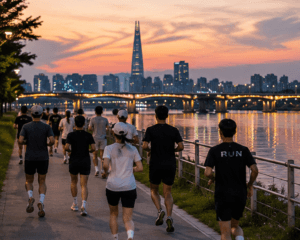
Why Running Clubs in Korea Are Growing
Running Clubs in Korea are growing because they solve one of the biggest challenges of exercise: consistency.
Many people start exercising with motivation, but it becomes difficult to continue alone. Work schedules, school pressure, weather, and fatigue can make it easy to stop after a few weeks.
A running club changes that experience.
When people join a group, they gain:
•A regular schedule
•A sense of accountability
•Encouragement from others
•A safe environment for beginners
•Social motivation
•A reason to show up consistently
For many Koreans, the group atmosphere makes running feel less intimidating. Instead of worrying about speed or distance, beginners can join relaxed sessions and improve gradually.
This is especially important in cities like Seoul, where daily life can be stressful and fast-paced. A running club offers both physical movement and emotional support.
The Han River as a Running Hub
The Han River plays a major role in the popularity of Running Clubs in Korea.
Its wide riverside paths, open views, bridges, parks, and well-maintained routes make it one of the best places for group running. Many clubs meet near popular Han River parks such as Yeouido, Banpo, Ttukseom, and Seoul Forest areas.
The Han River is especially attractive because it allows runners to escape the feeling of being trapped inside the city without actually leaving Seoul.
A typical running club session may include:
•Meeting near a subway station or park entrance
•Warming up together
•Running a short or medium-distance route
•Cooling down near the river
•Taking group photos
•Getting coffee or snacks afterward
This combination of exercise, scenery, and social connection is one reason Han River running has become so popular.
If you want to understand why the river is such an important part of Korean lifestyle, connect this section to your article on why Koreans love spending time along the Han River.
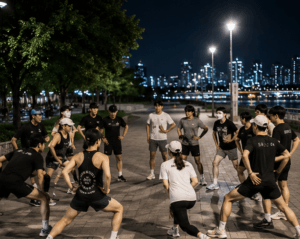
Running as a Social Activity
One of the most interesting parts of Running Clubs in Korea is that they are not only about exercise.
They are also social communities.
Many people join running clubs because they want to meet new friends, expand their social circle, or participate in a healthy activity after work. In a city where people are often busy and personal schedules can be difficult to coordinate, running creates a simple reason to gather.
Unlike formal networking events or expensive social activities, running clubs feel natural.
People can talk before and after the run. They can encourage one another during difficult moments. They can celebrate small progress together.
For some members, the running itself is only part of the experience.
The real value comes from belonging to a community.
This explains why many Korean running crews organize more than regular runs. Some groups also hold weekend events, seasonal challenges, marathon preparation sessions, coffee meetups, and social gatherings.
Why Young Koreans Are Joining Running Crews
Running crews have become especially popular among younger Koreans.
There are several reasons for this.
First, running is affordable. Unlike some sports that require expensive equipment, running only requires comfortable shoes and basic clothing. This makes it accessible to students and young professionals.
Second, running fits well with busy schedules. A group run after work can take only one or two hours, making it easier to maintain than weekend trips or long fitness programs.
Third, running has become visually connected to lifestyle culture. Many young people enjoy documenting their progress through fitness apps, social media posts, and group photos. This does not mean running is only about appearance, but visual sharing has helped spread the trend.
Fourth, running clubs offer community at a time when many people feel socially disconnected. As digital communication increases, offline group activities can feel more meaningful.
For young Koreans, running clubs offer a rare combination of health, friendship, structure, and lifestyle identity.
The Role of Fitness Apps and Social Media
Technology has also helped Running Clubs in Korea grow.
Many runners use apps to track distance, pace, route, and progress. Platforms such as Strava, Nike Run Club, and other fitness apps make it easier for people to record their workouts and share achievements.
This digital layer adds motivation.
A beginner can see progress over time. A group can complete monthly distance challenges. Friends can encourage one another after each run.
Social media has also made running culture more visible.
Photos of group runs, matching running outfits, sunrise routes, night runs, and marathon medals appear regularly on Instagram and other platforms. This visibility encourages more people to join.
However, the best running clubs are not only about posting photos. The strongest groups are built around consistency, safety, encouragement, and real community.
Running Clubs and Korean Work-Life Balance
Running Clubs in Korea also reflect a larger change in how people think about work-life balance.
For a long time, Korean work culture was associated with long hours and intense schedules. While those pressures still exist, many people are now more intentional about protecting their health and personal time.
After-work running has become one way to create that balance.
Instead of going directly home exhausted or spending the evening only on screens, people can meet a group, move their bodies, and reset mentally.
This connects strongly with Korea’s broader wellness trends.
Walking after dinner, cycling along the Han River, visiting wellness cafes, and joining running clubs all point to the same cultural shift: people want healthier routines that fit into real life.
Use this section to link to your article on how Koreans balance work, wellness, and social life.
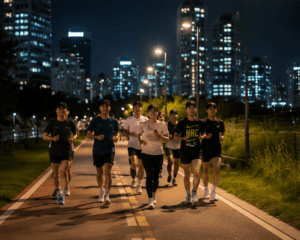
Beginner-Friendly Running Culture
A common misunderstanding is that running clubs are only for athletic people.
In reality, many Running Clubs in Korea welcome beginners.
Some clubs organize pace groups so that runners can choose a comfortable level. Others offer short-distance sessions for people who are just starting. Many beginner-friendly groups focus less on speed and more on participation.
This matters because running can feel intimidating at first.
People may worry that they are too slow, too inexperienced, or not fit enough to join. A supportive club helps remove those fears.
A beginner may start with a short 3-kilometer run. After a few weeks, that same person may feel comfortable running 5 kilometers or joining a longer weekend route.
The progress feels more achievable because it happens within a community.
Running Clubs and Safety
Safety is another reason group running has become popular.
Running alone at night can feel uncomfortable in any city. Group running provides a safer alternative, especially for evening routes.
Many Korean running clubs choose well-lit areas such as riverside paths, public parks, and familiar neighborhood routes. Members often run together, follow planned courses, and check on one another.
This creates a more comfortable environment for people who want to exercise after work or school.
The popularity of night walks in Korea has already shown how important safe public spaces are for daily wellness. Running clubs build on that same environment and turn it into a more active community habit.
This is a good place to link to your article on why Koreans love night walks.
From Casual Running to Marathons
For some people, joining a running club begins as a casual hobby.
Over time, it can become a serious fitness goal.
Korea hosts many running events, from local 5K and 10K races to half marathons and full marathons. Running clubs often help members prepare for these events by offering training schedules, group practice, pacing support, and encouragement.
The group environment makes race preparation less lonely.
Instead of training alone for months, members can share their progress, discuss challenges, and celebrate race day together.
Even people who never considered themselves runners may eventually sign up for their first race because of the confidence gained through a club.
This progression from casual participation to personal achievement is one reason running clubs remain appealing.
How Running Clubs Connect With Korean Lifestyle Culture
Running Clubs in Korea are not isolated from other lifestyle trends.
They connect with many parts of modern Korean daily life:
•Han River culture
•Night walking
•Outdoor exercise
•Cafe culture
•Work-life balance
•Social wellness
•Fitness technology
•Weekend leisure
A group may run along the Han River, stop at a cafe afterward, post a group photo, and plan a weekend race. This blend of health, social connection, and lifestyle experience feels very Korean.
It shows how wellness culture is becoming more integrated into everyday routines.
Rather than separating fitness from social life, many Koreans are combining the two.
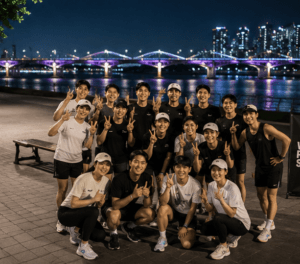
What Visitors Can Learn From Running Clubs in Korea
For visitors, Running Clubs in Korea offer a different way to experience the country.
Tourists often focus on food, shopping, palaces, and entertainment. Those are valuable experiences, but joining or observing a local running group reveals another side of Korean culture.
It shows how people build community in modern cities.
It also shows how wellness habits are becoming part of everyday life.
Even if visitors do not join a club, they can understand Korean lifestyle better by spending time near Han River parks in the evening. Seeing runners, walkers, cyclists, and picnic groups in the same space reveals how public areas support health and social connection.
This is one of Korea’s lifestyle strengths: ordinary public spaces become places where people can live healthier and more connected lives.
How to Experience Korean Running Culture
People interested in Korean running culture can start simply.
They can visit popular running areas such as the Han River, Seoul Forest, Olympic Park, or neighborhood parks in the evening. They can observe how groups gather, stretch, run, and socialize afterward.
For those staying longer in Korea, joining a beginner-friendly running club or public running event can be a memorable experience.
The key is not to worry too much about performance.
The spirit of many running clubs is consistency, encouragement, and community.
Running does not have to be fast to be meaningful.
It simply has to become part of a life that feels healthier and more balanced.
Conclusion
Running Clubs in Korea have grown because they offer more than exercise.
They provide community, motivation, safety, structure, and a healthier way to spend time after work or school. From Han River paths to neighborhood parks, running clubs are helping people transform fitness into a social lifestyle.
This trend reflects a larger shift in Korean culture.
Wellness is becoming less about extreme effort and more about sustainable daily habits. People want movement, friendship, fresh air, and balance.
Running Clubs in Korea show how a simple activity can become a powerful part of modern lifestyle culture.
For anyone trying to understand Korea beyond entertainment and food trends, the rise of running clubs offers a clear message: health is becoming social, and everyday wellness is becoming one of Korea’s most meaningful lifestyle movements.
FAQ
Why are Running Clubs in Korea becoming popular?
Running Clubs in Korea are becoming popular because they combine exercise, social connection, motivation, and a structured way to stay active after work or school.
Where do Running Clubs in Korea usually meet?
Many running clubs meet near the Han River, Seoul Forest, Olympic Park, neighborhood parks, and other well-lit public running routes.
Are Running Clubs in Korea beginner-friendly?
Yes. Many groups welcome beginners and offer relaxed pace groups, short-distance runs, and supportive community environments.
Why do young Koreans join running clubs?
Young Koreans often join running clubs for fitness, friendship, stress relief, work-life balance, and a healthier offline social activity.
Do Running Clubs in Korea connect with wellness culture?
Yes. Running clubs are part of Korea’s broader wellness culture, along with walking, cycling, outdoor exercise, Han River activities, and healthier social routines.
Continue Reading
•Korean Lifestyle Guide: Daily Habits Behind Korea’s Global Fascination
•Why Koreans Love Night Walks
To understand the evening walking culture that helped shape Korea’s outdoor wellness habits, read our guide to why Koreans love night walks.
•Why Koreans Love Spending Time Along the Han River
•Many running clubs meet near the river, making the Han River one of the best places to understand Korea’s outdoor lifestyle.
•Korean Cycling Culture: Exploring Cities on Two Wheels
•Running and cycling often share the same riverside spaces, showing how Korean cities support active lifestyles.
•How Koreans Balance Work, Wellness, and Social Life
•The rise of after-work running clubs is another example of how Koreans are trying to balance work, wellness, and social life.
•Outdoor Exercise in Korea: Why Koreans Stay Active All Year Round