Walk into a typical Korean home and you might notice something missing.
Not the furniture.
Not the decorations.
The carpet.
For many visitors from North America or Europe, the absence of wall-to-wall carpeting feels almost surprising. In many countries, carpets make a home feel warmer, quieter, and more comfortable.
So why did Korean homes take such a different path?
The answer isn’t simply that Koreans prefer wooden floors.
It’s that Korean homes were designed with an entirely different idea of comfort.
To understand why carpets never became a standard feature, you first have to understand where everyday life happens inside a Korean home.
If you’ve already read Why Koreans Always Take Off Their Shoes Indoors, you know that Korean homes have long treated the floor as part of everyday living rather than simply something people walk across.
And as we explored in How Ondol Heating Shaped Korean Home Culture, that way of living began with one remarkable innovation beneath the floor itself.
Once you see those two ideas together, the missing carpet suddenly starts to make sense.
A Carpet Would Hide the Best Part of the House
Most people assume carpets make a home feel warmer.
In traditional Korean homes, the floor was already warm.
That single difference changed everything.
With ondol heating, warmth rises gently through the floor instead of blowing through the air.
The floor itself becomes the most comfortable place in the room.
Families naturally sit on it.
Children play on it.
Guests gather there for conversation.
The floor isn’t covered because it’s meant to be experienced.
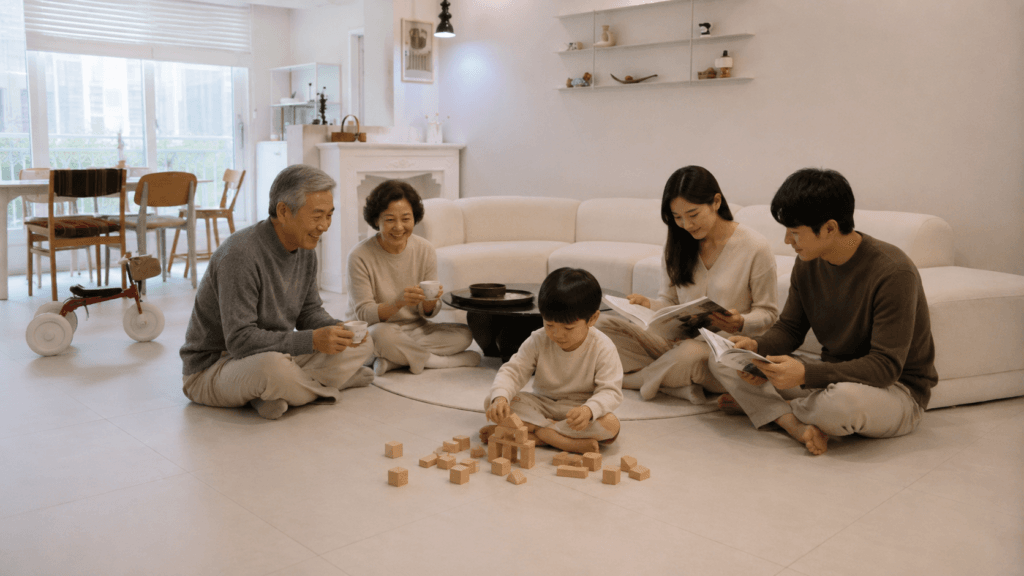
Imagine placing a thick carpet over that warmth.
The floor would still be heated, but the direct feeling of warmth would be reduced.
Instead of enjoying the floor itself, people would experience a layer between themselves and one of the home’s greatest comforts.
Over generations, Korean homes developed around the idea that the floor should remain open, clean, and welcoming.
It wasn’t something to cover.
It was something to live on.
And that simple philosophy continues to influence Korean homes today.
Living on the Floor Changes Everything
When people think about carpets, they usually think about comfort.
Soft.
Warm.
Comfortable to walk on.
In many parts of the world, that’s exactly what carpets provide.
But Korean homes approached comfort from a completely different direction.
Instead of making the floor more comfortable to walk across, they made it comfortable to live on.
That small difference shaped the entire home.
Children spread books across the floor while doing homework.
Families gathered there to watch television.
During holidays, relatives sat together for long meals and conversations.
The floor wasn’t empty space waiting to be covered.
It was one of the busiest places in the home.
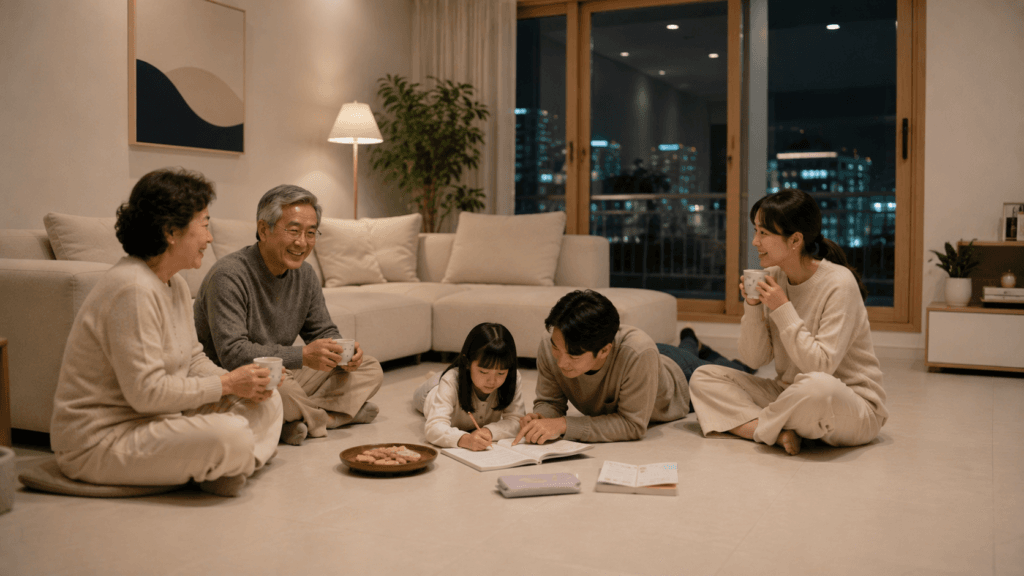
Once the floor becomes the center of daily life, carpets begin creating unexpected problems.
They trap dust more easily.
Cleaning becomes more difficult.
Spilled food or drinks require much more effort to remove.
Most importantly, they create another layer between people and the warm floor beneath them.
For families who spend hours sitting, playing, and relaxing on the floor every day, that simply isn’t practical.
This doesn’t mean Koreans dislike carpets.
Small rugs are becoming more common in bedrooms, children’s play areas, or beside sofas.
The difference is that they’re used as temporary accents rather than permanent flooring.
The floor itself remains the main living space.
That’s a subtle distinction, but it reveals something much larger.
Many homes around the world are designed around furniture.
Korean homes have traditionally been designed around the people using the space.
When the focus shifts from furniture to people, open floors begin to feel surprisingly natural.
And perhaps that’s why many visitors notice something unexpected after spending time inside a Korean home.
Even without thick carpets, the space often feels warmer, calmer, and more inviting than they expected.
Not because something has been added.
But because nothing stands between the family and the place where everyday life happens.
Why Korean Homes Still Feel Warm Without Carpets
Walk into a modern Korean apartment today and you’ll probably see wooden flooring, large windows, and open living spaces.
At first glance, it may look like a design trend.
In reality, it’s the continuation of a lifestyle that has evolved over centuries.
Modern flooring materials have changed.
Interior styles have become more minimalist.
But the philosophy behind the home remains surprisingly familiar.
The floor is still meant to be lived on.
That’s why many Korean families choose furniture that leaves the center of the living room open. The space can change throughout the day depending on what the family is doing.
In the morning, a child might spread out schoolbooks before class.
In the afternoon, grandparents may enjoy tea while sitting comfortably on the warm floor.
By evening, everyone gathers in the same space to talk, watch television, or simply relax together.
The room adapts to the people—not the other way around.
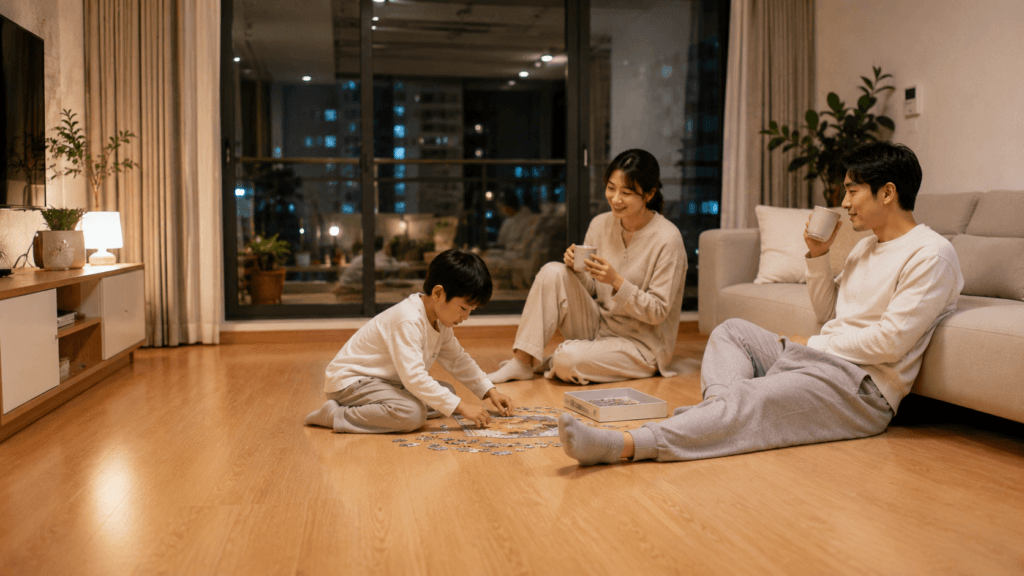
Perhaps that’s why visitors often describe Korean homes as feeling both simple and comfortable at the same time.
There isn’t less living because there are fewer carpets.
There’s more room for everyday life to unfold.
And maybe that’s the most interesting lesson of all.
Many people assume that a carpet makes a house feel cozy.
Korean homes suggest a different idea.
A home doesn’t become comfortable because of what’s placed on the floor.
It becomes comfortable because the floor itself is designed to welcome everyday life.
Sometimes, what isn’t there tells you as much about a culture as what is.
Conclusion
The absence of carpets in Korean homes isn’t a design trend or a matter of personal taste.
It’s the result of centuries of architecture, climate, and daily habits shaping one another.
Once the floor became the warmest and most comfortable place in the house, there was little reason to cover it.
That way of living continues today, even inside Korea’s most modern apartments.
Understanding why Korean homes rarely use carpets isn’t really about flooring.
It’s about discovering how a simple design choice reflects a culture that has long valued shared spaces, flexibility, and everyday family life.
Continue Exploring
Read next:
- Why Koreans Always Take Off Their Shoes Indoors
- How Ondol Heating Shaped Korean Home Culture
- Korean Home Culture: A Complete Guide to Everyday Life in Korean Homes
Coming Next
If Korean homes are designed around clean, open floors, why does almost every apartment include a large cabinet right beside the front door?
In the next article, we’ll explore how one seemingly ordinary piece of furniture quietly supports one of Korea’s most enduring everyday traditions.
Coming Next: Why Korean Apartments Have Shoe Cabinets at the Entrance
FAQ
Why don’t Korean homes usually have wall-to-wall carpets?
Because Korean homes have traditionally been designed around heated floors and floor-based living. Keeping the floor open allows families to fully enjoy its warmth and flexibility.
Are carpets uncommon in all Korean homes?
Large wall-to-wall carpets are rare, but many homes use small area rugs in specific spaces such as bedrooms, children’s rooms, or beside a sofa.
Does ondol heating work better without carpets?
Yes. Thick carpets can reduce the direct feeling of heat from the floor, while exposed flooring allows warmth to be felt more efficiently.
Is living on the floor still common in modern Korea?
Yes. Although lifestyles continue to evolve, many Korean families still spend a significant amount of time sitting, relaxing, or playing on the floor, especially in the living room.