For many people discovering K-pop for the first time, fandom seems to come alive during concerts, album releases, or music videos.
Those moments are certainly exciting.
But they represent only a small part of what Korean fan communities actually do.
Most fandom activity happens quietly, every single day.
Fans gather in online communities to welcome newcomers, share translations, celebrate milestones, exchange recommendations, and organize projects that may never appear in the headlines.
For many people, these spaces become more than information hubs.
They become places where friendships begin, cultures are exchanged, and shared interests grow into genuine communities.
Understanding these digital spaces reveals an important truth about Korean fandom.
The strongest communities aren’t built during major events.
They’re built through everyday conversations that continue long after the spotlight fades.
Fan Communities Are More Than News Feeds
At first glance, many Korean fan communities appear similar to ordinary online forums.
There are announcements.
Photos.
Videos.
Comments.
But spending time inside these communities quickly reveals something different.
Members don’t simply consume content.
They actively help one another.
Experienced fans answer questions from newcomers.
Volunteers share translated interviews.
Members recommend older performances, dramas, or variety shows that new fans may have missed.
Small conversations gradually create an environment where people feel comfortable participating rather than simply observing.
This culture of contribution is one reason Korean fandom communities remain active even during long periods without new releases.
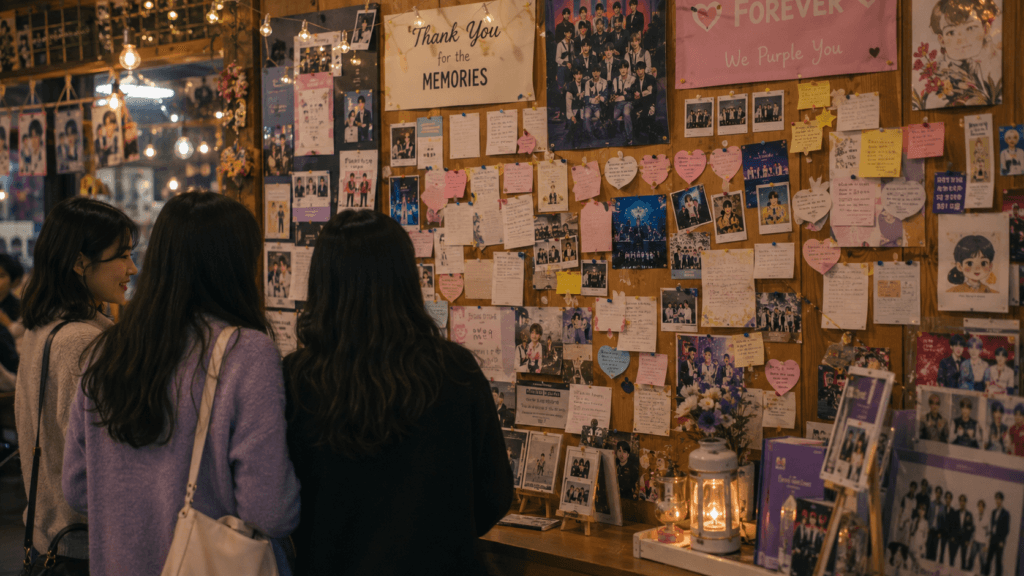
Digital Communities Build Real Friendships
One of the biggest surprises for many international fans is how often online conversations become real friendships.
People who first meet while discussing music often continue talking about school, work, travel, language learning, and everyday life.
Some eventually meet at concerts.
Others organize local fan gatherings.
Many continue communicating for years despite living in different countries.
The artist may provide the common interest.
The community provides the lasting connection.
This is one reason Korean fandom continues growing even between album releases.
People return not only because new content appears, but because the community itself has become an important part of their daily lives.
As explored in Why Korean Fandom Culture Is Different From Western Fandom, long-term participation often matters just as much as excitement surrounding a comeback.
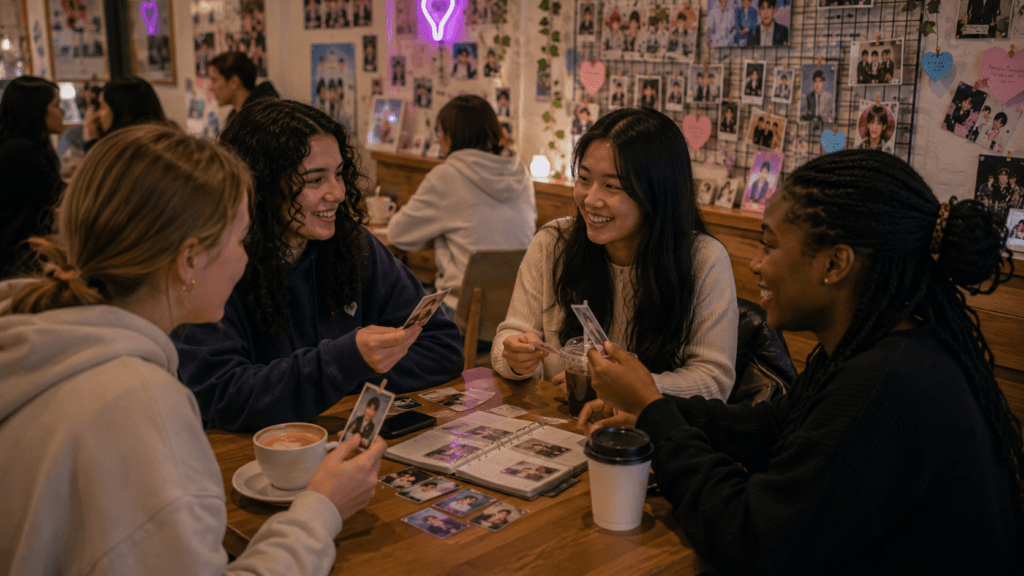
Fan Cafés Preserve the History of a Fandom
Social media is excellent for sharing today’s news.
Fan cafés and dedicated communities serve a different purpose.
They preserve the history of the fandom itself.
Members often organize years of photos, translations, interviews, event summaries, and fan-created resources so they remain easy to find long after they were first shared.
For someone discovering an artist for the first time, this makes a huge difference.
Instead of searching across dozens of unrelated websites, newcomers can gradually explore the artist’s journey through one community.
Many fans describe this experience as joining a story that has already been unfolding for years.
Rather than feeling left behind, they are welcomed into a community that enjoys helping others catch up.
This culture of preserving knowledge is one reason Korean fan communities continue growing across generations of fans.
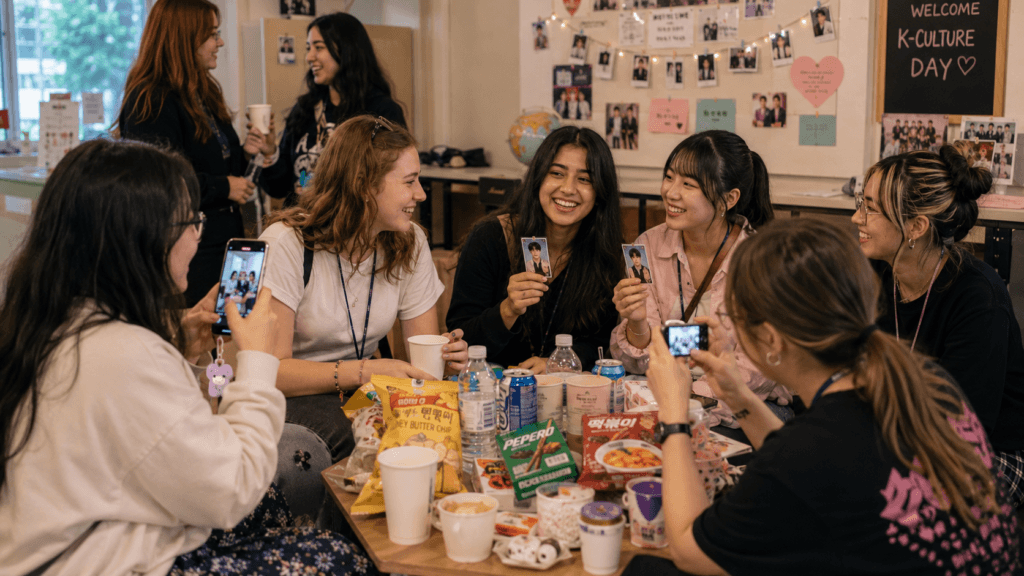
Online Communities Inspire Offline Experiences
Although most conversations begin online, they rarely stay there.
Fan communities often inspire people to meet in the real world through cultural events, birthday cafés, exhibitions, charity activities, and local gatherings.
For international visitors to Korea, these spaces can become unexpected travel destinations.
A themed café celebrating an artist’s birthday.
A fan-organized photo exhibition.
A charity fundraising event created by volunteers.
Even a casual gathering where fans exchange photo cards and share travel recommendations.
These experiences demonstrate that Korean fandom is not limited to digital interaction.
The online community often becomes the starting point for meaningful experiences that continue offline.
This blend of online and offline participation is one reason Korean fandom feels more like a living culture than a typical online forum.
Digital Communities Continue Evolving
The platforms used by fans have changed dramatically over the years.
Traditional fan cafés have gradually been joined by global community platforms, social media, live streaming apps, and dedicated fan services.
Despite these technological changes, one thing has remained remarkably consistent.
People still gather for the same reasons.
To celebrate artists.
To learn from one another.
To share creativity.
And to build friendships through common interests.
Technology simply provides new ways to continue traditions that have existed within Korean fandom for decades.
As discussed in How K-pop Fans Organize Global Streaming Events, these digital communities also make it possible for fans across different countries to collaborate naturally despite living thousands of miles apart.

Why These Communities Matter Beyond Entertainment
It is easy to think of fan communities as places that exist only to discuss celebrities.
In reality, they often become spaces where people exchange languages, cultures, travel advice, creative skills, and personal experiences.
Many international fans first become interested in Korean food, travel, language, or history through conversations that begin inside these communities.
In that sense, fan cafés contribute to something much larger than entertainment.
They help create cultural bridges.
Every conversation, recommendation, and shared experience introduces someone to another aspect of Korean culture.
That ongoing exchange is one reason Korean entertainment continues expanding far beyond music and television.
Conclusion
Korean fan cafés and digital communities are much more than places to receive updates.
They are living communities where people learn, create, celebrate, and build lasting friendships.
While technology has transformed the platforms fans use, the heart of Korean fandom has remained remarkably consistent.
People gather not only because they admire the same artists, but because they enjoy belonging to a community that values participation, generosity, and shared experiences.
Understanding these spaces helps explain why Korean fandom has become one of the strongest and most enduring communities in global entertainment.
Behind every successful artist is not only great music or memorable performances, but also a network of people who continue supporting one another every day.
Frequently Asked Questions
What is a Korean fan café?
A Korean fan café is a community where fans gather to share news, celebrate artists, exchange information, and build relationships with other supporters.
Are Korean fan cafés only available in Korea?
No. While many began in Korea, today’s fan communities include international members through global platforms and multilingual online spaces.
What do fans do inside these communities?
Fans discuss new releases, share translations, organize community projects, welcome newcomers, and participate in both online and offline events.
Are fan cafés different from social media?
Yes. Social media focuses on fast updates, while fan cafés and dedicated communities often encourage deeper conversations, long-term participation, and organized archives.
Why are Korean fan communities so influential?
Because they combine collaboration, shared knowledge, and long-term participation, creating communities that continue growing beyond individual comebacks or promotional events.
Continue Exploring
If you enjoyed this article, you may also like:
- Why Korean Fandom Culture Is Different From Western Fandom
- How K-pop Fans Organize Global Streaming Events
- How Korean Fans Influence Global Music Charts
- How Korean Fandom Culture Is Revolutionizing the Global Entertainment Industry
- The Future of Korean Entertainment Beyond Netflix
- Why Global Companies Study Korean Fandom