Many visitors to Korea notice the same thing within seconds of stepping into a Korean home.
The front door opens.
A warm smile welcomes them inside.
Then, almost instinctively, everyone begins taking off their shoes.
No one announces the rule.
No sign hangs on the wall.
Nobody needs to explain what comes next.
For Koreans, it’s simply what you do.
To many visitors, however, the moment raises an unexpected question.
Why is taking off your shoes such an important part of entering a Korean home?
The obvious answer is cleanliness.
Shoes carry dirt from outside, so removing them helps keep the floor clean.
That explanation makes sense—but it doesn’t explain why this habit has remained such an essential part of Korean life for generations.
After all, modern Korea is filled with robot vacuum cleaners, air purifiers, and some of the world’s most advanced apartment buildings.
If technology can keep a home clean, why does everyone still stop at the entrance?
The answer isn’t hidden in the shoes.
It’s hidden in the way Koreans think about home.
It’s Never Really Been About Shoes
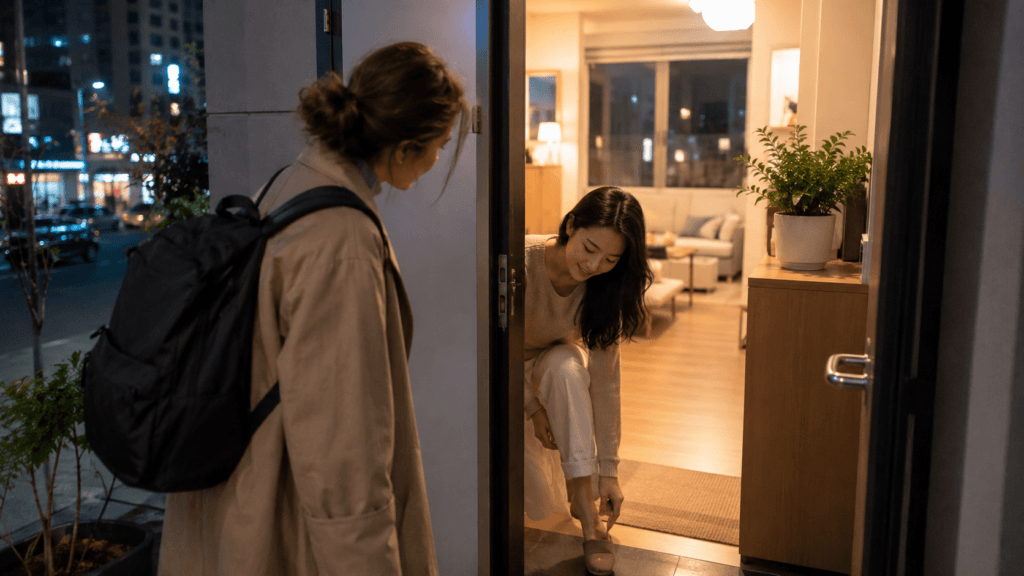
Imagine coming home after a long day.
You’ve spent hours surrounded by traffic, crowded trains, busy offices, and endless notifications.
Then you open your front door.
Without even thinking, you take off your shoes.
For many Koreans, this isn’t simply the first thing they do at home.
It’s the last thing they do before leaving the outside world behind.
That’s an important difference.
Many cultures treat the entrance as part of the house.
Korean homes often treat it as the space between two worlds.
Outside is public life.
Inside is personal life.
Crossing that small boundary quietly changes the atmosphere.
The pace slows.
Voices become softer.
The pressure of the day begins to fade.
Removing your shoes is simply the first step in that transition.
Perhaps that’s why most Koreans rarely think of it as a household rule.
It’s closer to a habit that naturally tells your body and mind,
“You’re home now.”
Once you begin looking at it this way, something interesting happens.
The question changes.
Instead of asking,
“Why do Koreans take off their shoes?”
you begin asking,
“Why do Korean homes feel so different from the moment you walk through the door?”
The answer lies beneath the floor itself.
The Floor That Shaped a Way of Life
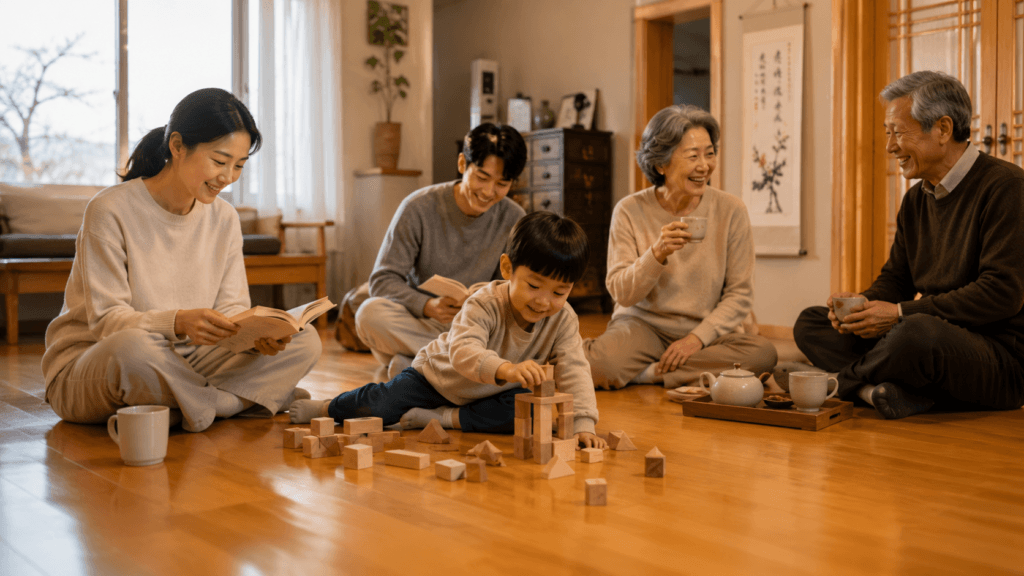
To understand why Koreans remove their shoes, you have to look beyond the entrance.
The real story begins beneath the floor.
For centuries, Korean homes were built around ondol, a heating system that warmed the floor instead of the air. During long, cold winters, the warmest place in the house wasn’t next to a fireplace—it was the floor itself.
That simple difference changed almost everything about daily life.
Families gathered where it was warm.
Children learned to crawl there.
Meals were shared there.
Guests sat together there.
On winter nights, people even slept there.
The floor wasn’t simply something people walked across.
It became the center of family life.
Once that happened, keeping the floor clean became more than a matter of hygiene.
It became a way of protecting the space where everyday life happened.
This is where many visitors experience a shift in perspective.
People often assume that Koreans remove their shoes because they value cleanliness.
Historically, it was almost the opposite.
As the floor became the place where people lived, cleanliness naturally became important.
The custom grew out of the lifestyle—not the other way around.
Even though modern apartments no longer use traditional ondol systems, the philosophy behind them remains surprisingly familiar.
Children still spread their homework across the living room floor.
Families still gather there during holidays.
Friends often sit comfortably on floor cushions while talking for hours.
The technology has evolved.
The architecture has changed.
But the relationship between people and their homes has remained remarkably consistent.
Perhaps that’s why taking off your shoes still feels completely natural in Korea.
It isn’t simply preserving an old tradition.
It’s continuing a way of living that has quietly connected generations of Korean families.
And that raises one final question.
If life has changed so dramatically over the past century, why does this centuries-old habit still feel perfectly at home in modern Korean apartments?
Why the Tradition Still Feels Natural Today
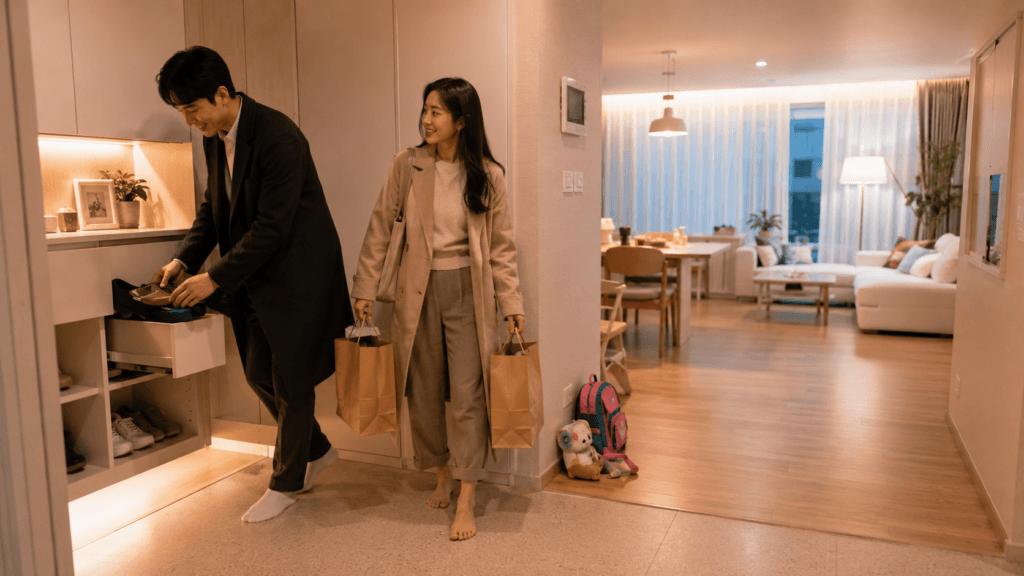
Traditional Korean homes have largely disappeared from the cities.
Today’s skylines are filled with high-rise apartment buildings equipped with smart locks, robot vacuum cleaners, voice-controlled lighting, and advanced heating systems.
Yet one small habit has barely changed.
Everyone still pauses at the entrance.
Everyone still takes off their shoes.
At first, that might seem surprising.
If modern technology has changed almost every part of daily life, why hasn’t this custom changed too?
The answer is simple.
Because modern Korean homes are still designed around the same idea.
The entrance isn’t simply where a house begins.
It’s where life slows down.
Look closely at a typical Korean apartment and you’ll notice that the entryway is often slightly lower than the main living space. This small step naturally separates the outside from the inside, making it feel completely natural to remove your shoes before entering.
You’ll also find something built into almost every apartment.
A shoe cabinet.
To many visitors, it’s just convenient storage.
To Koreans, it’s part of the home’s design philosophy. The architecture quietly supports a habit that already exists instead of forcing people to follow a rule.
The same philosophy appears throughout the home.
Clean, open floors.
Minimal clutter.
Shared living spaces where family members naturally spend time together.
Even in homes filled with modern furniture, the floor remains an important part of everyday life.
Perhaps that’s why this tradition has survived for so long.
It isn’t preserved out of nostalgia.
It continues because it still fits the way millions of Koreans live today.
And maybe that’s the most interesting discovery of all.
Many people come to Korea believing they’ll learn about its culture by visiting ancient palaces, historic temples, or famous landmarks.
Those places certainly tell part of the story.
But culture also reveals itself in much quieter ways.
Sometimes it begins with a pair of shoes left neatly by the front door.
Conclusion
The next time you step into a Korean home, you’ll probably notice the entrance differently.
What once looked like a simple household rule may now feel like something much more meaningful.
Taking off your shoes isn’t really about the shoes.
It’s about crossing an invisible boundary between the outside world and the place where family, comfort, and everyday life come together.
Sometimes the smallest habits offer the clearest window into a culture.
And in Korea, that story begins the moment you leave your shoes at the door.
FAQ
Is it rude to wear shoes inside a Korean home?
Yes. Unless your host specifically tells you otherwise, guests are expected to remove their shoes before entering the main living area.
Do younger generations in Korea still follow this tradition?
Absolutely. Whether they live in a traditional house or a modern apartment, removing shoes remains one of the most common everyday customs across generations.
Why don’t Korean homes usually have carpets?
Because floor-centered living and underfloor heating make hard flooring more practical and comfortable than wall-to-wall carpeting.
Is this custom unique to Korea?
Several countries have similar customs, but Korea’s long history of ondol heating and floor-based living gives the tradition its own distinctive cultural meaning.
Continue Exploring
If you enjoyed this article, you may also like: