Every unforgettable Korean drama begins long before the cameras start rolling.
Long before audiences cry during an emotional finale, celebrate a romantic confession, or eagerly wait for the next episode, hundreds of creative professionals have already spent months—sometimes years—turning an idea into a finished production.
For many international viewers, the final result feels effortless.
Beautiful cinematography.
Emotional performances.
Memorable music.
Seamless editing.
But behind every successful Korean drama is a carefully coordinated creative process involving writers, directors, actors, cinematographers, editors, composers, costume designers, production designers, and dozens of specialists working toward the same goal.
What makes Korean dramas especially fascinating is that the production process often differs from the systems used in many Western television industries.
Creative decisions are made differently.
Production schedules move at a different pace.
Writers and directors often work more closely throughout the life of a series.
Understanding how Korean dramas are made helps explain why they have developed such a distinctive style and why audiences around the world continue returning for new stories.
If you’ve ever wondered why Korean dramas feel different from many Western television series, What Makes Korean Dramas Different from Western TV? explores the creative philosophy that shapes these productions before filming even begins.
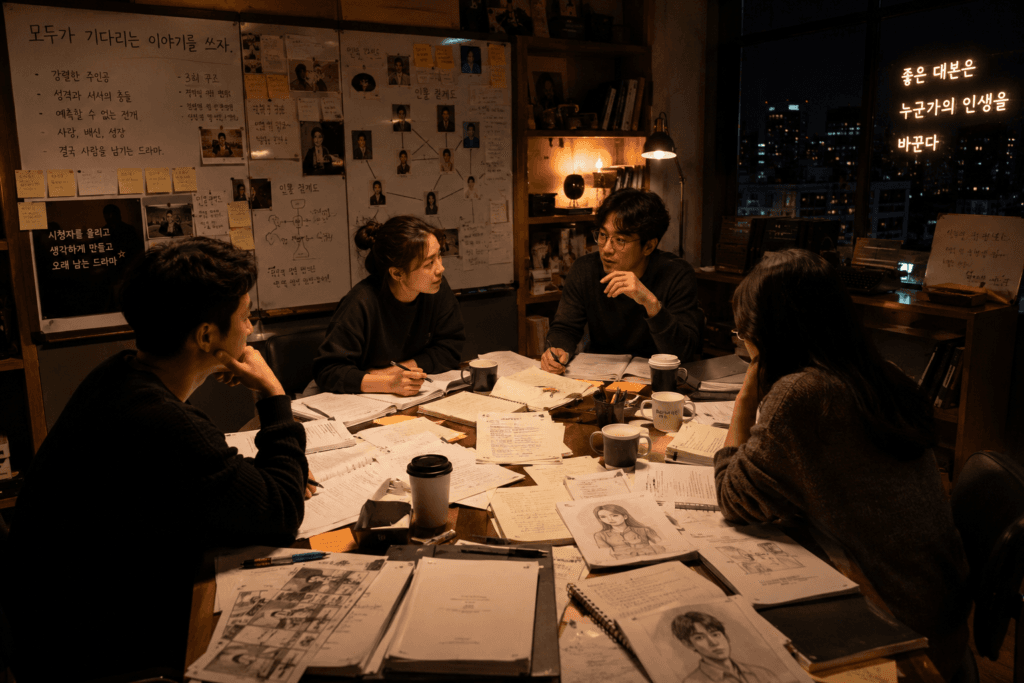
Every Great Korean Drama Starts With One Story
Before actors are cast.
Before locations are selected.
Before cameras are prepared.
Everything begins with a screenplay.
In Korea, writers often play an especially influential role in shaping a drama.
Rather than simply delivering scripts to a production company, many writers remain deeply involved throughout development, helping refine characters, dialogue, emotional pacing, and overall story structure.
A single script may go through dozens of revisions before filming begins.
Some scenes are rewritten repeatedly until they capture exactly the emotional tone the creative team hopes to achieve.
Character relationships are carefully balanced.
Small details planted in early episodes are designed to pay off much later in the story.
This attention to long-term narrative planning is one reason many Korean dramas feel cohesive from beginning to end.
Instead of relying only on action or spectacle, they build emotional investment gradually.
Viewers become attached to characters because every conversation and every decision contributes to a larger story.
That storytelling philosophy also explains why many Korean dramas conclude within a single season.
Rather than extending successful series indefinitely, writers often begin with a complete narrative already in mind.
If you’re curious why this format has become so successful internationally, Why Korean Dramas Usually Have Only 16 Episodes explains how Korea’s storytelling structure differs from long-running television franchises.
Casting Is About Chemistry, Not Just Popularity
Choosing the right actors is one of the most important stages of production.
Talent matters.
Experience matters.
Popularity matters.
But another factor often matters just as much:
Chemistry.
Casting directors spend considerable time evaluating how performers interact with one another rather than simply selecting the biggest stars.
Romantic dramas require believable emotional connections.
Crime thrillers depend on convincing tension.
Family dramas succeed only when relationships feel authentic.
Many productions conduct script readings long before filming begins.
These sessions allow writers, directors, and actors to explore dialogue together while identifying opportunities to strengthen individual characters.
Sometimes entire scenes change after these early rehearsals.
Dialogue becomes more natural.
Character motivations become clearer.
Even small adjustments made during script readings can significantly improve the final production.
Rather than treating actors as performers who simply deliver lines, Korean productions often encourage close collaboration throughout the creative process.
That partnership contributes to the emotional realism many viewers immediately notice.
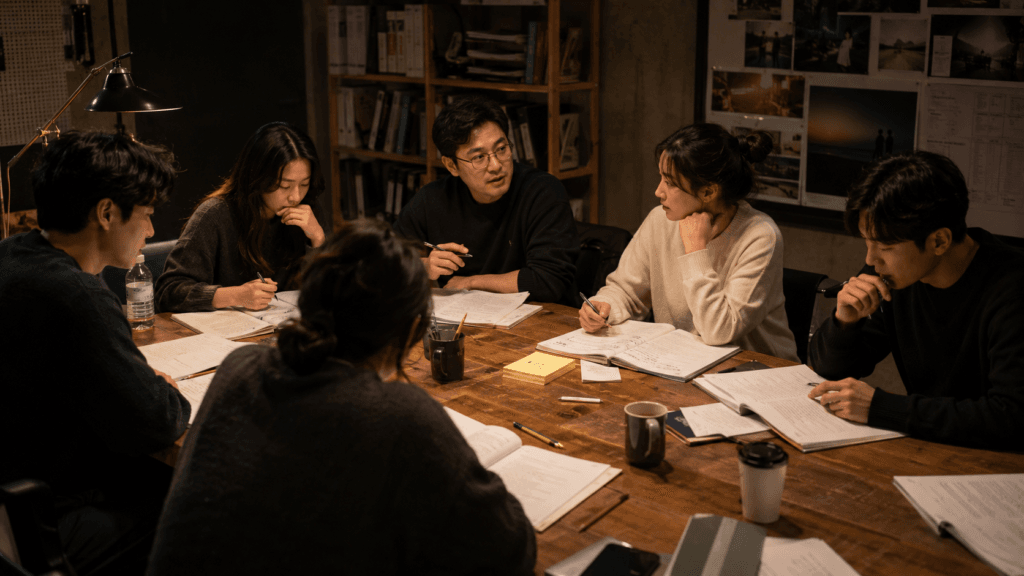
Turning Words Into Visual Stories
Once the script is finalized and the cast has been selected, the production enters one of its most demanding phases.
Preparation.
Every filming location must be chosen carefully.
Production designers build sets that reflect each character’s personality.
Costume teams develop wardrobes that evolve naturally as the story progresses.
Cinematographers work with directors to determine the visual language of the drama.
Will the story feel warm and nostalgic?
Dark and suspenseful?
Bright and hopeful?
These creative decisions influence everything from camera movement to color palettes and lighting design.
Unlike many viewers realize, the emotional tone of a Korean drama is often established long before the first scene is filmed.
By the time cameras begin rolling, hundreds of artistic decisions have already shaped the world the audience is about to enter.
The result is a viewing experience where visuals and storytelling support one another instead of competing for attention.
Filming Is a Constant Balance Between Planning and Creativity
A typical day on a Korean drama set begins long before actors appear in front of the camera.
Lighting crews prepare equipment.
Camera teams rehearse movements.
Sound engineers test microphones.
Assistant directors coordinate schedules.
Hair and makeup artists make final adjustments while production managers organize the day’s scenes.
Although every shot is carefully planned, flexibility remains essential.
Unexpected weather.
Changing light.
Actor performances.
New creative ideas.
All of these factors can lead directors to modify scenes during filming.
Some of the most memorable moments in Korean dramas were not part of the original shooting plan.
They emerged because experienced production teams recognized opportunities in the moment and adapted accordingly.
This combination of preparation and creative flexibility helps Korean productions feel polished without losing emotional authenticity.
It is one reason viewers often describe Korean dramas as cinematic rather than simply television shows.
Editing Is Where the Story Truly Comes Together
When filming ends, the drama is far from finished.
In many ways, post-production is where the story finally finds its rhythm.
Editors review hundreds of hours of footage, selecting not only the technically strongest takes but also the performances that best capture each character’s emotions.
A scene that lasted several minutes during filming may become a powerful thirty-second sequence after careful editing.
Likewise, two separately filmed conversations can feel like a single continuous moment once they are combined in the editing room.
Pacing is especially important in Korean dramas.
Editors carefully control when a scene should slow down, when silence should linger, and when emotional tension should suddenly build.
This attention to rhythm helps explain why many Korean dramas feel immersive rather than rushed.
Viewers often describe themselves as “unable to stop watching,” and editing plays a significant role in creating that experience.
Music Often Becomes Part of the Story
Ask longtime K-drama fans what they remember most about a favorite series, and many will mention the soundtrack.
Music in Korean dramas is rarely treated as background decoration.
Instead, it becomes part of the storytelling.
A familiar melody can immediately remind viewers of a relationship, an important decision, or an unforgettable scene.
Rather than filling every moment with music, Korean productions frequently use silence just as effectively.
A quiet conversation may contain no background music at all, allowing facial expressions and dialogue to carry the emotional weight.
Then, at exactly the right moment, a single piece of music enters and transforms the entire scene.
This careful balance between silence and music creates emotional impact without overwhelming the audience.
The result is a viewing experience where viewers often remember not only what happened, but how a scene made them feel.
That emotional rhythm is one of the reasons Why Korean Dramas Feel More Emotional Than Hollywood Shows continues to resonate with audiences around the world.
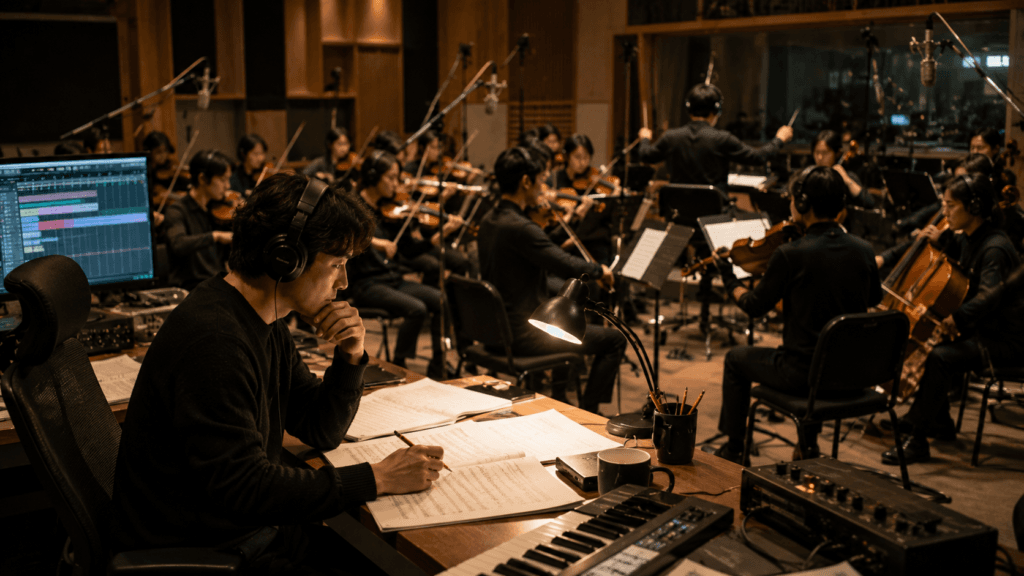
Hundreds of Specialists Shape Every Episode
Actors are the faces audiences recognize.
Behind every episode, however, stands a much larger creative team.
Production designers transform empty buildings into believable homes.
Costume designers subtly reflect a character’s personality through clothing choices.
Hair and makeup artists help characters evolve visually throughout the story.
Lighting specialists shape the mood of every scene.
Sound engineers remove unwanted noise and enhance emotional realism.
Colorists carefully adjust every frame to create a consistent visual identity.
Each department may seem independent, but they constantly collaborate.
A small change to a costume can influence lighting.
Lighting affects camera choices.
Camera choices influence editing.
Editing shapes how the music is used.
Every creative decision connects with another.
This collaborative workflow is one reason Korean dramas often feel remarkably consistent from the first episode to the last.
Why Korean Production Teams Earn Global Respect
International audiences often praise Korean actors or directors.
Within the entertainment industry, however, production teams themselves have also earned enormous respect.
Korean crews are known for their ability to combine efficiency with artistic precision.
Many productions work under demanding schedules while maintaining exceptionally high visual standards.
This reputation has attracted increasing international interest.
Global production companies now collaborate with Korean cinematographers, editors, visual artists, composers, and technical specialists on projects reaching audiences far beyond Korea.
As Korean entertainment continues expanding internationally, the expertise developed within the industry has become one of its greatest exports.
This growing reputation also explains why Korean dramas continue attracting worldwide attention. Why Korean Dramas Dominate Netflix Global Rankings explores how outstanding production quality combines with compelling storytelling to reach global audiences.
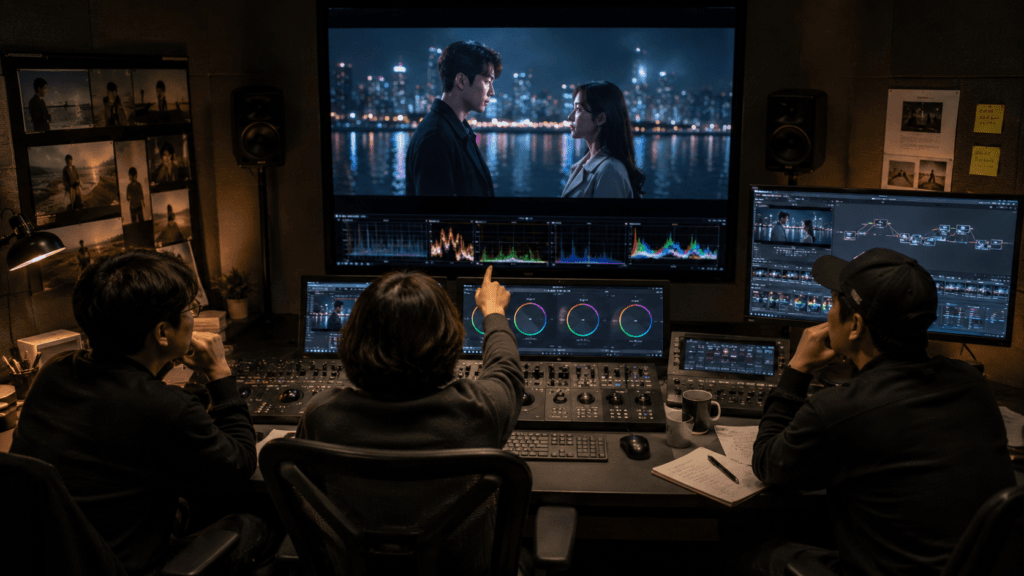
Great Dramas Are Built Through Collaboration
One lesson becomes clear after looking behind the scenes.
No single person creates a successful Korean drama.
A memorable series is the result of hundreds of people solving creative problems together.
The writer imagines the story.
The director interprets it.
Actors bring the characters to life.
Cinematographers shape the visual language.
Editors refine the pacing.
Composers strengthen the emotional impact.
Production teams coordinate thousands of details that viewers rarely notice.
When audiences become completely immersed in a drama, they are experiencing the combined work of an entire creative community.
Perhaps that is why Korean dramas feel so carefully crafted.
Every episode reflects collaboration rather than individual performance.
Conclusion
Watching a Korean drama is easy.
Creating one is anything but.
Behind every memorable scene lies months of planning, collaboration, technical expertise, and creative problem-solving.
From the first draft of a screenplay to the final stage of color grading, each department contributes something essential to the finished production.
That dedication to craftsmanship helps explain why Korean dramas continue earning admiration from viewers around the world.
Technology will continue changing.
Streaming platforms will continue evolving.
Production techniques will become even more advanced.
Yet the heart of Korean entertainment is unlikely to change.
It remains a creative industry built on collaboration, emotional storytelling, and an unwavering commitment to quality.
The next time you watch a Korean drama, you’ll see more than actors performing on screen.
You’ll see the work of hundreds of talented people whose creativity makes every story possible.
Frequently Asked Questions
How long does it take to make a Korean drama?
Production timelines vary, but many dramas require months of script development, pre-production, filming, and post-production before release.
Are Korean dramas filmed before they air?
Many productions complete most or all filming before broadcast, while others may continue filming during the airing schedule depending on the production model.
Why do Korean dramas look so cinematic?
Careful cinematography, production design, lighting, editing, music, and color grading all contribute to their distinctive visual style.
Who has the biggest influence on a Korean drama?
Successful dramas are collaborative projects, but writers, directors, and production teams typically have the greatest creative influence throughout development.
Why are Korean production teams respected internationally?
They are recognized for combining creative storytelling with high production standards, efficient workflows, and strong collaboration across multiple departments.
Continue Exploring
If you enjoyed this article, you may also like:
- What Makes Korean Dramas Different from Western TV?
- Why Korean Dramas Usually Have Only 16 Episodes
- Why Korean Dramas Feel More Emotional Than Hollywood Shows
- Why Korean Dramas Dominate Netflix Global Rankings
- The Future of Korean Entertainment Beyond Netflix
- Korean Drama Product Placement Explained: Why You See So Many Brands