Walk into almost any Korean apartment, and you’ll notice something before you even reach the living room.
A built-in cabinet stands quietly beside the front door.
To many visitors, it looks like an ordinary storage unit.
Some assume it’s simply there to save space.
Others think it’s a convenient place to organize shoes.
They’re both right.
But neither explanation tells the whole story.
If the cabinet existed only to store shoes, why is it built into almost every apartment? Why is it placed at the very entrance instead of inside a bedroom or closet?
Like many details of Korean homes, its purpose goes far beyond convenience.
It quietly supports one of the oldest routines in Korean daily life.
If you’ve already explored Why Koreans Always Take Off Their Shoes Indoors, you know that removing shoes isn’t simply about keeping the floor clean.
And as we discovered in How Ondol Heating Shaped Korean Home Culture, the floor became the center of everyday life because of Korea’s unique approach to home heating.
Once families began living on the floor, something else became necessary.
There had to be a place where the outside world could stop before entering the home.
More Than a Place to Store Shoes
Many homes around the world have closets.
Some have mudrooms.
Others simply leave shoes by the front door.
Korean apartments took a different approach.
Instead of treating shoe storage as an afterthought, they built it directly into the architecture.
That decision wasn’t just about organization.
It was about creating a natural transition between outside and inside.
When someone arrives home, they don’t need to think about what to do.
The design gently guides them.
Open the door.
Take off your shoes.
Place them in the cabinet.
Step into the living space.
The routine feels effortless because the home was designed to support it.
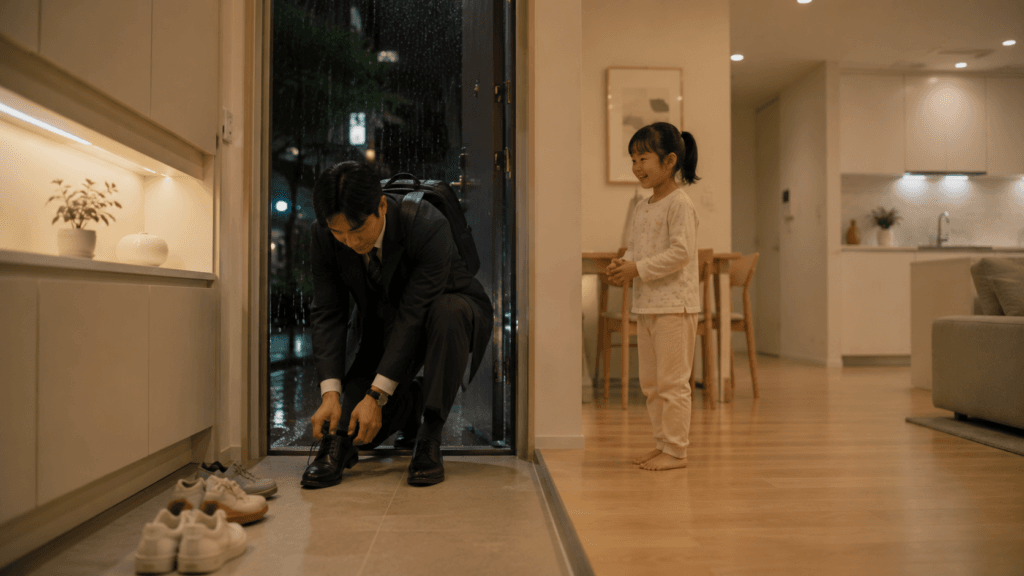
This is something Korean architecture does remarkably well.
Instead of asking people to adapt to the building, the building quietly adapts to the people.
The shoe cabinet isn’t the reason Koreans remove their shoes.
It simply makes a long-standing cultural habit feel completely natural.
And perhaps that’s the difference visitors notice without even realizing it.
The cabinet isn’t just storing shoes.
It’s marking the moment when life outside ends and life at home begins.
A Small Space That Separates Two Different Worlds
Step into a Korean apartment, and you’ll often notice something unusual about the entrance.
The floor is slightly lower than the rest of the home.
To someone unfamiliar with Korean housing, it may seem like a simple architectural detail.
In reality, it’s one of the most thoughtful parts of the entire apartment.
This area, known as the hyeonggwan (entryway), was designed to create a clear transition between outside and inside.
The small change in floor level naturally encourages people to stop before entering the main living space.
That’s where the shoe cabinet comes in.
It isn’t placed there because it happens to fit.
It’s placed there because that’s exactly where the daily routine begins.
You arrive home.
You pause.
Your shoes come off.
Then, only after crossing that small step, do you enter the home itself.
The process feels so effortless that most Koreans rarely think about it.
The architecture quietly guides the behavior without anyone needing to explain the rules.
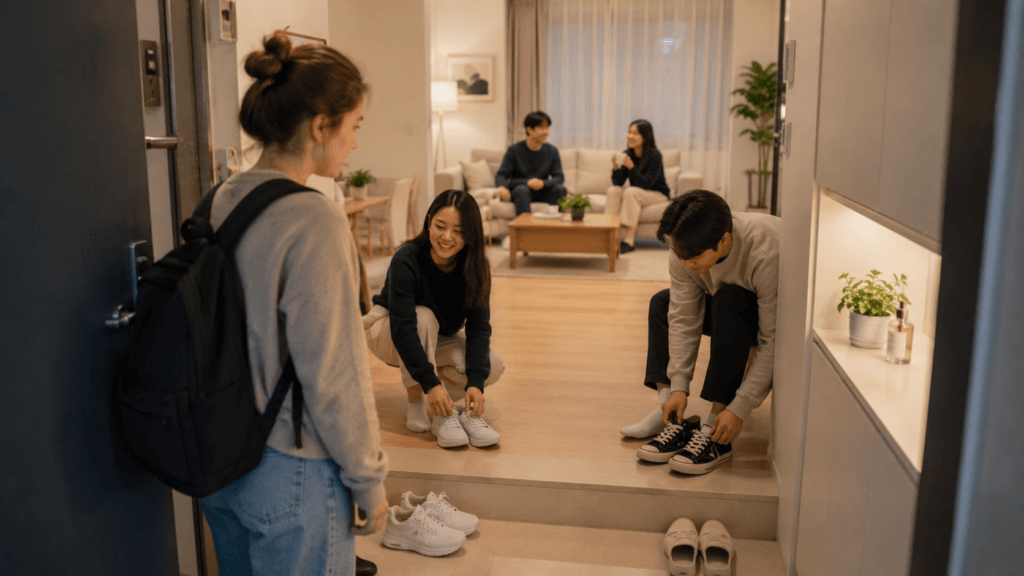
This idea appears throughout Korean home design.
The goal isn’t simply to make a home functional.
It’s to make everyday routines feel effortless.
Once you’ve lived in a Korean apartment, you begin to notice how many small design choices quietly support daily life.
The shoe cabinet is one example.
The lowered entrance is another.
Even the way the living room opens into the rest of the apartment reflects the same philosophy.
Everything works together to create a home where routines don’t feel like rules.
They simply feel natural.
Perhaps that’s why visitors often remember the entrance long after they’ve forgotten the furniture.
It’s one of the first places where they experience Korean home culture—not through words, but through design.
And once you recognize that, another question naturally follows.
If such a simple piece of furniture reveals so much about Korean life, what other everyday spaces inside the home have been shaped by the same philosophy?
Why This Design Still Matters Today
At first glance, a built-in shoe cabinet might seem like a small feature.
In reality, it represents something much bigger.
It shows how Korean homes are designed around everyday behavior rather than simply decorating empty space.
In many countries, people change their habits to fit the layout of a home.
Korean apartments often do the opposite.
The home quietly supports habits that already exist.
That’s why the shoe cabinet doesn’t feel like extra furniture.
It feels like part of the entrance itself.
Even as apartment designs have become more modern, larger, and smarter, this small detail has remained almost unchanged.
Not because it’s traditional.
Because it still works.
Every member of the family—from young children to grandparents—uses the same routine every day.
Shoes stay at the entrance.
The living space stays clean.
The transition from outside to inside happens almost without thinking.
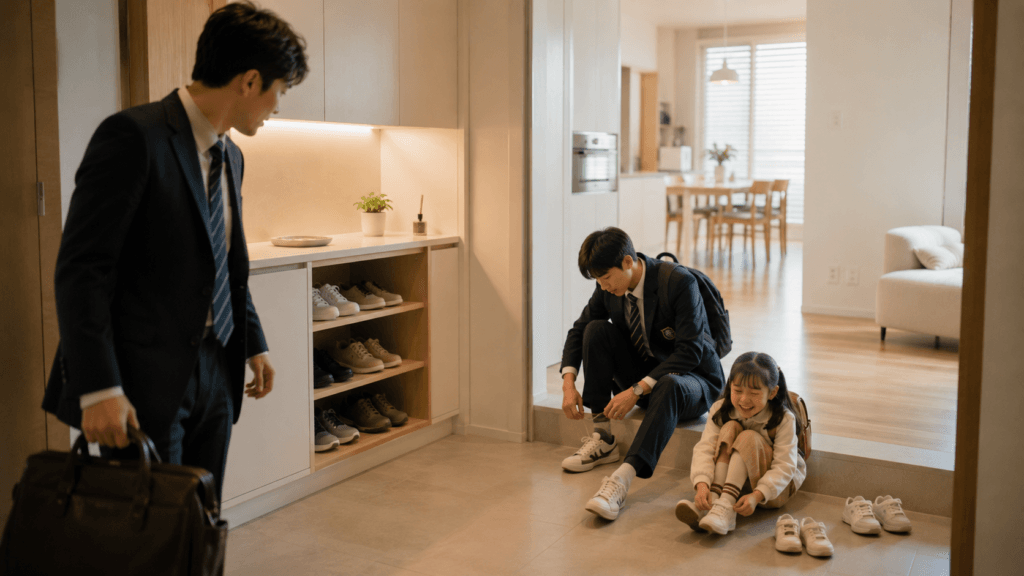
Perhaps that’s the most interesting lesson hidden inside such an ordinary piece of furniture.
Visitors often see a shoe cabinet.
Koreans see the beginning of home.
It’s the place where the outside world is left behind.
The place where a busy day quietly comes to an end.
The place where family life begins.
Sometimes the most meaningful parts of a culture aren’t found in famous landmarks or historic traditions.
Sometimes they’re built into the wall beside the front door.
And that’s exactly why the shoe cabinet has remained one of the most recognizable features of Korean apartments.
Not because people admire the cabinet itself—
but because it continues to support the way people want to live.
Conclusion
A built-in shoe cabinet may seem like a practical design choice, but it tells a much deeper story about Korean home culture.
It reflects a lifestyle where the entrance marks the boundary between public life and private life.
It supports a tradition that has been shaped by floor-centered living, ondol heating, and generations of everyday habits.
Once you understand the purpose of this small space, you begin to notice something remarkable.
Korean homes aren’t designed around objects.
They’re designed around people.
And sometimes, that’s the biggest difference of all.
Continue Exploring
Read next:
- Why Koreans Always Take Off Their Shoes Indoors
- How Ondol Heating Shaped Korean Home Culture
- Why Korean Homes Rarely Use Carpets
Coming Next
If the entrance is designed to separate the outside world from the inside, what happens after you step into the home?
In the next article, we’ll take a room-by-room journey through a typical Korean apartment and discover how every space reflects the rhythms of everyday Korean life.
Coming Next: Inside a Typical Korean Apartment: What Every Room Reveals About Korean Life
FAQ
Why do Korean apartments have built-in shoe cabinets?
Because removing shoes before entering the living area is part of everyday life in Korea. Built-in shoe cabinets make this daily routine convenient while keeping the entrance organized.
Why is the apartment entrance lower than the rest of the home?
The lowered entryway creates a clear transition between the outside and inside, making it natural to remove shoes before stepping into the main living space.
Do all Korean apartments have shoe cabinets?
Most modern apartments include a built-in shoe cabinet or dedicated shoe storage near the entrance, regardless of the apartment’s size.
Can visitors wear shoes inside a Korean apartment?
Generally, no. Guests are expected to remove their shoes unless the host specifically says otherwise.