If someone asked Koreans to name the one place they visit almost every day, many people would answer without hesitation: the convenience store.
Korean Convenience Store Culture is far more than grabbing a quick snack. Convenience stores have become neighborhood kitchens, coffee shops, parcel centers, late-night study spaces, emergency grocery stores, and even social gathering spots. Whether you’re a busy office worker, a university student pulling an all-nighter, or a traveler exploring Seoul at midnight, chances are a brightly lit convenience store is only a few minutes away.
Unlike convenience stores in many countries that primarily sell packaged snacks and drinks, Korean convenience stores function almost like miniature supermarkets combined with everyday service centers. They continuously introduce new products, seasonal collaborations, trendy desserts, and ready-to-eat meals that often go viral on social media.
Today, convenience stores have become one of the easiest windows into understanding modern Korean life. They reveal how people eat, work, relax, and socialize throughout the day.
Why Convenience Stores Became Part of Everyday Korean Life
Korea is one of the world’s most densely populated countries, especially in major cities like Seoul, Busan, and Incheon. Combined with excellent public transportation and busy lifestyles, this urban environment created the perfect conditions for convenience stores to flourish.
Instead of driving to a large supermarket once a week, many Koreans simply walk a few minutes to purchase exactly what they need for the day.
Fresh milk.
Instant ramen.
Coffee.
Ice cream.
Household supplies.
Phone chargers.
Medicine-like health products.
Umbrellas.
Even socks.
Because stores are located almost everywhere, buying only what you need has become a natural habit.
Many locations operate twenty-four hours a day, making them valuable for people working late shifts, students studying overnight, or travelers dealing with jet lag.
Convenience stores also reflect Korea’s culture of efficiency. Rather than spending an hour shopping, customers can finish their entire visit in just a few minutes.
This speed perfectly matches modern Korean lifestyles, where time is often considered one of the most valuable resources.
More Than Snacks: Everyday Services You Can Use
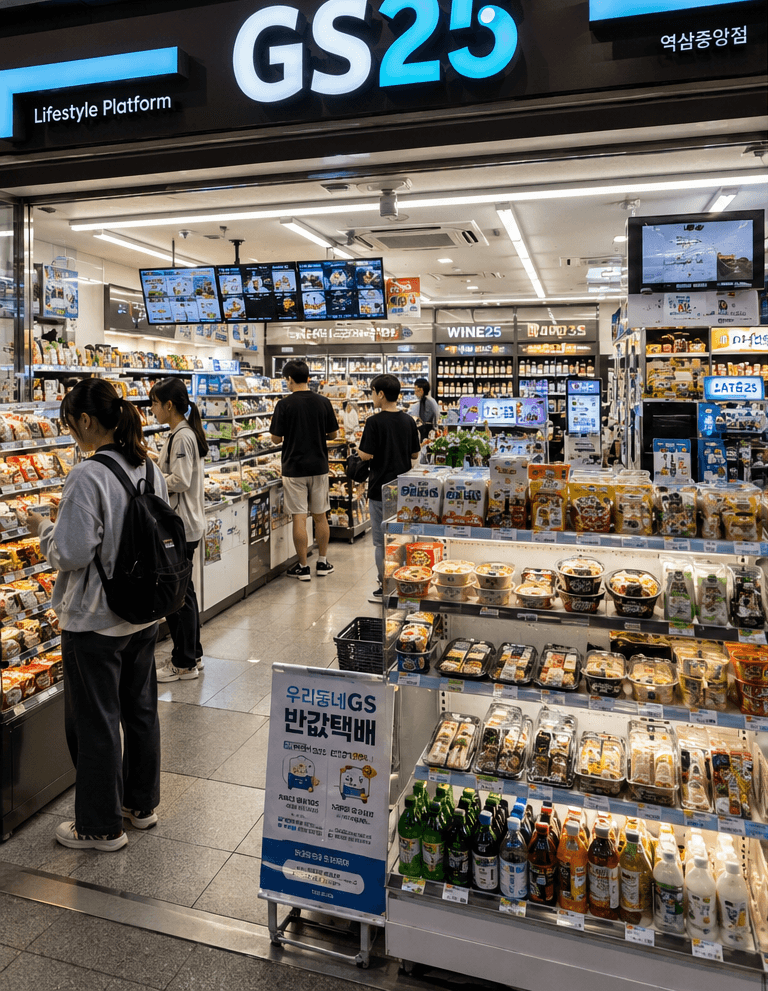
One of the biggest surprises for first-time visitors is how many services Korean convenience stores provide beyond food.
Many locations allow customers to:
•Send domestic parcels
•Print documents
•Withdraw cash
•Pay utility bills
•Recharge transportation cards
•Purchase event tickets
•Collect online shopping deliveries
•Buy prepaid mobile SIM cards
•Use self-service kiosks
Some stores even offer package lockers that allow customers to pick up online purchases whenever it is convenient.
These services save time while reducing the need to visit multiple businesses throughout the day.
For office workers, grabbing breakfast, printing documents, sending a package, and buying coffee can all happen during one short stop before work.
This convenience explains why many Koreans visit their neighborhood convenience store multiple times each week instead of making one large shopping trip.
The stores have quietly evolved into neighborhood service hubs that support daily routines.
The Food That Made Korean Convenience Stores Famous
Ask international travelers what surprised them most about Korea, and convenience store food often appears near the top of the list.
Unlike the limited packaged options found elsewhere, Korean convenience stores offer an impressive variety of fresh, ready-to-eat meals that are affordable, satisfying, and constantly updated.
Popular choices include triangle kimbap, lunch boxes filled with rice and side dishes, freshly prepared sandwiches, salads, instant ramen stations, steamed buns during winter, and seasonal desserts.
Coffee has become another major attraction.
Many stores operate self-service coffee machines capable of producing surprisingly good Americanos, lattes, and iced drinks for a fraction of café prices.
Students frequently grab an iced coffee before class.
Office workers stop in during their commute.
Taxi drivers rely on convenience stores for quick meals between rides.
Travelers often enjoy a complete breakfast for only a few dollars.
Perhaps the most famous experience is creating your own instant ramen meal.
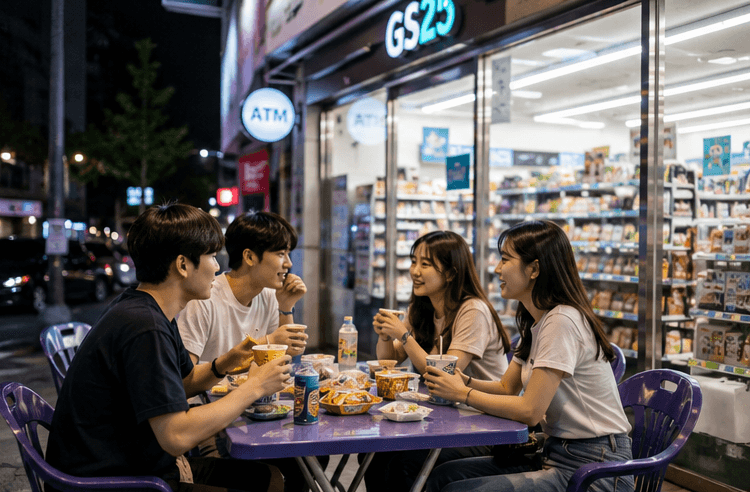
Customers select their preferred ramen, purchase additional toppings like eggs, cheese, dumplings, or sausages, and prepare everything using the store’s hot water station. Many stores also provide seating areas where customers can immediately enjoy their meal.
This simple ritual has become so iconic that countless travel videos now recommend trying Korean convenience store ramen as an essential cultural experience.
Unlike restaurants, convenience stores encourage quick, flexible meals that fit busy schedules without sacrificing variety.
For many people, they represent the perfect balance between affordability, speed, and surprisingly high quality.
Why Korean Convenience Stores Keep Going Viral on Social Media
One reason Korean Convenience Store Culture has attracted worldwide attention is its ability to constantly reinvent itself. Rather than keeping the same shelves year after year, convenience store chains regularly introduce limited-edition foods, celebrity collaborations, seasonal drinks, and products inspired by current trends.
A snack that appears one month may disappear the next.
A new dessert featured by a popular influencer can sell out nationwide within days.
Limited flavors of ice cream, instant noodles, sparkling beverages, and coffee often become trending topics on TikTok, YouTube, and Instagram, encouraging people to visit stores just to see what is new.
This constant rotation creates a sense of discovery. Even locals who visit several times a week never know exactly what they might find.
International visitors often make convenience store “haul” videos, filling baskets with dozens of unique Korean snacks and comparing their favorites. These videos have introduced millions of viewers to products they had never seen before, turning convenience stores into unexpected tourist attractions.
Unlike traditional supermarkets, Korean convenience stores actively respond to customer preferences. If a product becomes popular online, stores can quickly expand its availability. If demand fades, new products replace it almost immediately.
This fast-moving product cycle reflects Korea’s broader consumer culture, where innovation and trend awareness play an important role in everyday shopping.
A Different Experience in Every Season
Another fascinating aspect of Korean convenience store culture is how it changes throughout the year.
During the hot summer months, refrigerated drinks, fruit-flavored ice creams, cold noodle meals, and iced coffee dominate the shelves. Customers escaping the heat often stop by several times a day for refreshing treats.
As autumn arrives, seasonal sweet potatoes, roasted chestnut-flavored snacks, pumpkin desserts, and warm beverages begin to appear.
Winter creates perhaps the most memorable atmosphere.
Many stores prepare steaming hot foods near the checkout counter. Customers can enjoy fish cakes served in warm broth, steamed buns filled with sweet red bean paste or pizza fillings, roasted sweet potatoes, and instant ramen that feels especially comforting on cold evenings.
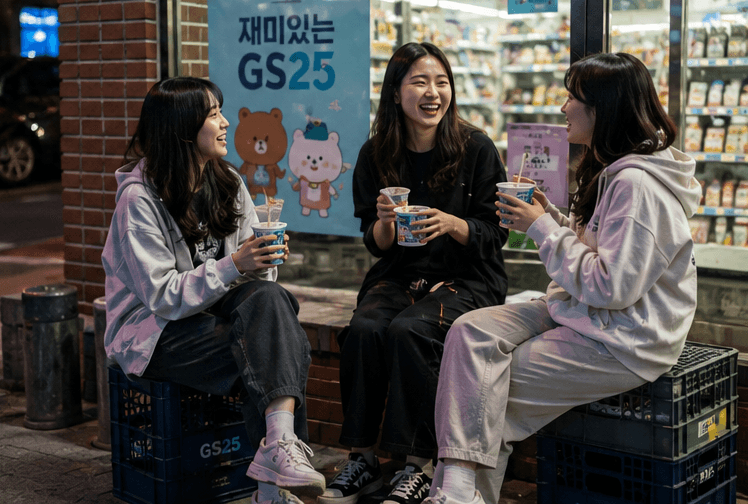
The contrast between freezing streets outside and the warm, brightly lit interior creates a cozy atmosphere that many Koreans associate with childhood memories and late-night conversations.
Spring brings fresh fruit products, cherry blossom-themed desserts, and colorful beverages that celebrate warmer weather.
Because merchandise changes with the seasons, convenience stores never feel static. They evolve alongside Korean daily life, holidays, and consumer habits throughout the year.
Why Tourists Love Korean Convenience Stores
For many international visitors, convenience stores become one of the first places they feel comfortable exploring independently.
Prices are clearly displayed.
Products are neatly organized.
Stores are clean, safe, and easy to navigate.
Most locations accept international credit cards, while self-checkout kiosks increasingly support multiple languages.
Travelers appreciate that they can enjoy an authentic slice of Korean daily life without needing reservations, Korean language skills, or expensive restaurants.
Some visitors even challenge themselves to eat exclusively from convenience stores for an entire day, discovering surprisingly balanced meals that include rice, vegetables, protein, fruit, yogurt, and freshly brewed coffee.
Many stores also provide indoor seating, allowing travelers to rest, recharge their phones, and plan their next destination while enjoying a quick meal.
Late at night, convenience stores become especially valuable because many restaurants close earlier than visitors expect. Whether arriving after a late flight or returning from an evening exploring Seoul, travelers know they can almost always find a hot meal, drinks, and everyday essentials nearby.
This reliability helps explain why convenience stores appear in so many travel guides about Korea.
Convenience Stores as a Reflection of Modern Korean Life
Perhaps the biggest reason convenience stores are so beloved is that they perfectly reflect modern Korean society.
Life in Korea often moves quickly. Students study late into the night. Office workers have demanding schedules. Families balance work, school, and personal commitments. Travelers explore cities from early morning until midnight.
Convenience stores quietly support all of these routines.
They provide affordable meals for busy students.
Coffee for commuters rushing to work.
Late-night snacks after evening study sessions.
Emergency toiletries for travelers.
Parcel services for online shoppers.
A warm place to take a short break during cold winter evenings.
Rather than being merely retail stores, they have become trusted neighborhood spaces that people rely on every single day.
For many Koreans, stopping by the convenience store isn’t a special event—it’s simply part of everyday life.
Yet for visitors, that ordinary routine offers one of the most authentic ways to experience contemporary Korea.
Conclusion
Korean convenience store culture is about much more than buying snacks. It represents efficiency, innovation, accessibility, and the rhythms of everyday life.
From affordable ready-to-eat meals and constantly changing seasonal products to practical services like parcel collection and bill payment, convenience stores have evolved into an essential part of modern Korean society.
For travelers, they offer an affordable introduction to Korean food and culture. For locals, they provide dependable convenience from morning until late at night.
The next time you visit Korea, don’t think of the neighborhood convenience store as just another place to shop. Step inside, explore the shelves, prepare a bowl of instant ramen, try a new dessert, and watch everyday Korean life unfold around you. You may discover that one of the country’s most memorable cultural experiences is found just around the corner.
FAQ
Why are Korean convenience stores so popular?
They combine affordable food, practical daily services, long operating hours, and convenient locations, making them an essential part of everyday life in Korea.
What foods should first-time visitors try?
Popular choices include triangle kimbap, convenience store lunch boxes, instant ramen, Korean snacks, seasonal desserts, iced coffee, and fish cakes during winter.
Are Korean convenience stores open 24 hours?
Many locations operate around the clock, although some stores may reduce hours depending on local demand or staffing.
Can tourists use Korean convenience stores easily?
Yes. Most stores are clean, easy to navigate, accept international credit cards, and many self-service machines offer multilingual support.
Which convenience store chains are most common in Korea?
The largest chains include GS25, CU, 7-Eleven Korea, and emart24, with thousands of locations across the country.
Continue Exploring
If you enjoyed this article, you may also like:
The Unstoppable ‘Buldak Noodles Craze
Ice Americano in Korea: Why Koreans Drink Iced Coffee Even in Freezing Winter
The Rise of Wellness Cafes in Korea
Korean Food Philosophy Slow Aging: The Secret of Korean “Yak-Sik-Dong-Won”