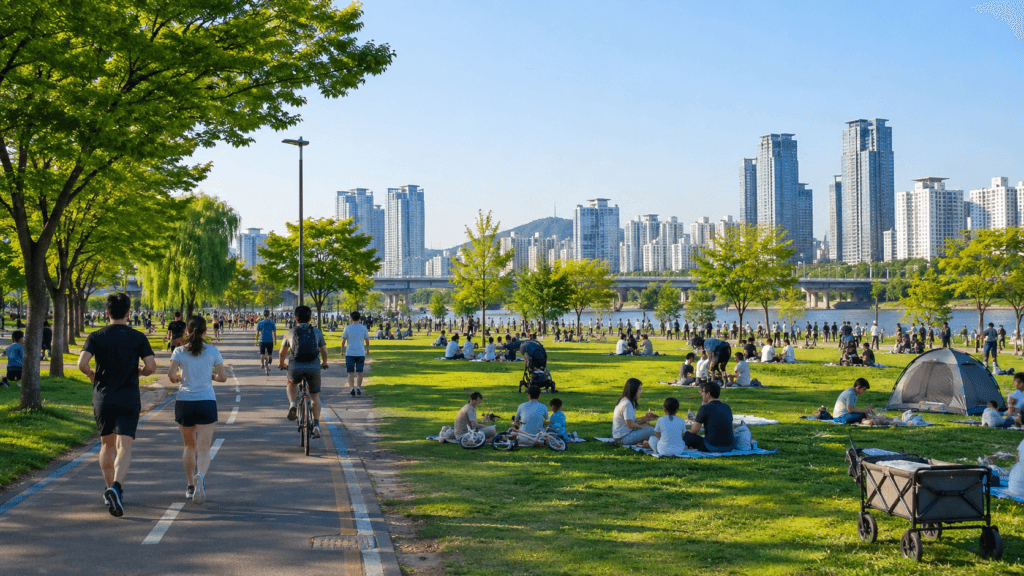
If you visit South Korea for the first time, one thing quickly becomes noticeable. No matter where you are—whether in Seoul, Busan, Daegu, Daejeon, or even smaller cities—you’ll find parks filled with people throughout the day.
Some are jogging before work.
Others are stretching beneath rows of trees.
Parents push strollers along quiet walking paths while grandparents practice gentle exercises nearby. Teenagers gather on grassy lawns after school, and office workers spend their lunch breaks sitting on benches with coffee in hand.
Unlike many countries where parks are mainly weekend destinations, parks in Korea are woven into everyday life.
They are places to exercise, relax, meet friends, enjoy family time, and simply slow down after busy days.
Understanding Korean park culture offers a deeper look into why many Koreans prioritize both wellness and community despite living in one of the world’s most urbanized countries.
Parks Are Designed for Daily Living
One reason Korean parks feel so active is that they are designed to be part of everyday routines rather than occasional attractions.
Instead of building only large destination parks outside cities, Korean urban planning often places smaller neighborhood parks within walking distance of residential areas.
This means people don’t need to plan a special trip.
A short five- or ten-minute walk is often enough to reach a green space.
Many apartment complexes even connect directly to nearby parks through walking paths, making outdoor activity a natural extension of daily life.
These parks usually include:
- Walking trails
- Bicycle paths
- Exercise equipment
- Children’s playgrounds
- Basketball courts
- Badminton courts
- Small streams or ponds
- Gardens that change with each season
Because parks serve so many purposes at once, visitors of every generation can enjoy them together.
It is common to see grandparents exercising while grandchildren play nearby, creating shared experiences that strengthen family bonds.
This accessibility also supports many of the healthy habits discussed in our guide on The Korean Morning Routine: Small Habits That Shape Daily Life, where short walks and fresh air often become part of the start of each day.
Parks Support Korea’s Walking Culture
Walking is one of the simplest forms of exercise, yet it has become a defining feature of Korean daily life.
Rather than relying solely on gyms, many people choose parks as their preferred place to stay active.
Wide walking trails encourage regular movement before work, after dinner, or during weekends.
Unlike intense fitness programs, walking in parks feels approachable for every age group.
Many older adults maintain remarkably active lifestyles by walking several kilometers every day.
Meanwhile, younger professionals often use evening walks as a way to decompress after long hours at work.
This habit connects closely with Korea’s pedestrian-friendly city design explored in Why Koreans Walk So Much: The Hidden Health Benefit of Korean Cities.
Parks simply provide another comfortable environment where those walking habits naturally continue.
Exercise Without Membership Fees
Another interesting aspect of Korean park culture is that staying active often costs nothing.
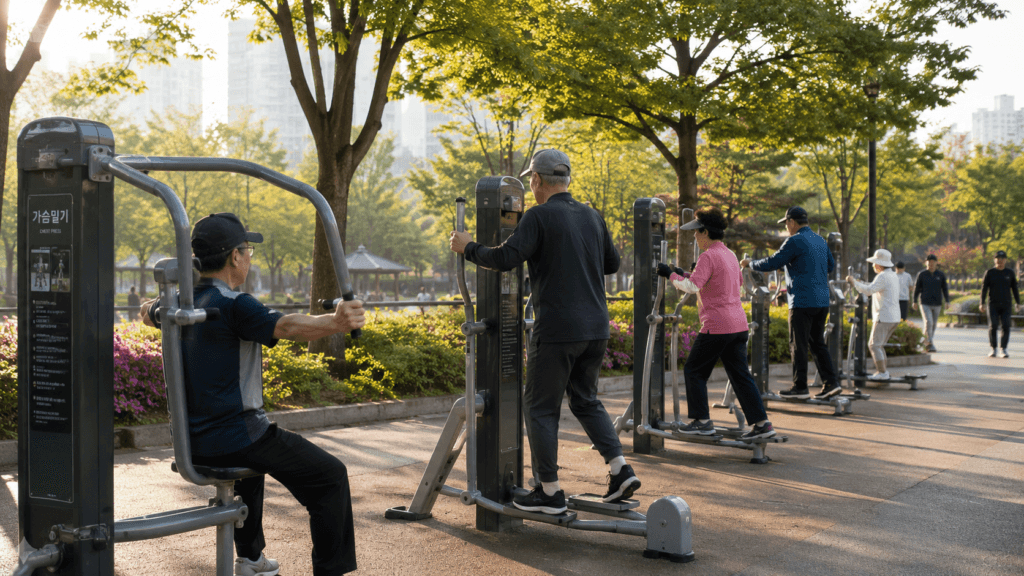
Many parks include outdoor fitness stations equipped with pull-up bars, leg presses, stretching equipment, balance machines, and simple resistance devices.
These facilities are free for everyone.
Early mornings often resemble an open-air gym.
Retirees perform stretching routines together.
Middle-aged visitors alternate between walking and strength exercises.
Even young adults sometimes complete full bodyweight workouts before heading home.
This accessibility removes financial barriers and encourages lifelong physical activity.
Rather than viewing fitness as something requiring expensive memberships, many Koreans see movement as something that can happen anywhere.
That mindset also explains why Outdoor Exercise in Korea: Why Koreans Stay Active All Year Round has become such an important part of Korean wellness culture.
Parks Become Community Spaces
Perhaps the most unique feature of Korean parks is that they create opportunities for spontaneous social interaction.
Unlike commercial spaces where spending money is expected, parks welcome everyone equally.
Neighbors greet each other during morning walks.
Children quickly make new friends on playgrounds.
Dog owners stop to chat.
Retirees gather for conversation after finishing their exercise routines.
Students study together beneath shaded trees.
These everyday encounters strengthen local communities without requiring organized events.
Many visitors may not even know one another’s names, yet repeated encounters create a comforting sense of familiarity.
For newcomers to a neighborhood, parks often become the easiest place to feel connected.
This emphasis on community reflects Korea’s broader balance between personal wellness and social relationships, explored further in How Koreans Balance Work, Wellness, and Social Life.
Every Season Creates a Different Park Experience
Korean parks never feel exactly the same throughout the year.
Instead, each season transforms both the scenery and the activities taking place.
Spring
Cherry blossoms attract families, photographers, and couples.
People enjoy picnics under blooming trees while children play nearby.
The atmosphere feels festive yet relaxed.
Summer
Large trees provide welcome shade from the heat.
Many parks feature fountains or small water play areas for children.
Evening visits become especially popular once temperatures cool.
Autumn
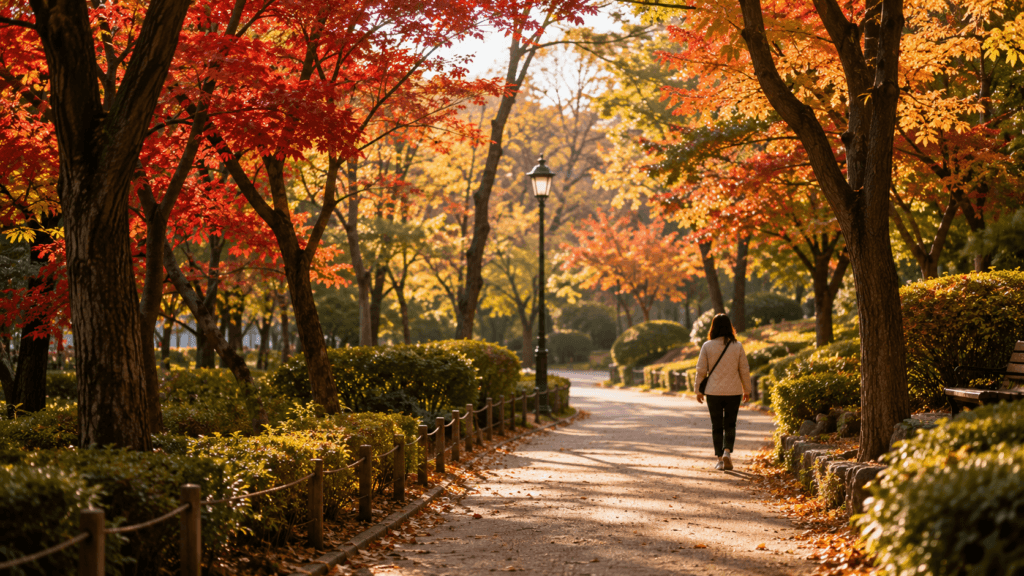
Perhaps the most beloved season, autumn fills parks with brilliant shades of red, orange, and gold.
Walking trails become especially crowded as people admire changing leaves.
Many photography enthusiasts spend entire afternoons capturing colorful landscapes.
Winter
Even colder weather rarely empties Korean parks.
People continue walking while bundled in warm clothing.
Snow-covered paths create peaceful scenery, and some parks even host seasonal festivals or light displays.
Rather than limiting outdoor activity to pleasant weather, Koreans tend to adapt their routines throughout the year.
Parks Encourage Mindfulness
While parks certainly support physical fitness, many visitors come for another reason entirely.
Mental rest.
Modern Korean cities move quickly.
Long work hours, busy commutes, and constant digital connectivity can become mentally exhausting.
Stepping into a nearby park offers a simple but effective reset.
Listening to birds instead of traffic.
Watching leaves move in the wind.
Sitting quietly beside a pond.
Reading beneath a tree.
These seemingly ordinary moments provide valuable opportunities to slow down.
Unlike structured meditation, spending time in nature requires no special training.
Simply being outdoors can help reduce stress and improve concentration.
This appreciation for slower living also connects naturally with The Rise of Wellness Cafes in Korea, where peaceful environments encourage people to pause and recharge.
Parks Are Perfect for Family Time
Weekend afternoons often reveal another important role of Korean parks.
Families.
Parents bring bicycles.
Children ride scooters.
Grandparents watch toddlers explore playgrounds.
Some families bring picnic mats while others simply enjoy ice cream after a walk.
Unlike expensive entertainment options, parks provide affordable opportunities to spend quality time together.
Many families return to the same parks every weekend, creating traditions that children remember for years.
These experiences also explain why outdoor leisure remains deeply connected to Korean lifestyle despite rapid urban development.
Readers interested in Korea’s outdoor leisure traditions may also enjoy Why Picnics Are So Popular in Korea, where public green spaces become vibrant gathering places during spring and autumn.
Parks Connect Cities With Nature
South Korea is one of the world’s most densely populated countries.
Despite this, nature remains surprisingly accessible.
Many city parks connect directly to rivers, forests, hills, or mountain trails.
Instead of separating urban development from nature, Korean cities often blend them together.
A person might leave a busy subway station and reach a peaceful wooded trail within minutes.
This balance makes outdoor recreation convenient even for people with demanding schedules.
It also helps explain why so many Koreans maintain active lifestyles despite living in large metropolitan areas.
For visitors, these green spaces often become one of the biggest surprises about modern Korea.
The contrast between towering skyscrapers and peaceful tree-lined paths creates an urban environment that feels both energetic and calming.
Parks Reflect Korea’s Wellness Philosophy
Looking beyond walking paths and playgrounds, Korean parks reveal something deeper about the country’s lifestyle.
They reflect a belief that wellness does not always require expensive products, luxury retreats, or complicated routines.
Instead, health can grow from consistent daily habits.
Taking a walk after dinner.
Stretching in the morning.
Meeting friends outdoors.
Watching children play.
Enjoying seasonal flowers.
Reading quietly beneath a tree.
These simple activities accumulate over time, supporting both physical and mental well-being.
Rather than separating wellness from ordinary life, Korean park culture makes healthy living feel natural and accessible.
Perhaps that is why parks remain busy every single day—not because people have extra time, but because spending time outdoors has become an ordinary part of life itself.
Conclusion
At first glance, Korean parks may seem like ordinary public spaces.
But spend a little time observing them, and you’ll discover they are much more than patches of greenery.
They are outdoor gyms, community centers, family gathering places, peaceful retreats, and daily wellness hubs all at once.
Whether someone is walking before sunrise, sharing coffee with friends, reading beneath autumn trees, or exercising after work, parks quietly support countless moments that shape everyday life in Korea.
They remind us that wellness isn’t always built through dramatic lifestyle changes. Sometimes, it begins with something as simple as taking a walk through the nearest park.
As many visitors discover, experiencing Korean park culture isn’t just about seeing beautiful landscapes—it’s about understanding how ordinary spaces help create extraordinary daily habits.
If you’re curious about how Koreans continue embracing nature beyond city parks, our next article explores another beloved tradition: Why Koreans Love Hiking, where mountain trails become an essential part of Korea’s outdoor lifestyle.
FAQ
Why are Korean parks always busy?
Because parks are integrated into daily routines. Many people visit before work, after dinner, during lunch breaks, or on weekends for exercise, relaxation, or socializing.
Are Korean parks free to use?
Yes. Public parks in Korea are generally free and often include walking trails, playgrounds, sports courts, and outdoor fitness equipment.
What activities are popular in Korean parks?
Walking, jogging, cycling, stretching, exercising, picnicking, reading, photography, and spending time with family or friends are among the most common activities.
Which season is best for visiting Korean parks?
Every season offers something different. Spring features cherry blossoms, summer provides lush greenery, autumn is famous for colorful foliage, and winter offers peaceful snow-covered scenery.
How do parks contribute to Korean wellness?
They encourage daily physical activity, reduce stress, promote social interaction, and make healthy lifestyles accessible without requiring expensive memberships or equipment.
Continue Exploring
- Korean Morning Routine: Small Habits That Shape Daily Life
- Why Koreans Walk So Much: The Hidden Health Benefit of Korean Cities
- Outdoor Exercise in Korea: Why Koreans Stay Active All Year Round
- How Koreans Balance Work, Wellness, and Social Life
- The Rise of Wellness Cafes in Korea
- Why Picnics Are So Popular in Korea
Next - Why Koreans Love Hiking