If you’ve watched American television for years, one of the first things you’ll notice about Korean dramas is their length. Just as you’re becoming attached to the characters, the story ends. There isn’t another season waiting next year or a cliffhanger designed to keep the series running indefinitely.
For many international viewers, this raises an interesting question: Why do Korean dramas usually have only 16 episodes?
The answer goes far beyond tradition. The 16-episode format reflects Korea’s unique approach to storytelling, television production, audience expectations, and even the economics of the entertainment industry.
Rather than producing as many episodes as possible, Korean creators often focus on telling one complete story with a carefully planned beginning, middle, and ending. This philosophy has become one of the defining characteristics of modern K-dramas and one of the biggest reasons they have earned such a loyal global audience.
If you’re new to Korean dramas, start with What Makes Korean Dramas Different from Western TV? to understand the storytelling philosophy that makes K-dramas unique.
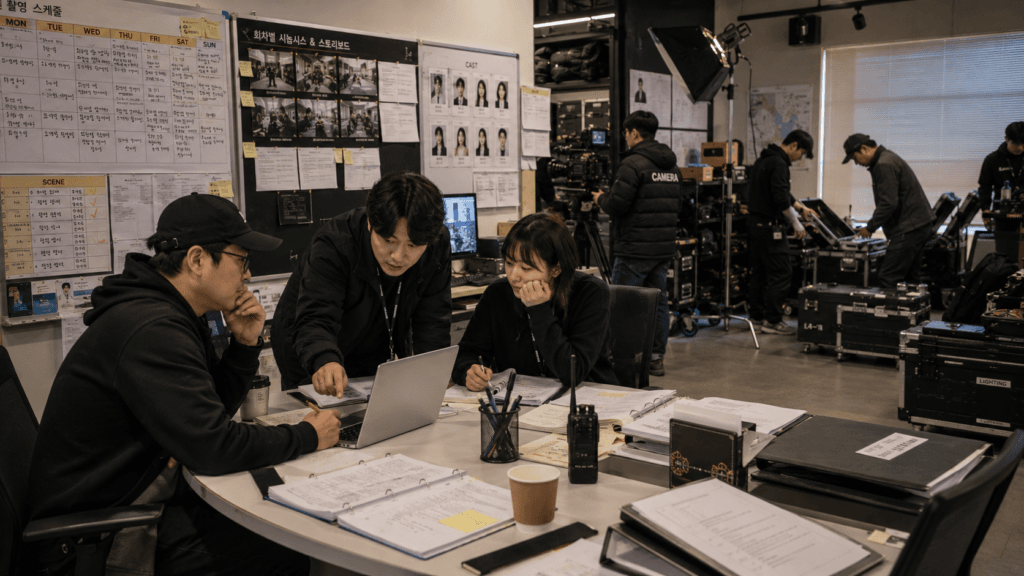
The 16-Episode Format Didn’t Happen by Accident
Although not every Korean drama has exactly 16 episodes, the format became popular because it strikes a practical balance between storytelling and production.
Sixteen episodes provide enough time to introduce compelling characters, build emotional relationships, develop meaningful conflicts, and deliver a satisfying conclusion without making the story feel unnecessarily long.
For decades, Korean broadcasters discovered that audiences responded well to dramas with a clearly defined ending. Instead of stretching successful series across multiple years, production companies focused on creating fresh stories that viewers could enjoy within a few months.
This approach also encouraged writers to think differently.
Before filming even begins, most Korean dramas already have a clear narrative structure. Writers know where the story starts, how the characters will develop, and how everything will conclude.
Because the destination is already planned, every episode serves a purpose.
Very few scenes exist simply to fill time.
Every conversation, relationship, and conflict gradually moves the story toward its conclusion.
This disciplined approach to storytelling has become one of the biggest differences between Korean dramas and many long-running Western television series.
A Complete Story Matters More Than Endless Seasons
In many television markets, success often leads to another season.
If ratings remain high, networks naturally want more episodes.
While this allows audiences to spend more time with favorite characters, it can also create storytelling challenges. Writers must introduce new conflicts, extend existing relationships, or invent additional storylines simply to keep the series going.
Korean dramas usually take the opposite approach.
The goal is not to ask how many seasons a drama can survive.
The goal is to tell the best possible story.
This philosophy changes everything.
Characters experience meaningful growth because writers know exactly where their journey ends.
Relationships progress naturally rather than being delayed for several seasons.
Major plot twists feel intentional because they were planned from the beginning.
Even supporting characters often receive satisfying conclusions instead of disappearing as new storylines take over.
For viewers, this creates confidence.
Starting a Korean drama doesn’t feel like beginning an endless commitment. Instead, it feels like opening a novel with a clear ending waiting at the final chapter.
Writers Plan the Ending Before Filming Starts
One reason Korean dramas maintain consistent quality is the amount of preparation that happens before cameras begin rolling.
Unlike productions that constantly adjust future episodes based on ratings, many Korean drama teams spend months developing scripts before filming starts.
Writers work closely with directors and producers to shape the overall narrative.
Character arcs are mapped.
Major emotional moments are scheduled.
Episode pacing is carefully considered.
This level of preparation helps prevent many common storytelling problems, such as introducing unnecessary characters or abandoning important plotlines halfway through the series.
It also allows production teams to coordinate filming schedules more efficiently.
Actors understand their characters’ complete emotional journey before shooting begins, making performances feel more consistent from the first episode to the last.
If you’re interested in the different storytelling styles found across Korean television, explore Korean Drama Genres Explained: Romance, Thriller, Historical & More to see how various genres use the same storytelling foundation in unique ways.

Different Genres Sometimes Break the Rule
Although sixteen episodes have become the format many viewers associate with Korean dramas, there has never been a strict industry rule requiring every series to follow that number.
Romantic comedies frequently stay close to 16 episodes because they benefit from balanced pacing and gradual relationship development.
Thrillers sometimes finish in 12 episodes to maintain constant tension without slowing the momentum.
Historical dramas often extend to 20, 24, or even 50 episodes because they cover major political events, multiple generations, or complex historical conflicts.
Daily family dramas can run for more than 100 episodes, while short-form streaming originals occasionally tell complete stories in just six or eight episodes.
As streaming services continue investing in Korean entertainment, episode counts have become even more flexible.
Instead of following one standard formula, creators now choose the length that best supports each individual story.
The guiding principle remains the same:
The story determines the number of episodes—not the other way around.
How Streaming Services Are Changing the Traditional Format
The rise of global streaming platforms has given Korean creators more flexibility than ever before.
In the past, television broadcasters often scheduled dramas around fixed weekly programming slots. Episode lengths and total episode counts were influenced by broadcasting schedules, advertising, and seasonal programming.
Streaming services have changed those rules.
Today, Korean productions can be designed specifically for the story they want to tell rather than fitting into a traditional television schedule.
Some streaming originals finish their stories in just eight episodes.
Others expand to twelve.
Large-scale productions may still choose sixteen episodes because the format provides enough time to build characters while maintaining strong pacing.
Instead of replacing the traditional structure, streaming platforms have encouraged greater creative freedom.
Writers now ask a different question.
Rather than deciding how many episodes they should produce first, they decide how many episodes the story actually needs.
This approach has helped maintain the quality that international audiences expect from Korean dramas while allowing creators to experiment with different storytelling styles.
Why International Audiences Love Shorter Korean Dramas
For viewers outside Korea, one of the biggest advantages of K-dramas is their manageable length.
Watching a television series no longer requires months of commitment.
A sixteen-episode drama can often be completed over a few weekends, making it much easier for busy viewers to finish an entire story.
This shorter format also creates stronger emotional pacing.
Every episode feels important because there is limited time to develop relationships, introduce conflicts, and resolve the story naturally.
There are fewer filler episodes, fewer repetitive storylines, and fewer situations where the plot feels stretched simply to continue another season.
Many international fans also appreciate knowing that the ending already exists.
Instead of worrying whether a favorite series will be canceled unexpectedly, viewers can begin watching with confidence that the creators planned a complete conclusion from the beginning.
This sense of closure has become one of the defining strengths of Korean television.
It’s a storytelling experience that feels more like reading a carefully written novel than following an endless television franchise.

Will Korean Dramas Always Have 16 Episodes?
Probably not.
Although sixteen episodes remain one of the most recognizable formats in Korean television, the industry continues to evolve.
Streaming platforms have already introduced greater flexibility, allowing creators to choose the format that best fits their stories.
Some dramas may continue using twelve episodes to maintain a faster pace.
Others may return to twenty episodes when the narrative requires additional time.
Historical dramas, family dramas, and certain large-scale productions will likely continue using longer formats, while premium streaming series may experiment with even shorter seasons.
What is unlikely to change is the storytelling philosophy behind Korean dramas.
Whether a series has eight, twelve, sixteen, or twenty episodes, audiences expect a carefully planned narrative with meaningful character development and a satisfying ending.
That commitment to complete storytelling is what distinguishes Korean dramas from many long-running television series around the world.
If you’re curious about everything that happens before filming even begins, continue with How Korean Dramas Are Made: Behind the Scenes to explore the creative process behind every production.

Conclusion
The popularity of the sixteen-episode format is no coincidence. It reflects a storytelling philosophy that values quality over quantity, allowing writers to create complete narratives instead of extending stories indefinitely.
While the exact number of episodes continues to evolve with the growth of global streaming platforms, the core principle remains the same: every episode should move the story forward.
For international audiences, this approach has become one of the greatest strengths of Korean entertainment. It allows viewers to enjoy compelling characters, emotional storytelling, and satisfying endings without committing to years of television.
Whether your next K-drama lasts eight episodes or twenty, chances are it was designed with one goal in mind—to tell a memorable story from beginning to end.
Frequently Asked Questions
Do all Korean dramas have exactly 16 episodes?
No. While 16 episodes are common, many dramas have 12, 20, or even more episodes depending on the story and genre.
Why don’t Korean dramas usually have many seasons?
Most Korean dramas are written as complete stories before production begins. The focus is on delivering a satisfying ending rather than extending the series for additional seasons.
Are streaming platforms changing Korean drama formats?
Yes. Streaming services give creators greater flexibility, leading to shorter and longer series depending on the needs of each production.
Which genres usually have more than 16 episodes?
Historical dramas, family dramas, and daily television series often have longer episode counts than romantic comedies or thrillers.
Is a shorter series better?
Not necessarily. The best episode count is the one that fits the story. Korean creators generally choose the format that allows the narrative to develop naturally without unnecessary filler.
Continue Exploring
If you enjoyed this article, you may also like:
•What Makes Korean Dramas Different from Western TV?
•How to Start Watching Korean Dramas: A Beginner’s Guide
•Korean Drama Genres Explained: Romance, Thriller, Historical & More
•How Korean Dramas Are Made: Behind the Scenes