Many people discovering Asian comics for the first time assume that webtoons and manga are simply different names for the same thing.
After all, both tell stories through illustrated panels.
Both feature memorable characters, dramatic plot twists, and dedicated fan communities.
Both have inspired hit television series, movies, and animation.
Yet once you begin reading them, the differences become immediately clear.
The experience of reading a Korean webtoon is very different from reading a Japanese manga.
The stories may share certain themes, but the way they are created, published, and experienced has evolved in completely different directions.
Understanding these differences not only helps readers choose where to begin but also explains why Korean webtoons have become such an important part of today’s global entertainment industry.
Rather than competing with manga, webtoons have created their own style of storytelling—one designed specifically for the digital age.
If you’ve already explored How Korean Webtoons Become Hit Dramas, you’ve seen how webtoons frequently inspire successful television adaptations. Before understanding that creative journey, it helps to understand what makes webtoons different from manga in the first place.
What Is a Korean Webtoon?
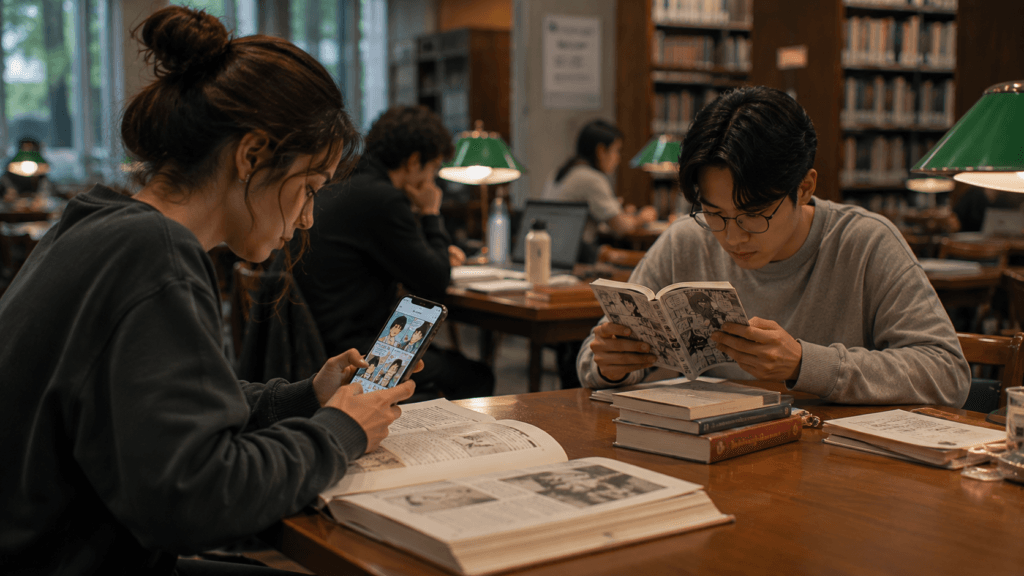
A webtoon is a digital comic designed primarily for online reading.
Unlike traditional printed comics, webtoons are created with smartphones and tablets in mind.
Instead of turning pages, readers simply scroll downward through a continuous sequence of illustrations.
This vertical format changes the storytelling experience.
Creators can control pacing by using empty space between scenes.
Long scrolling sections can build suspense before revealing an important moment.
Emotional conversations unfold naturally without being interrupted by page breaks.
Most Korean webtoons are also published in full color.
The use of lighting, seasonal colors, weather, and visual atmosphere helps strengthen emotional storytelling.
Because they are released digitally, new chapters often appear on a regular weekly schedule, allowing readers to follow stories over months or even years.
This mobile-first design has played a major role in helping Korean webtoons reach readers around the world.
What Is Manga?
Manga refers to Japanese comics, a storytelling tradition with a much longer publishing history.
Most manga are originally published in magazines before later being collected into individual volumes.
Unlike webtoons, manga are traditionally printed in black and white.
Readers follow each page from right to left, a format that reflects Japanese publishing conventions.
This page-based structure gives manga artists complete control over page composition.
A dramatic reveal may occur only after a page is turned.
Large illustrations can occupy an entire page.
Multiple small panels may slow the rhythm of an emotional conversation.
Although digital manga has become increasingly common, many readers still enjoy physical books as an important part of the experience.
For many fans, collecting manga volumes remains just as meaningful as reading the stories themselves.
Rather than being shaped by smartphones, manga evolved through decades of magazine publishing and print culture.
That history continues influencing how stories are presented today.
Two Different Formats Create Two Different Reading Experiences
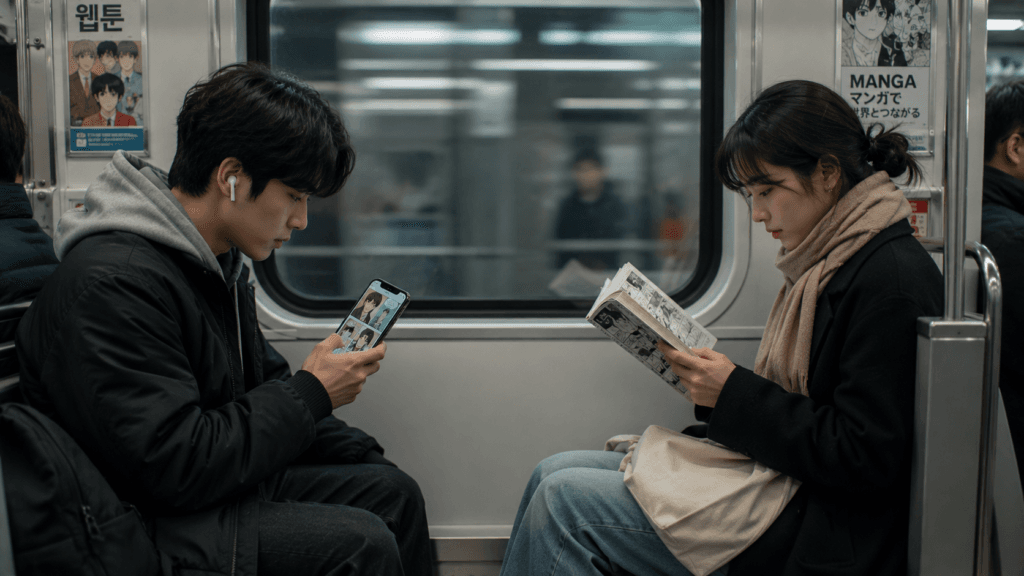
The most obvious difference between webtoons and manga is not the artwork.
It is the way readers move through the story.
Reading a webtoon feels fluid.
One scene naturally flows into the next through continuous scrolling.
Readers experience long emotional pauses, dramatic reveals, and cinematic pacing without stopping to turn pages.
The format feels especially comfortable on modern smartphones because it was designed specifically for digital reading.
Manga offers a different rhythm.
Every page turn creates anticipation.
Artists carefully arrange panels so that readers discover new information exactly when intended.
The physical act of turning pages becomes part of the storytelling experience.
Neither format is objectively better.
They simply create different relationships between the reader and the story.
Some readers enjoy the immersive flow of webtoons.
Others appreciate the carefully composed pages and artistic traditions found in manga.
These different reading experiences explain why both formats continue attracting passionate audiences around the world.
Storytelling Reflects Different Creative Traditions
The differences extend beyond format.
Many Korean webtoons are written with long-term digital serialization in mind.
Episodes are often structured around weekly releases, ending with cliffhangers that encourage readers to return.
The pacing reflects how audiences consume stories online.
Manga has traditionally developed within Japan’s magazine publishing industry.
While many famous manga also use cliffhangers, the storytelling rhythm is often influenced by printed chapters and collected volumes rather than infinite scrolling.
Neither approach limits creativity.
Instead, each medium has developed storytelling techniques that suit its own audience and publishing environment.
These creative differences become especially noticeable when stories move from page to screen.
Because many webtoons already use cinematic pacing and visual storytelling, they often adapt naturally into live-action productions.
Why Webtoons Adapt So Well Into TV Dramas
One reason Korean webtoons have become such valuable source material is the way they are written.
Unlike many traditional comics, webtoons are designed for readers who experience stories one vertical scroll at a time.
That format naturally creates dramatic reveals, emotional pauses, and cinematic pacing.
Readers move through scenes almost as if they are watching a film.
This visual rhythm makes it easier for producers to imagine how a story might translate into live-action television.
The emotional structure is often already in place.
Major cliffhangers appear at the end of episodes.
Character development unfolds gradually over time.
Many scenes already feel like storyboards waiting to be filmed.
Of course, adaptation still requires significant creative work.
Screenwriters expand dialogue.
Directors reinterpret important scenes.
Actors add emotional depth that illustrations can only suggest.
As discussed in How Korean Webtoons Become Hit Dramas, successful adaptations preserve the heart of the original story while allowing television to take advantage of its own strengths.
Which Format Is Better for Beginners?
The answer depends on how you enjoy reading.
If you primarily read on your phone and enjoy colorful artwork with smooth, continuous scrolling, webtoons are usually the easiest place to begin.
Most platforms are designed for mobile devices, making it simple to read during a commute, while relaxing at home, or whenever you have a few free minutes.
Many readers also appreciate the full-color artwork and modern digital presentation.
Manga may be a better choice if you enjoy traditional books and carefully composed page layouts.
The experience of turning pages, discovering dramatic reveals, and following the artist’s original composition remains one of manga’s greatest strengths.
Some readers also prefer collecting physical volumes, something that continues to be an important part of manga culture.
For newcomers, there is no wrong choice.
The best format is the one that matches how you naturally enjoy stories.
Many fans eventually discover that they enjoy both for different reasons.
Webtoons and Manga Continue Learning From Each Other
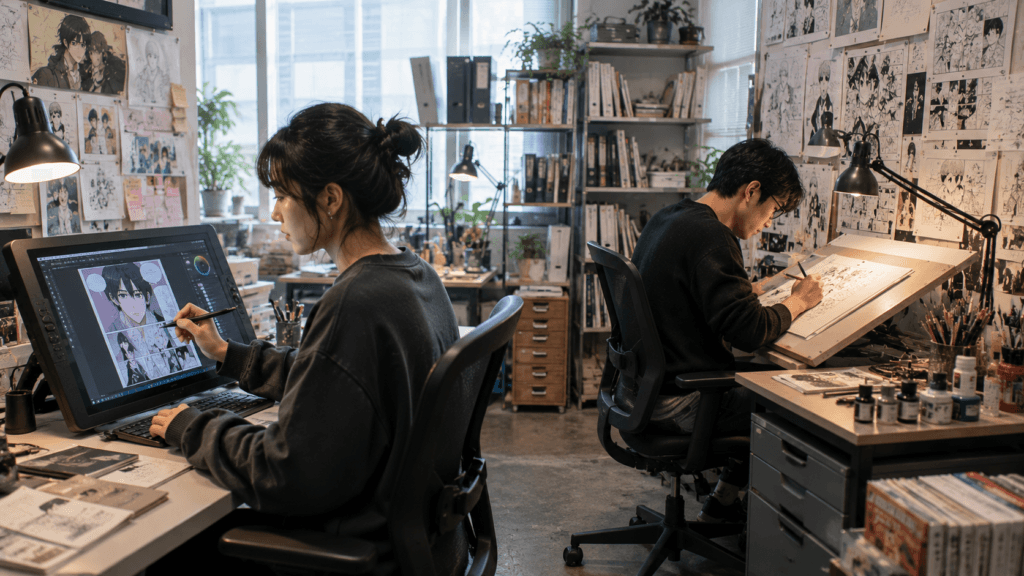
Although webtoons and manga developed through different publishing traditions, the two industries increasingly influence one another.
Digital manga platforms have become more common in recent years.
Some manga creators now experiment with vertical storytelling designed for mobile devices.
At the same time, webtoon creators continue learning from manga’s strengths in character development, visual composition, and long-form storytelling.
Rather than competing directly, both formats continue evolving as audiences discover new ways to read.
The growing popularity of digital publishing has encouraged creators across Asia to experiment with storytelling techniques that would have been difficult only a decade ago.
For readers, this means greater variety and more opportunities to explore different styles of illustrated storytelling.
The Future of Digital Storytelling
The success of Korean webtoons demonstrates how technology can reshape an entire creative industry.
Stories that once existed only in printed magazines now reach millions of readers instantly through smartphones.
Many continue their journey beyond digital comics, becoming television dramas, films, animation, games, and even international remakes.
This flexibility has transformed webtoons into one of Korea’s most influential creative exports.
At the same time, manga continues attracting new generations of readers while adapting to changing technology.
Rather than replacing one another, webtoons and manga are expanding the possibilities of visual storytelling together.
As digital entertainment continues evolving, both formats are likely to remain important parts of the global creative landscape.
Conclusion
Webtoons and manga may appear similar at first glance, but they represent two distinct storytelling traditions.
Manga grew from decades of print publishing, carefully designed page layouts, and a rich artistic heritage.
Webtoons emerged from the digital era, embracing smartphones, vertical scrolling, and full-color storytelling created for modern readers.
Neither format is inherently better.
Each offers a unique reading experience shaped by its own history, creative philosophy, and audience.
For many readers, webtoons provide an accessible introduction to Korean entertainment, while manga offers an equally rewarding journey through Japan’s comic tradition.
The best way to appreciate their differences is simply to experience both.
You may discover that each medium tells unforgettable stories in its own remarkable way.
Frequently Asked Questions
Are webtoons and manga the same?
No. While both are illustrated storytelling formats, webtoons are primarily digital and vertically scrolled, whereas manga traditionally uses printed pages and is read from right to left.
Why are webtoons usually in color?
Because they were designed for digital devices, full-color artwork enhances readability and creates a more immersive mobile experience.
Is manga always black and white?
Most traditional manga is published in black and white, although color editions and digital releases have become more common in recent years.
Which is easier for beginners?
Many new readers find webtoons easier because they are optimized for smartphones and feature intuitive vertical scrolling. However, readers who enjoy printed books may prefer manga.
Why do so many Korean dramas come from webtoons?
Their cinematic pacing, strong character development, and loyal fan communities make webtoons excellent source material for television adaptations.
Continue Exploring
If you enjoyed this article, you may also like: