Over the past decade, Korean webtoons have become one of the entertainment industry’s richest sources of new television stories.
Many internationally successful dramas didn’t begin as original screenplays.
They began as digital comics.
This trend isn’t simply the result of webtoons becoming more popular.
Instead, it reflects the way Korean webtoons are built from the very beginning.
Their storytelling naturally emphasizes memorable characters, emotional pacing, visually striking scenes, and episode endings that encourage readers to keep going.
These same qualities also happen to work exceptionally well on television.
For producers, adapting a successful webtoon isn’t just about finding an existing audience.
It’s about discovering stories that already understand how to keep people emotionally invested.
That combination has made Korean webtoons one of the most valuable creative foundations in today’s entertainment industry.
If you’ve already read How Korean Webtoons Become Hit Dramas, you’ve seen the production journey from digital comic to television series. This article explores why the storytelling itself translates so effectively from one medium to another.
Built Around Episodic Storytelling
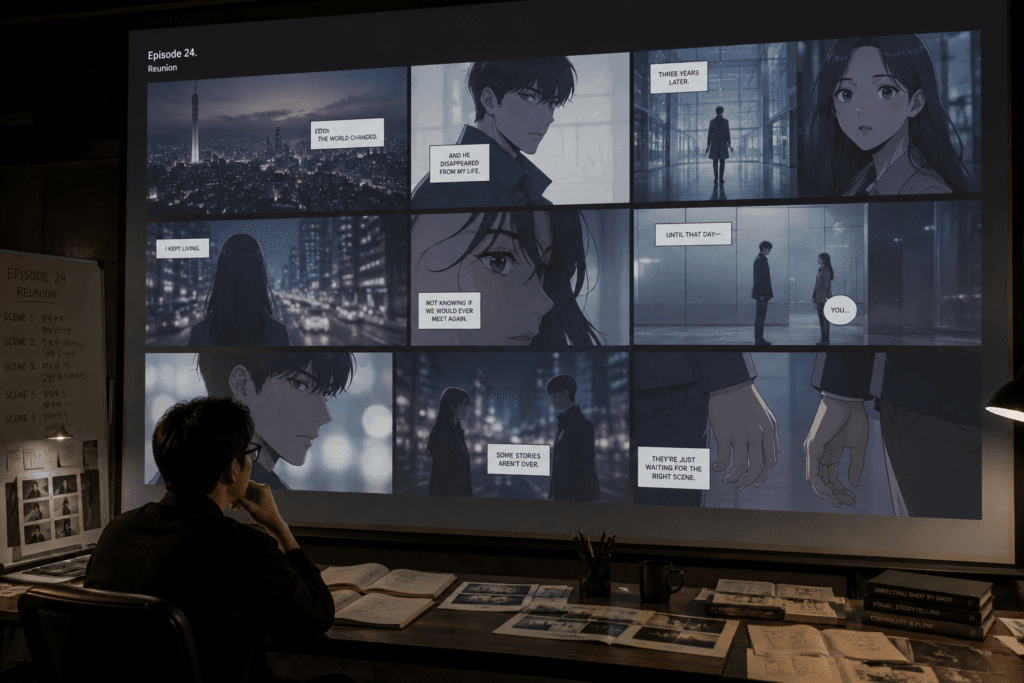
Unlike many traditional comics, Korean webtoons are usually published one episode at a time.
Each update needs to satisfy readers while also encouraging them to return next week.
As a result, creators naturally structure every episode with its own emotional rhythm.
There is usually a clear beginning.
A conflict develops.
Relationships evolve.
Questions appear.
Then the episode ends at exactly the moment readers most want to continue.
This rhythm closely mirrors television storytelling.
Drama episodes also build toward memorable endings that encourage viewers to watch the next installment.
Because both formats rely on episodic engagement, adapting the overall narrative often requires fewer structural changes than audiences might expect.
Instead of rebuilding the story from scratch, production teams can focus on translating those emotional beats into live-action scenes.
Strong Characters Already Have Loyal Fans
A successful adaptation depends on far more than an interesting plot.
Audiences remember characters.
They become emotionally attached to them over dozens—or sometimes hundreds—of episodes.
By the time a popular webtoon is considered for adaptation, many readers already know exactly who these characters are.
They understand their personalities.
They debate their decisions.
They celebrate their victories and worry about their failures.
This existing emotional investment gives producers something incredibly valuable.
Instead of introducing completely unfamiliar characters, they begin with personalities that audiences already care about.
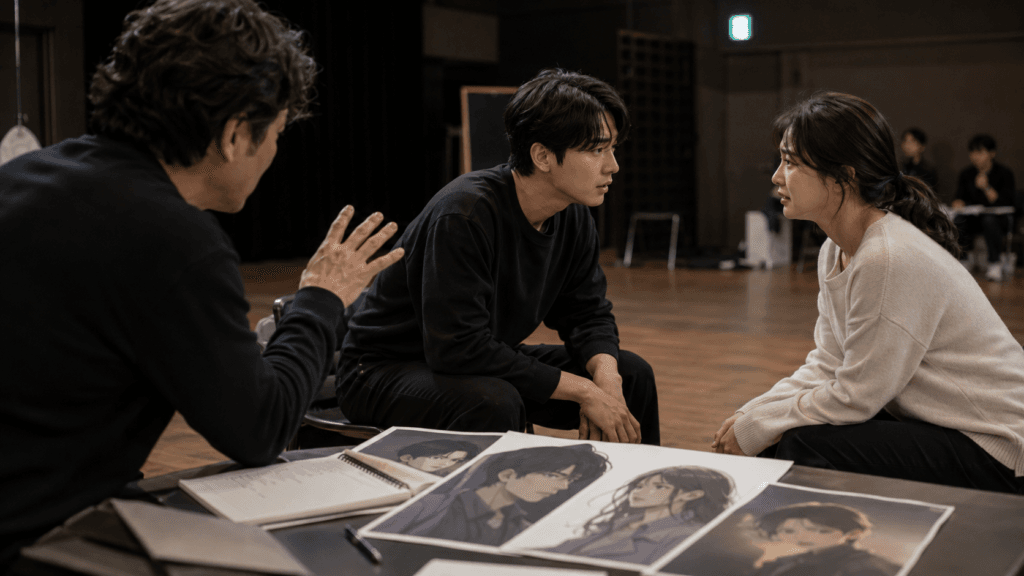
Of course, illustrated characters still need to become believable human beings.
That transformation depends on casting, directing, and performance rather than appearance alone.
As explored in The Korean Actor Training System Explained, successful adaptations focus on capturing the emotional truth of a character instead of simply recreating the original artwork.
Webtoons Think Visually From the Very Beginning
One reason webtoons adapt so naturally is that they communicate visually.
Readers don’t simply follow dialogue.
They experience carefully arranged compositions, dramatic reveals, facial expressions, lighting, and pacing through sequential artwork.
Every panel exists to guide the reader’s attention.
Every transition creates movement.
Every reveal is timed with purpose.
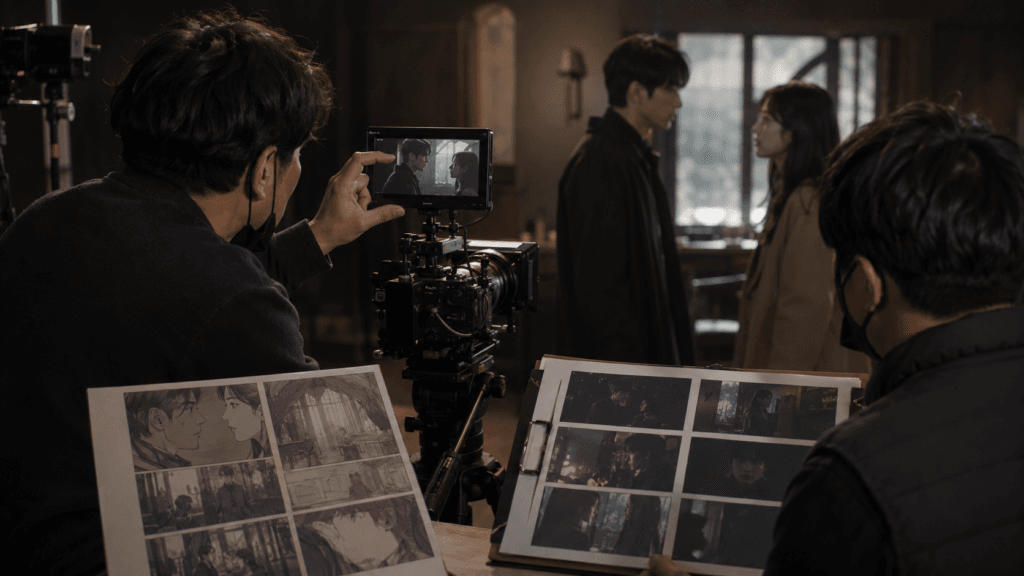
Directors approach filmmaking in much the same way.
They think about camera angles.
Framing.
Movement.
Lighting.
Visual rhythm.
Because webtoon creators already tell stories through carefully planned visual sequences, many scenes feel surprisingly cinematic long before a camera ever arrives.
This doesn’t mean directors simply copy the illustrations.
Instead, they reinterpret visual ideas using the language of film.
The result feels familiar to longtime readers while remaining fresh for audiences discovering the story for the first time.
Emotional Pacing Feels Natural on Screen
One of the greatest strengths of Korean webtoons is their emotional rhythm.
Rather than rushing from one dramatic event to the next, many stories allow relationships to develop gradually. Small conversations, quiet moments, and subtle changes in a character’s emotions receive just as much attention as major plot twists.
This style of storytelling translates naturally into television.
Actors can expand on silent moments through facial expressions and body language, while directors use lighting, music, and camera movement to deepen emotions that readers originally experienced through illustrations.
Instead of feeling stretched to fill an episode, the story often gains new emotional depth in live action.
That is why many viewers feel that a successful adaptation captures the spirit of the original even when individual scenes have been rewritten.
Visual Composition Already Thinks Like a Camera
Webtoon creators rarely think only about drawing attractive illustrations.
They also think about what the reader sees first, how tension builds, and where attention should naturally move next.
A dramatic close-up.
A wide landscape after an emotional confrontation.
A long pause before an important reveal.
Although these decisions are made with digital panels rather than cameras, they follow many of the same visual principles used in filmmaking.
When directors begin adapting a webtoon, they are often working from scenes that already have a clear visual identity.
The challenge is not to copy every panel exactly, but to preserve the feeling those panels created.
This visual clarity allows production teams to spend more time refining performances and atmosphere instead of completely reinventing the story’s presentation.
Streaming Platforms Value Stories That Keep Audiences Watching
Streaming platforms compete for attention in an increasingly crowded entertainment market.
Stories that encourage viewers to watch “just one more episode” are especially valuable.
Korean webtoons have spent years refining exactly this kind of storytelling.
Weekly serialization naturally teaches creators how to build anticipation.
Questions remain unanswered.
Relationships slowly evolve.
Each chapter ends with enough emotional momentum to encourage readers to continue.
Television episodes benefit from the same structure.
Instead of relying only on action or spectacle, webtoon adaptations often maintain audience interest through character development and emotional curiosity.
This long-form approach aligns particularly well with modern streaming habits, where viewers frequently watch several episodes in a single sitting.
As explored in Why Korean Webtoons Are So Addictive, carefully managed pacing and emotional investment encourage audiences to keep returning without the story ever feeling repetitive.
The Best Adaptations Respect the Original While Becoming Something New
Some viewers expect a live-action adaptation to recreate every scene exactly as it appeared in the webtoon.
In practice, the strongest adaptations take a different approach.
They preserve the heart of the story while embracing the strengths of television.
An emotional conversation may become longer.
A supporting character may receive additional development.
A scene that lasted only a few panels might evolve into an entire sequence because actors, music, and cinematography can add layers that illustrations cannot.
Rather than replacing the original, a successful adaptation offers another way to experience the same story.
Readers recognize familiar emotions.
New viewers enjoy a complete drama without needing prior knowledge of the webtoon.
This balance between respect and reinvention is one of the defining qualities of Korean adaptations.
Conclusion
Korean webtoons are exceptionally well suited for television because they combine visual storytelling, memorable characters, and episodic structure in ways that naturally complement live-action production.
Their creators think cinematically.
Their stories develop patiently.
Their emotional pacing keeps audiences invested over long periods of time.
These qualities make adaptation easier—but they do not guarantee success.
Every great adaptation still depends on talented writers, directors, actors, editors, and composers who understand how to translate the original story into a different medium.
When that collaboration succeeds, viewers experience something more than a faithful adaptation.
They experience a story that feels as though it was always meant to exist on screen.
Frequently Asked Questions
Why are Korean webtoons easier to adapt than many other comics?
Many webtoons are written with episodic pacing, strong visual storytelling, and character-driven narratives that naturally fit television.
Do TV adaptations follow webtoons exactly?
Not usually. Most productions preserve the main story while adjusting scenes, dialogue, and pacing to better suit live-action storytelling.
Why do streaming platforms invest in webtoon adaptations?
Successful webtoons already have compelling stories and engaged audiences, making them attractive source material for new drama series.
Are all popular webtoons adapted into TV dramas?
No. Only a small number are selected, and producers consider factors such as story structure, audience appeal, production feasibility, and commercial potential.
Can a TV adaptation be better than the original webtoon?
Some fans prefer the original, while others enjoy the live-action version more. Each medium offers different strengths, and successful adaptations create a new experience rather than simply copying the source material.
Continue Exploring
If you enjoyed this article, you may also like: