Some of the world’s most successful Korean dramas didn’t begin as television scripts.
They began as digital comics.
For many international viewers, discovering that a favorite drama was originally a webtoon comes as a surprise. Yet in Korea, adapting webtoons into television series has become one of the entertainment industry’s most successful creative strategies.
What makes webtoons so valuable isn’t simply their popularity.
It is the way they combine compelling storytelling, memorable characters, and visually structured narratives that naturally lend themselves to television.
A successful webtoon already offers something every producer hopes to find.
An audience.
Instead of developing an entirely new concept from the ground up, production companies can build upon stories that have already attracted millions of readers.
That existing fanbase reduces uncertainty while giving creative teams a strong narrative foundation to expand upon.
However, adapting a webtoon is far more complex than copying drawings onto the screen.
Every successful adaptation requires hundreds of creative decisions about storytelling, casting, cinematography, pacing, and emotional tone.
The goal is not to recreate every panel exactly as it appears in the original.
The goal is to preserve the heart of the story while transforming it into a completely different medium.
As Korean entertainment continues reaching new audiences worldwide, webtoon adaptations have become one of its greatest creative strengths.
They represent the point where digital publishing and television production meet to create something entirely new.
If you’ve already explored How Korean Dramas Are Made: Behind the Scenes, you’ve seen how a television series is produced. This article begins even earlier—at the moment a digital story first captures the attention of producers.
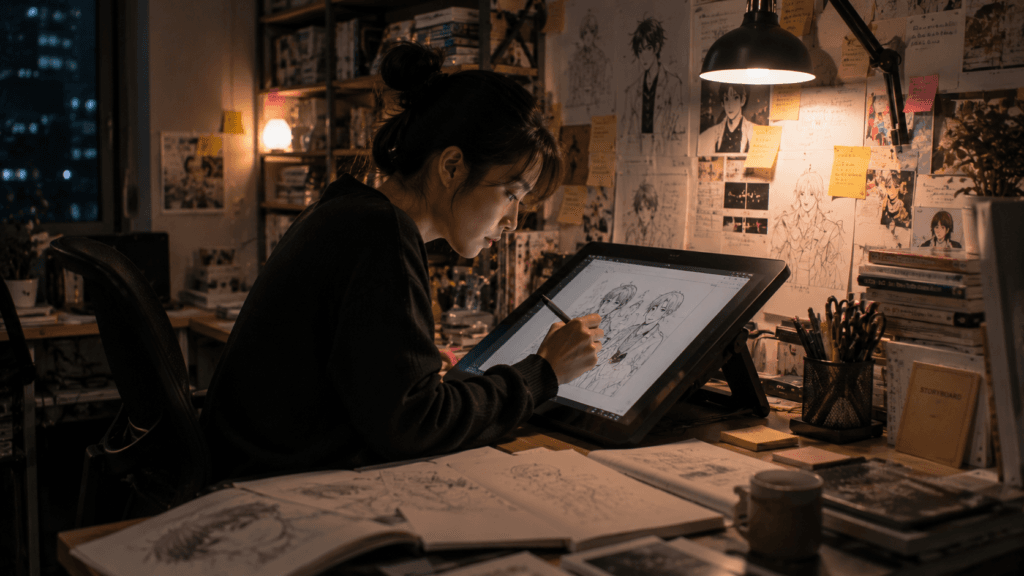
Why Producers Look to Webtoons for New Stories
Original television scripts remain an important part of Korean entertainment.
At the same time, webtoons have become one of the industry’s richest sources of new ideas.
There are several reasons for this.
First, successful webtoons have already demonstrated that audiences care about the story.
Millions of readers may follow a series for months or even years before producers begin considering an adaptation.
That long-term engagement provides valuable insight into which stories create emotional investment.
Second, webtoons often feature highly visual storytelling.
Creators design dramatic reveals, emotional close-ups, and action sequences with mobile readers in mind.
Many of those scenes translate surprisingly well into live-action production.
Finally, webtoons explore an enormous variety of genres.
Romance.
Thrillers.
Fantasy.
Historical fiction.
Medical dramas.
Legal stories.
Supernatural adventures.
Slice-of-life narratives.
This diversity gives producers an almost endless library of ideas suited to different audiences.
Rather than searching for a single blockbuster concept, production companies can choose stories that match changing viewer interests while still building upon proven creative foundations.
A Great Adaptation Respects the Original Without Copying It
One of the biggest misconceptions about adaptations is that success depends on recreating every scene exactly as it appeared in the webtoon.
In reality, the opposite is often true.
Reading a webtoon and watching a television drama are completely different experiences.
A webtoon reader controls the pace.
They can pause, scroll slowly, revisit earlier chapters, or spend several minutes examining one emotional illustration.
Television works differently.
Directors determine pacing.
Editors decide rhythm.
Actors communicate emotions that illustrations can only suggest.
Music adds another emotional layer.
Because of these differences, adaptation always involves creative interpretation.
Some supporting characters receive larger roles.
Certain storylines are condensed.
Dialogue changes.
Entire scenes may be rewritten to work more naturally on screen.
The most successful adaptations preserve what readers loved most—the emotional core—while embracing the strengths of television as a storytelling medium.
This same philosophy explains why Korean dramas often feel distinctive regardless of their source material. As explored in What Makes Korean Dramas Different from Western TV?, Korean productions prioritize emotional storytelling over simply reproducing visual spectacle.
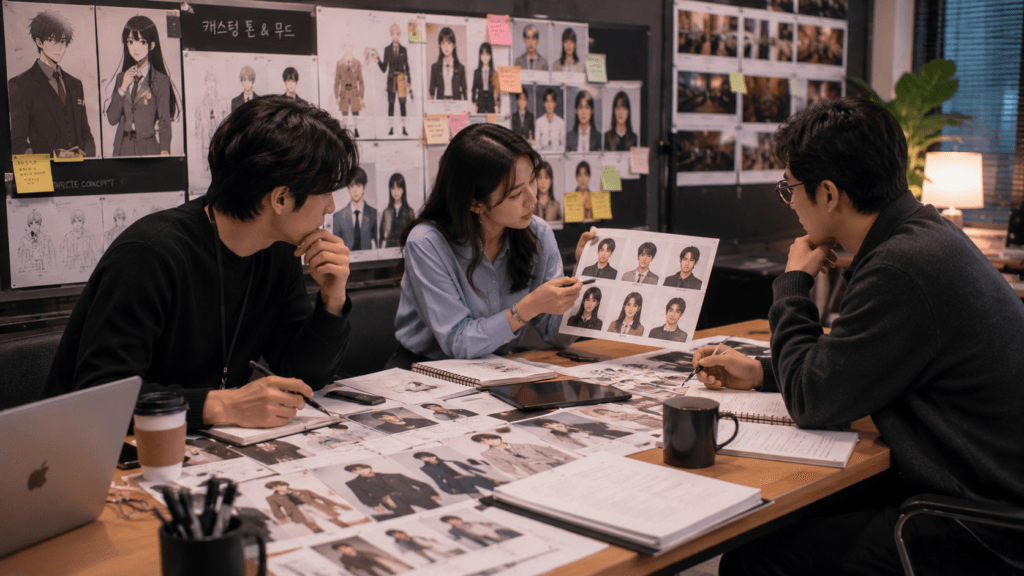
Turning Drawings Into Living Characters
One of the most important decisions in any adaptation is casting.
Readers often spend years imagining what their favorite characters look and behave like.
That creates both opportunity and pressure.
Actors are not expected to imitate illustrations perfectly.
Instead, they must capture the personality that made readers care about the characters in the first place.
Casting directors therefore look beyond physical resemblance.
They consider emotional range.
Chemistry between actors.
Voice.
Body language.
The ability to communicate subtle emotions that originally existed only through drawings.
Once filming begins, directors continue shaping those performances so they feel authentic in live action while remaining recognizable to longtime readers.
This careful balance explains why some adaptations satisfy both existing fans and completely new audiences.
Why Webtoon Adaptations Feel So Different From Original Stories
Not every successful Korean drama begins with a completely original screenplay.
At the same time, not every webtoon becomes a successful television series.
The difference lies in adaptation.
Experienced production teams understand that audiences watching a drama expect a different experience from readers scrolling through a webtoon.
A webtoon often relies on dramatic illustrations, internal thoughts, and carefully paced scrolling to create emotion.
Television has different strengths.
Actors communicate subtle emotions through facial expressions.
Music adds emotional depth.
Camera movement guides the audience’s attention.
Editing controls the rhythm of every scene.
Because each medium tells stories differently, adaptation is less about copying and more about translating.
Successful productions preserve the emotional core while allowing the story to evolve naturally for television.
This creative flexibility explains why some adaptations become beloved dramas in their own right rather than simply visual copies of the original comic.
Choosing the Right Actors Matters as Much as the Story
Readers usually spend months—or even years—imagining what their favorite characters look like.
When casting is announced, expectations are naturally high.
Interestingly, producers rarely focus only on physical resemblance.
Instead, they ask a more important question:
Can this actor make readers believe the character has come to life?
Sometimes the best choice looks slightly different from the original artwork but perfectly captures the personality, emotional depth, and relationships that readers remember.
That balance between familiarity and originality is one of the biggest challenges facing adaptation teams.
Once casting is complete, directors and actors continue refining the character throughout rehearsals and filming.
Rather than recreating every illustration, they focus on preserving the emotional journey that made the webtoon successful.
As explored in The Korean Actor Training System Explained, this process relies heavily on character analysis, emotional preparation, and close collaboration between actors and directors.
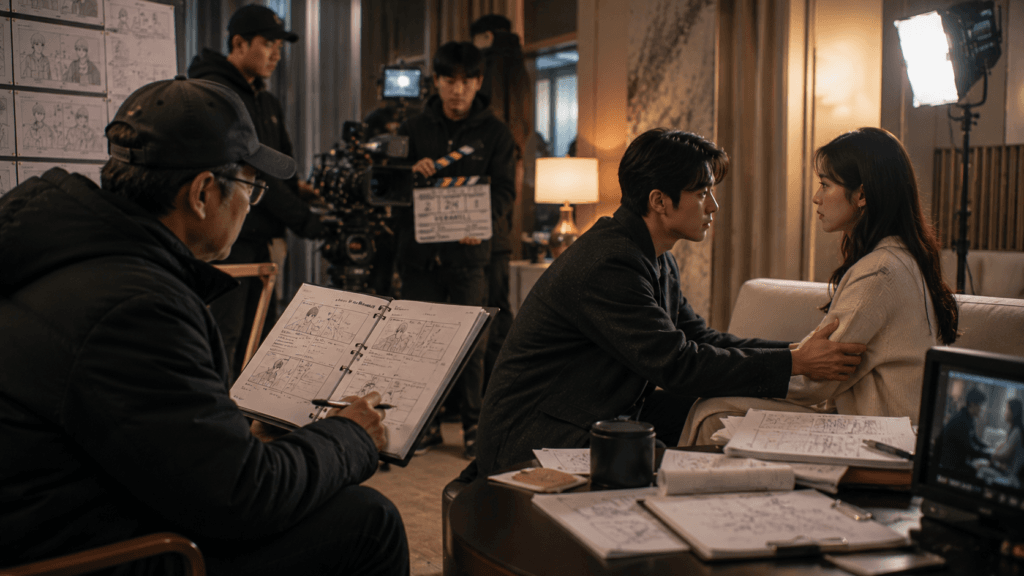
Why Streaming Platforms Love Webtoon Adaptations
From a business perspective, webtoon adaptations offer several important advantages.
First, they begin with a proven audience.
A successful webtoon already has dedicated readers who are excited to see the story brought to life.
Second, the source material often contains years of carefully developed storytelling.
Characters already have emotional depth.
Relationships have evolved naturally.
Major plot points have been tested through reader feedback.
Finally, webtoons introduce a wide variety of genres.
Fantasy, action, romance, mystery, legal dramas, school stories, supernatural adventures, and slice-of-life narratives all exist within Korea’s digital publishing industry.
This diversity gives production companies enormous creative flexibility.
Rather than relying on one type of drama, they can adapt stories for completely different audiences while continuing to build upon successful intellectual property.
For streaming platforms competing for global viewers, that combination of creative variety and existing fan interest makes webtoon adaptations especially attractive.
Webtoons Are Expanding Korean Entertainment Beyond Television
Today, webtoons influence far more than television.
Successful series increasingly inspire films, animation, games, merchandise, and international remakes.
A story that begins on a digital drawing tablet may eventually appear across multiple forms of entertainment.
This demonstrates how Korean webtoons have evolved into valuable intellectual property rather than remaining simple online comics.
The growth of webtoon adaptations also reflects a broader trend within Korean entertainment.
Creative ideas are no longer confined to one medium.
Stories move naturally between publishing, television, cinema, and digital platforms while reaching audiences around the world.
That creative ecosystem is one reason Korean entertainment continues expanding internationally, as discussed in The Future of Korean Entertainment Beyond Netflix.
Conclusion
Korean webtoons have become much more than digital comics.
They have developed into one of the entertainment industry’s most important creative foundations.
By combining compelling storytelling with visually engaging narratives, webtoons provide producers with stories that already resonate with readers while leaving room for new creative interpretation.
The most successful adaptations do not simply copy illustrations.
They translate emotion.
They expand relationships.
They use acting, cinematography, music, and editing to create experiences that feel both familiar and completely new.
As more international audiences discover Korean entertainment, webtoons will likely continue shaping the next generation of hit dramas.
For viewers, this means that some of tomorrow’s most talked-about series may already exist today—waiting quietly on a creator’s digital canvas.
Frequently Asked Questions
What is a Korean webtoon adaptation?
A Korean webtoon adaptation is a television series or film based on a digital comic originally published online.
Why are so many Korean dramas based on webtoons?
Popular webtoons already have strong storytelling, memorable characters, and loyal readers, making them attractive source material for producers.
Are webtoon adaptations always faithful to the original?
Not always. Most adaptations preserve the main story while adjusting pacing, dialogue, and characters to better suit live-action television.
Do I need to read the webtoon before watching the drama?
No. Most adaptations are written so that both longtime readers and completely new viewers can enjoy the story.
Why have Korean webtoons become so influential?
Their mobile-friendly format, diverse genres, and strong storytelling have made them one of Korea’s most valuable sources of new entertainment ideas.
Continue Exploring
If you enjoyed this article, you may also like: