What if you could go several days without leaving home—and never feel like you were missing anything?
Breakfast could arrive before you wake up.
Fresh groceries could appear at your door before dinner.
A forgotten phone charger, pet food, or even medicine could be delivered within hours.
For many people in Korea, this isn’t a glimpse of the future.
It’s simply another ordinary day.
Visitors are often amazed by how quickly deliveries arrive, but speed is only part of the story.
The bigger transformation has happened quietly inside Korean homes.
As delivery services have expanded, they haven’t just changed the way people shop.
They’ve changed daily routines, how families eat, how households stay organized, and even how people think about leaving the house.
Understanding Korea’s delivery culture means looking beyond the delivery itself and seeing how it has become woven into everyday life.
Home Became the Center of Everyday Life
Not long ago, many everyday tasks required leaving home.
Buying groceries meant visiting a supermarket.
Replacing household supplies meant stopping by a local store.
Dinner often involved cooking from scratch or eating out.
Today, many of those activities begin with a smartphone.
Groceries, toiletries, cleaning products, office supplies, and countless other everyday necessities can be ordered in just a few minutes.
Instead of planning errands around a busy schedule, many households simply plan deliveries.
This small change has had a surprisingly large effect.
Home is no longer just the place people return to at the end of the day.
For many families, it has become the center of daily life itself.
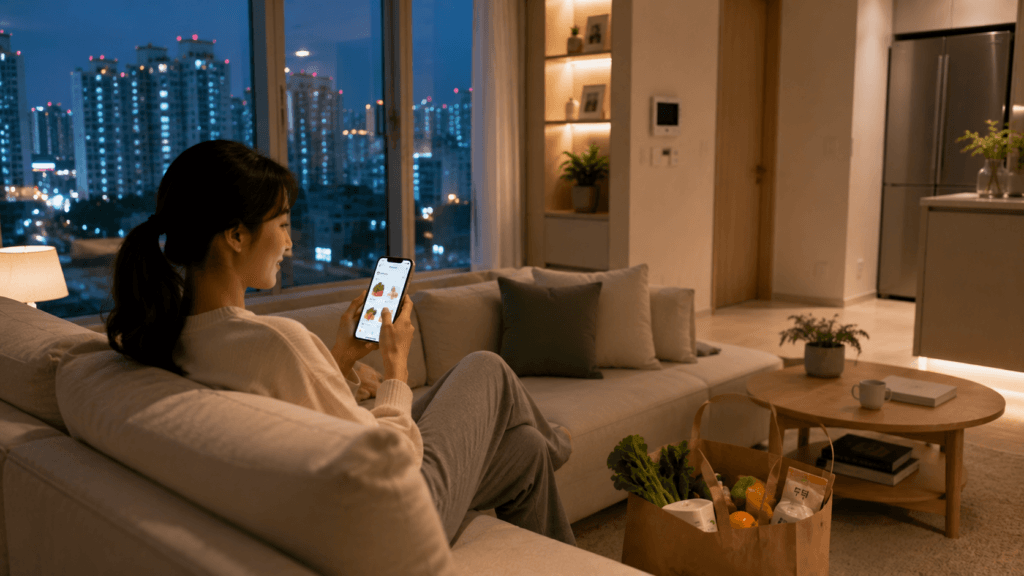
Shopping No Longer Means Going Out
One of the biggest lifestyle changes is how people think about shopping.
Instead of making one large shopping trip every week, many households order exactly what they need when they need it.
Fresh fruit for tomorrow’s breakfast.
Laundry detergent before the weekend.
A birthday gift that arrives the next day.
The goal isn’t simply convenience.
It’s flexibility.
People no longer need to organize their schedules around store opening hours or traffic.
Shopping fits around daily life instead of interrupting it.
This shift has quietly changed how Korean homes function.
Storage rooms no longer need to hold weeks of supplies.
Many families simply order items as they become necessary, knowing they can often arrive much sooner than expected.
The Kitchen Has Changed Too
Delivery culture hasn’t replaced cooking.
Instead, it has expanded the number of ways people prepare meals at home.
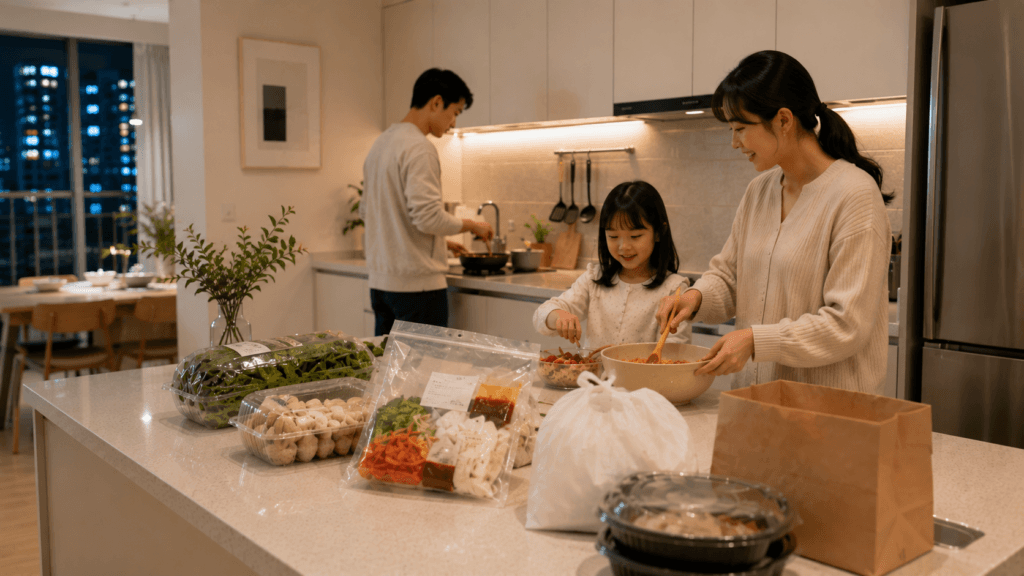
Some evenings, families cook with fresh groceries delivered earlier that day.
On busier nights, they may order takeout from a neighborhood restaurant.
Meal kits have also become increasingly popular, allowing people to prepare restaurant-quality dishes with much less preparation.
Rather than choosing one approach, many households simply choose whichever option fits the day.
The kitchen remains an important part of the home, but its role has become far more flexible than it was in the past.
As explored in Why Korean Kitchens Are Smaller Than You Expect, Korean kitchens are designed for efficient daily living rather than oversized cooking spaces.
Korean Apartments Were Ready for the Delivery Boom
Fast delivery didn’t become part of everyday life by accident.
It also depended on homes that could support it.
Most Korean apartment buildings were already designed with features that made frequent deliveries practical.
Secure entrances helped protect packages.
Parcel lockers made it possible to receive deliveries even when nobody was home.
Clearly numbered buildings and organized apartment complexes allowed drivers to complete deliveries quickly and efficiently.
Instead of forcing residents to adjust their schedules around delivery times, the buildings themselves adapted to modern lifestyles.
As explored in Why Package Delivery Works So Well in Korean Apartment Buildings, thoughtful apartment design has become one of the hidden reasons Korea’s delivery culture works so smoothly.
Daily Routines Quietly Changed
The biggest change wasn’t how quickly packages arrived.
It was how people organized their day.
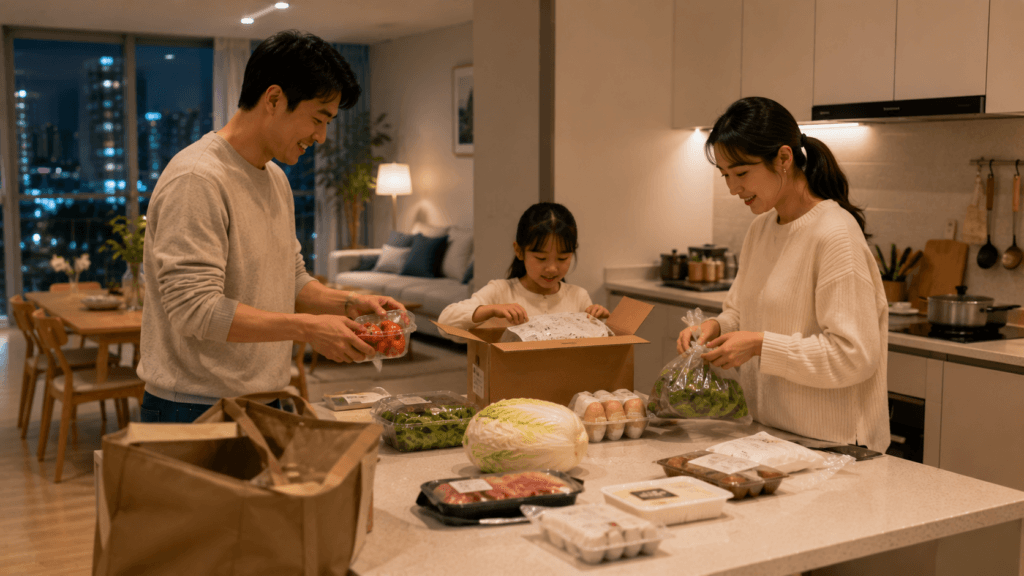
A parent orders groceries during lunch, knowing they’ll arrive before the children return from school.
An office worker picks up a package from the apartment locker on the way home.
A family decides what to eat after work instead of making plans hours in advance.
Late at night, someone realizes they’re out of laundry detergent and orders a replacement before going to bed.
By the following day, it’s already at the door.
None of these moments feel remarkable on their own.
Together, however, they’ve created a lifestyle where daily routines are no longer built around shopping trips or store hours.
Instead, everyday life flows around the convenience of delivery.
Convenience Became Part of the Home
Perhaps the most interesting change is that delivery no longer feels like a special service.
It’s simply part of how the home functions.
Packages arrive alongside the rhythm of daily life.
Groceries appear before dinner.
Household essentials are replaced before anyone notices they’re running low.
Meals arrive when schedules become busy.
Rather than encouraging people to stay inside, delivery has given them greater flexibility over how they spend their time.
A trip to the supermarket is now a choice instead of a necessity.
Running errands no longer defines an afternoon.
The home has quietly become a place where work, family, relaxation, and everyday shopping can all exist together without feeling overwhelming.
As explored in How Korean Apartments Make Small Spaces Feel Bigger, many Korean homes are designed around one simple principle: everyday life should feel easier, not more complicated.
Conclusion
Korea’s delivery culture is often praised for its speed.
But speed isn’t what changed everyday life.
The real transformation happened inside the home.
As deliveries became faster and more reliable, shopping habits evolved, meal preparation became more flexible, and daily routines adapted to a new level of convenience.
Combined with apartment buildings designed to support secure and efficient deliveries, this created a lifestyle where many everyday tasks could happen without unnecessary planning or travel.
In Korea today, delivery isn’t simply about receiving a package.
It’s part of the way modern homes are designed to support everyday living.
Frequently Asked Questions
Why is delivery culture so important in Korea?
Fast, reliable delivery has become deeply integrated into everyday life, making shopping, dining, and household management more convenient.
Has delivery culture changed how Koreans shop?
Yes. Many people now order smaller quantities more frequently instead of making large weekly shopping trips.
Do Koreans still cook at home?
Absolutely. Delivery culture has expanded meal options by making groceries, meal kits, and takeout equally convenient, rather than replacing home cooking.
Why do Korean apartment buildings support delivery so well?
Secure entrances, parcel lockers, organized apartment layouts, and centralized management help deliveries arrive safely and efficiently.
Is Korea’s delivery culture only about speed?
No. While fast delivery is impressive, its biggest impact has been changing how people organize everyday life at home.
Continue Exploring
If you enjoyed this article, you may also like:
- Why Package Delivery Works So Well in Korean Apartment Buildings
- Why Smart Homes Are Becoming Standard in Korean Apartments
- How Korean Apartments Make Small Spaces Feel Bigger
- Inside a Typical Korean Apartment: What Every Room Reveals About Korean Life
- Why Korean Apartment Complexes Feel Like Small Cities
- Why Korean Neighborhoods Are Designed for Everyday Convenience