If you spend an entire year in Korea, you’ll probably notice something surprising.
Just when one festival seems to end, another one quietly begins.
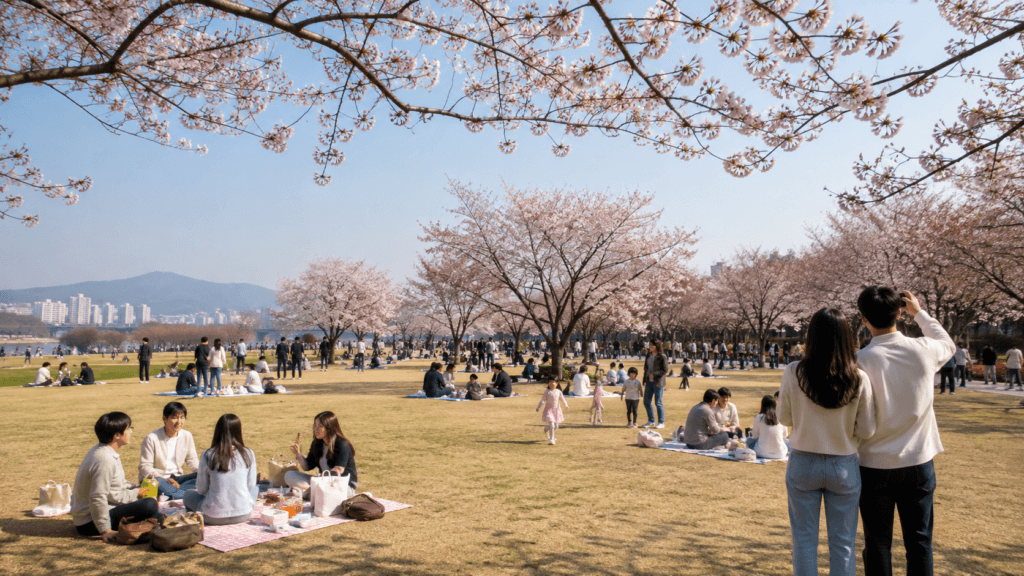
In spring, parks fill with people carrying cameras beneath blooming cherry blossoms.
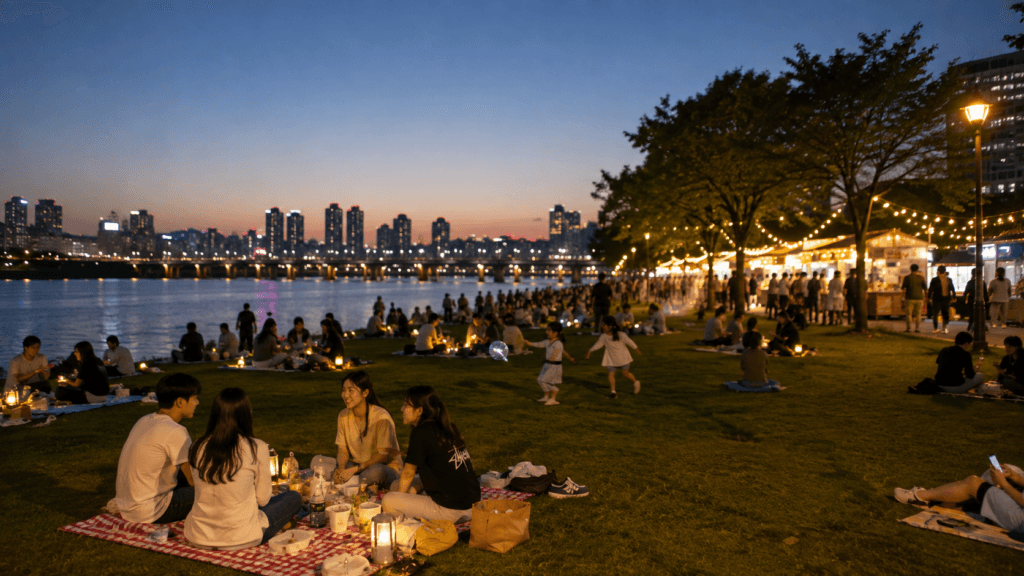
By summer, riversides come alive with music, evening markets, and families enjoying the cooler night air.
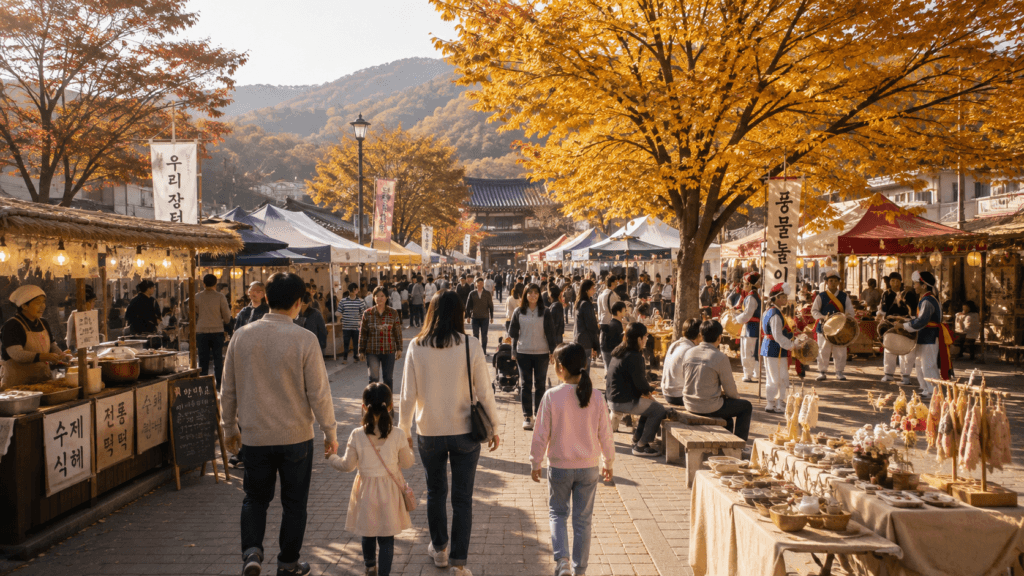
A few months later, mountains glow with autumn colors as local festivals spread across cities and small towns alike.
Then winter arrives, bringing ice festivals, illuminated streets, and Christmas markets that attract visitors despite the freezing temperatures.
At first, it almost feels as if Korea is always celebrating something.
Many visitors assume Koreans simply enjoy festivals more than other countries.
But after living here for a while, another pattern begins to appear.
The festivals themselves are only part of the story.
What really stands out is how naturally people gather whenever the seasons begin to change.
Neighbors who rarely meet during busy weekdays suddenly find themselves walking through the same flower festival.
Families who haven’t traveled together for months decide to spend an afternoon at a local autumn celebration.
Friends who have been too busy to meet all summer finally gather at a riverside night festival before the weather turns cold.
The calendar may say a new season has arrived.
But for many Koreans, it doesn’t truly feel like spring, summer, autumn, or winter until they’ve shared that moment with other people.
That’s why seasonal festivals feel different in Korea.
They’re not simply entertainment.
They’re markers of time.
They quietly remind people that another chapter of the year has begun.
Understanding that changes the way you see every festival you visit.
Instead of asking, “What’s happening here?”
You begin asking something much more interesting.
“What season are people welcoming together?”
Every New Season Begins Outside
The first warm weekend after winter always feels different.
People seem to notice it at exactly the same time.
The heavy coats disappear almost overnight.
Outdoor café tables that sat empty for months suddenly fill before lunchtime.
Parks become crowded with parents watching children run across the grass for what feels like the first time in ages.
Cyclists return to riverside paths.
Street musicians appear in places that were nearly silent only a week earlier.
Nothing has been announced.
No one has told the city to go outside.
Yet somehow everyone does.
For visitors, this can feel like an incredible coincidence.
For many Koreans, it simply feels like the natural beginning of spring.
The same pattern repeats throughout the year.
The first humid evenings of summer encourage people to stay outside after sunset.
The arrival of crisp autumn air inspires weekend walks through forests and neighborhoods lined with colorful trees.
When winter lights begin appearing across shopping districts, people once again gather outdoors, even as temperatures continue to fall.
The season changes first.
The city responds almost immediately afterward.
That’s one reason festivals feel so deeply connected to everyday life.
Rather than creating excitement from nothing, they grow out of changes people are already experiencing together.
A cherry blossom festival isn’t simply about flowers.
It’s the shared feeling that winter has finally ended.
An autumn festival isn’t only about colorful leaves.
It’s a chance to enjoy the most comfortable weeks of the year before colder weather returns.
The event gives people a reason to gather.
The season gives them a reason to care.
Once you begin seeing festivals through that perspective, something else becomes easier to understand.
The biggest attraction is rarely the stage, the performances, or even the food.
It’s the opportunity to experience the changing season alongside thousands of other people.
As the weather grows warmer, that feeling doesn’t disappear.
It simply changes with the season.
Summer Isn’t Just Hot—It’s Shared
By July, the rhythm of the city changes again.
The afternoon sun becomes almost too strong to stay outside for long.
Sidewalks that were lively during spring afternoons begin to empty.
For a few hours, the city feels quieter.
Then something unexpected happens.
As the sun begins to set, people return.
Restaurants place tables outdoors.
Night markets slowly fill with families carrying cold drinks.
Groups of coworkers gather beside the Han River after work.
Children chase bubbles across open plazas while live music drifts through the evening air.
The heat hasn’t disappeared.
People have simply learned to enjoy it together.
That’s one reason so many summer festivals begin after sunset.
They’re less about escaping the season than embracing it in a different way.
Instead of staying indoors until autumn arrives, communities adapt.
Riverside parks become gathering places.
Local festivals move into the evening.
Outdoor concerts replace afternoon events.
The atmosphere feels noticeably different from spring.
Spring celebrates new beginnings.
Summer celebrates shared evenings.
You start realizing that each Korean season has its own personality.
And each festival quietly reflects that personality instead of trying to change it.
Autumn Feels Like Korea’s Biggest Community Season
If spring invites people back outside and summer encourages them to stay out late, autumn seems to bring everyone together at once.
The air becomes cooler.
The sky looks clearer.
Walking suddenly feels enjoyable again.
Without planning it, people begin spending more time outdoors.
Mountain trails become crowded before sunrise.
Local markets fill with seasonal food.
Small towns prepare festivals that celebrate everything from apples and chrysanthemums to traditional crafts and regional specialties.
For many visitors, it can feel as though every weekend offers another festival somewhere in Korea.
But after attending a few of them, you notice something interesting.
People don’t seem to be rushing from one event to the next.
They linger.
Families sit together while children play nearby.
Older couples slowly explore local markets without checking the time.
Friends stop for street food before wandering through exhibitions or live performances.
The festival provides the setting, but the day isn’t built around a schedule.
It’s built around spending time together.
Autumn also carries a deeper meaning in Korean life.
It is the season of Chuseok, one of Korea’s most important traditional holidays, when millions of people travel to visit parents, grandparents, and relatives.
Even for those who don’t attend a formal festival, the season naturally becomes associated with family reunions, hometown visits, and shared meals.
That sense of togetherness quietly extends into local festivals as well.
Communities celebrate not only the harvest but also the relationships that have grown throughout the year.
Perhaps that’s why autumn festivals often feel less like tourist attractions and more like neighborhood gatherings.
Visitors are welcome, but the atmosphere never feels staged.
You’re simply joining a community as it celebrates one of its favorite times of year.
As the colorful leaves gradually disappear, many visitors expect outdoor festivals to come to an end.
Instead, Korea simply finds a different way to celebrate.
Winter Turns the Cold Into Something to Share
The first cold wind of winter changes the city once again.
People bundle themselves in scarves and heavy coats.
Steam rises from food stalls.
Bare trees replace colorful leaves.
It seems like the kind of weather that would encourage everyone to stay indoors.
Yet parks, public squares, and riversides continue filling with people.
This surprises many first-time visitors.
Instead of waiting for spring, Koreans often find reasons to enjoy winter exactly as it is.
Cities decorate streets with thousands of lights.
Christmas markets bring together families, couples, and friends searching for warm drinks and seasonal treats.
In colder regions, frozen rivers become the setting for ice fishing festivals, while snow festivals transform ordinary landscapes into places where children laugh, families play, and visitors experience winter together.
The weather becomes part of the celebration rather than an obstacle to it.
That mindset reflects something you’ve probably noticed throughout the year.
Every season offers a different way to gather.
Spring welcomes new beginnings.
Summer celebrates long evenings.
Autumn brings communities together around harvest and family.
Winter reminds people that even cold weather can create warm memories.
By the end of the year, you begin realizing that the festivals themselves are only visible signs of something much larger.
They’re moments when communities pause, step outside, and experience the passing of time together.
Conclusion
At first glance, Korea seems to have festivals for almost everything.
Cherry blossoms.
Fireworks.
Autumn leaves.
Ice fishing.
Christmas lights.
But after spending more time here, you begin seeing a different pattern.
The festivals aren’t what bring communities together.
The changing seasons do.
Each season gives people a reason to leave home, meet friends, spend time with family, and enjoy the neighborhoods they share every day.
The festivals simply give those moments a place to happen.
That’s why seasonal festivals in Korea often feel so welcoming.
Even if you’re visiting for the first time, you’re not just watching a performance or walking through a market.
You’re experiencing the same seasonal rhythm that millions of Koreans look forward to every year.
And perhaps that’s the real reason these celebrations leave such a lasting impression.
They’re not only about celebrating nature.
They’re about celebrating life together as another season begins.
FAQ
Why are seasonal festivals so popular in Korea?
Because they celebrate the changing seasons while giving families, friends, and local communities opportunities to spend time together outdoors.
What is the most popular season for festivals in Korea?
Autumn is often considered the busiest festival season thanks to comfortable weather, harvest celebrations, and the influence of Chuseok, although every season has its own unique events.
Are Korean seasonal festivals only for tourists?
No. Most festivals are enjoyed by local residents as well, making them feel authentic and community-focused rather than purely tourist attractions.
Why do so many Korean festivals take place outdoors?
Korean festivals often celebrate seasonal changes, nature, and public spaces, making parks, riversides, neighborhoods, and town squares natural gathering places.
What makes Korean seasonal festivals different?
Rather than focusing only on entertainment, many Korean festivals reflect everyday community life, seasonal traditions, and the shared experience of welcoming a new part of the year.
Continue Exploring
If you enjoyed this article, you may also like: