If you visit a modern Korean apartment for the first time, there’s a good chance you’ll miss one of its most practical features.
The kitchen seems to end exactly where you’d expect.
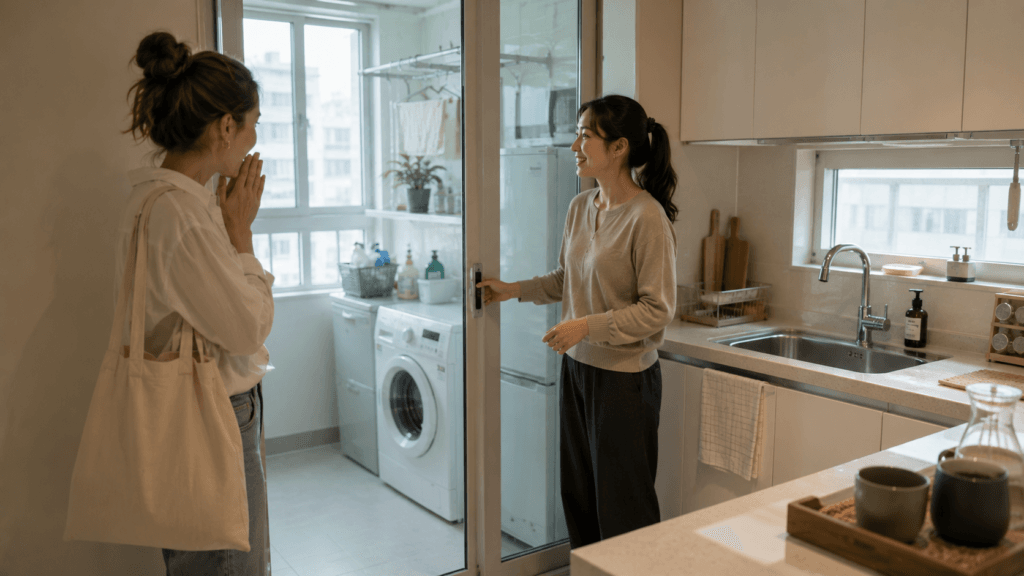
Then someone opens a door behind the sink or refrigerator, revealing another small room.
At first glance, it doesn’t look particularly important.
There’s a washing machine.
A drying rack.
Storage shelves.
Maybe even a second refrigerator.
But this isn’t simply a laundry room.
It’s a hidden utility space—one of the smartest design features found in many Korean apartments.
Rather than serving a single purpose, this room quietly supports dozens of everyday household routines.
It keeps practical tasks together in one place, allowing the rest of the home to stay clean, organized, and comfortable.
Once you understand why this space exists, you’ll start noticing it in apartment floor plans all across Korea.
It’s Not Just a Laundry Room
Many visitors assume this room exists only for doing laundry.
That’s understandable.
A washing machine is often the first thing they notice.
But Korean families rarely think of it as just a laundry room.
Instead, it’s a multi-purpose household workspace.
Depending on the apartment, the room may include:
- A washing machine
- Indoor drying racks
- A kimchi refrigerator
- Cleaning supplies
- Recycling bins
- Vacuum cleaners
- Shelves for rice, bottled water, or bulk groceries
- Seasonal household storage
Instead of spreading these items throughout the apartment, everything related to household maintenance stays together in one practical space.
This arrangement makes daily routines much more efficient.
Instead of searching through different rooms for cleaning supplies, moving laundry between separate areas, or finding space for bulky household items, everything is already where it’s needed.
A family member can start the washing machine, hang clothes to dry, sort recycling, or store groceries without disrupting the rest of the apartment.
The room may not be the largest space in the home, but it often becomes one of the hardest-working.
Rather than serving a single purpose, it quietly supports the countless small tasks that keep everyday family life running smoothly.
One Room That Handles Everyday Life
The hidden utility room works almost like the home’s backstage area.
Family life happens in the living room.
Meals are prepared in the kitchen.
Bedrooms remain quiet places to rest.
Meanwhile, the utility room quietly handles the everyday tasks that keep the household running.
Laundry can dry without filling the living room.
Cleaning supplies stay out of sight.
Recycling remains neatly organized until collection day.
Large grocery items don’t occupy valuable kitchen cabinets.
Even a kimchi refrigerator, found in many Korean homes, often fits naturally into this space because it doesn’t need to compete with everyday cooking activities.
Rather than creating separate rooms for each household task, Korean apartments bring these functions together in one efficient area.
The result is a home that feels less cluttered without requiring more floor space.
Why Is It Located Behind the Kitchen?
The location isn’t accidental.
The kitchen already contains the home’s main water supply, drainage system, and ventilation.
Placing the utility room directly behind it makes everyday chores much more convenient.
Laundry can be done without adding extra plumbing elsewhere in the apartment.
Cleaning equipment stays close to where it’s most often needed.
Food-related storage, including bottled water, bulk ingredients, or a kimchi refrigerator, remains near the kitchen without taking up valuable cooking space.
This layout also keeps practical household activities separated from the areas where families relax or entertain guests.
The location isn’t accidental.
Rather than adding another separate room, Korean apartment layouts often place the utility space directly behind the kitchen, allowing several everyday household tasks to happen in one convenient area.
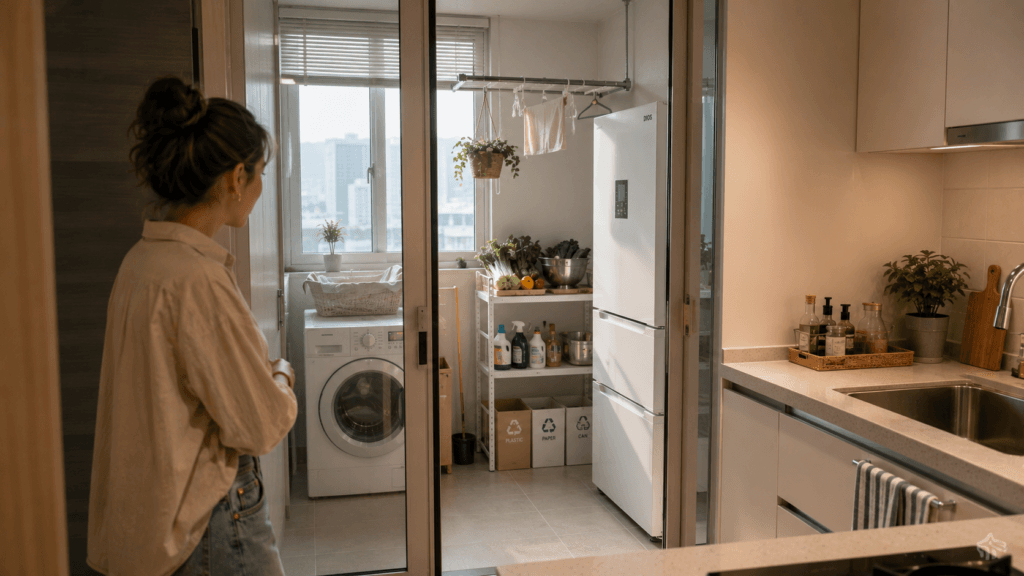
The hidden utility room makes the most sense when you consider how people live in Korea.
Most Korean families live in apartments, where every square meter needs to serve a purpose.
Instead of creating separate rooms for laundry, storage, cleaning equipment, and household supplies, apartment designers combine these everyday functions into one practical space.
The result is a room that constantly changes throughout the day.
In the morning, someone might start a load of laundry.
Later, freshly washed clothes are hung on indoor drying racks.
After grocery shopping, bottled water, rice, and other bulk items are stored on the shelves.
A kimchi refrigerator quietly keeps different varieties of kimchi at the ideal fermentation temperature.
Cleaning supplies stay within easy reach but remain hidden from the rest of the home.
Recycling is neatly sorted until collection day.
Rather than feeling crowded, the room works because every item has a clear purpose.
It’s less about storage and more about creating a dedicated s
A Space Visitors Rarely Notice
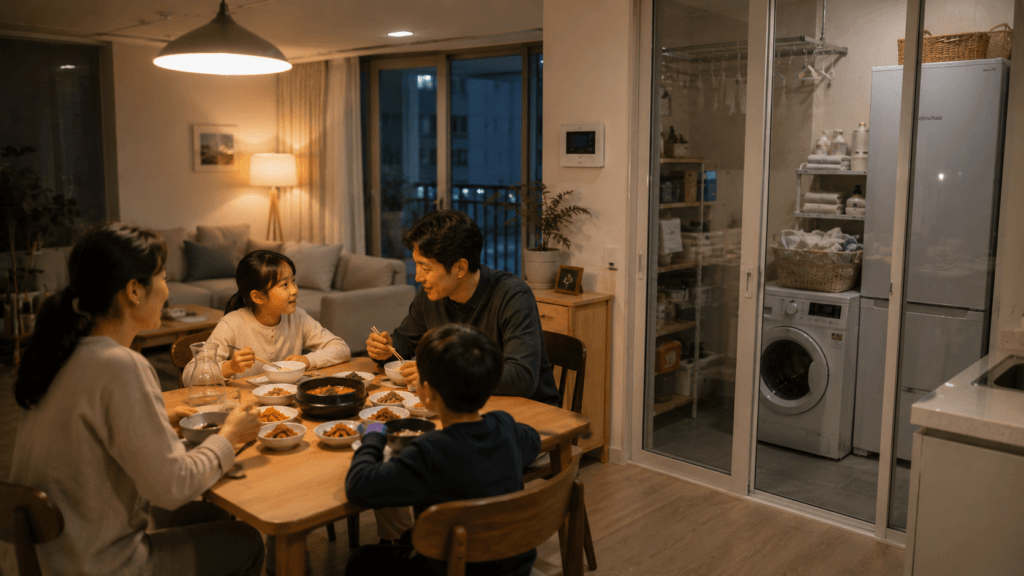
Ironically, one of the most useful rooms in a Korean apartment is also one of the easiest to overlook.
Visitors usually remember the living room with its large windows.
They notice the heated ondol floors.
They admire the modern kitchen.
But the utility room often goes unnoticed because it isn’t designed to impress anyone.
Its purpose is simply to make everyday life work more smoothly.
For Korean families, that’s exactly what makes it valuable.
The room quietly supports routines that happen every single day while allowing the rest of the apartment to remain clean, open, and comfortable.
It’s a practical design choice that reflects a broader philosophy found throughout Korean homes: every space should earn its place.
The utility room is just one example of how Korean homes are designed around everyday routines. The same practical thinking can also be seen in traditional heating systems, as explored in How Ondol Heating Shaped Korean Home Culture.
Conclusion
Hidden utility spaces behind the kitchen are much more than laundry rooms.
They are flexible workspaces designed to support the realities of apartment living.
By bringing laundry, storage, household supplies, recycling, cleaning equipment, and often even a kimchi refrigerator into one dedicated area, Korean apartments make everyday routines simpler without taking away valuable living space.
It’s not the largest room in the home.
It isn’t the most beautiful.
Yet it quietly performs some of the most important jobs every single day.
Once you understand how this small room works, it becomes clear why so many Korean apartment layouts continue to include it—and why residents would find it difficult to live without it.
Frequently Asked Questions
What is the hidden room behind the kitchen in Korean apartments?
It’s a multi-purpose utility room used for laundry, indoor clothes drying, storage, household supplies, recycling, and often appliances such as a kimchi refrigerator.
Is it the same as a laundry room?
Not exactly. While laundry is one of its main functions, the space usually serves several household purposes at the same time, making it much more versatile than a typical laundry room.
Why is it connected to the kitchen?
The kitchen already has water, drainage, and ventilation systems, making it the most practical location for a utility space that supports everyday household tasks.
Do all Korean apartments have a utility room?
No. The layout depends on the apartment’s age and design, but many modern Korean apartments include some version of this multi-purpose utility space.
Why do Korean families like this design?
It keeps practical household activities in one dedicated area, helping the rest of the apartment stay organized, uncluttered, and comfortable for everyday family life.
Continue Exploring
If you enjoyed this article, you may also like:
Why Korean Families Still Use Kimchi Refrigerators
Why Koreans Always Take Off Their Shoes Indoors
Why Korean Lifestyle Guide: Daily Habits Behind Korea’s Global Fascination