The global fascination with South Korea often begins with K-pop, K-dramas, skincare, or Korean food. Yet after spending time in Korea, many visitors realize that the country’s greatest appeal goes far beyond entertainment.
It lies in everyday life.
This Korean Lifestyle Guide explores the simple habits that shape daily living in South Korea. From morning walks and neighborhood parks to convenience stores, weekend getaways, and mountain hiking, these routines reveal a culture that values balance, wellness, community, and small moments of happiness.
Unlike lifestyle trends that focus on dramatic transformations, Korean daily life is built around consistency. Many healthy habits happen naturally because cities, neighborhoods, and public spaces make them easy to practice.
Understanding these habits helps explain why Korean culture continues to inspire millions of people around the world.
Korean Lifestyle Guide: Wellness Starts with Everyday Habits
One of the biggest misconceptions about Korean wellness is that it depends on expensive products or complicated routines.
In reality, many healthy habits begin with ordinary daily choices.
People walk instead of driving short distances.
They visit nearby parks after dinner.
Office workers enjoy a quiet coffee break instead of rushing through lunch.
Families spend weekends outdoors rather than staying inside.
This approach reflects a philosophy that wellness is something built gradually.
Instead of chasing perfection, many Koreans simply repeat healthy routines every day.
That is why understanding Korean lifestyle means looking beyond famous attractions and observing everyday behavior.
If you’d like to explore these habits in greater detail, start with:
- The Korean Morning Routine: Small Habits That Shape Daily Life
- How Koreans Balance Work, Wellness, and Social Life
Together, these articles explain how daily routines create long-term well-being.
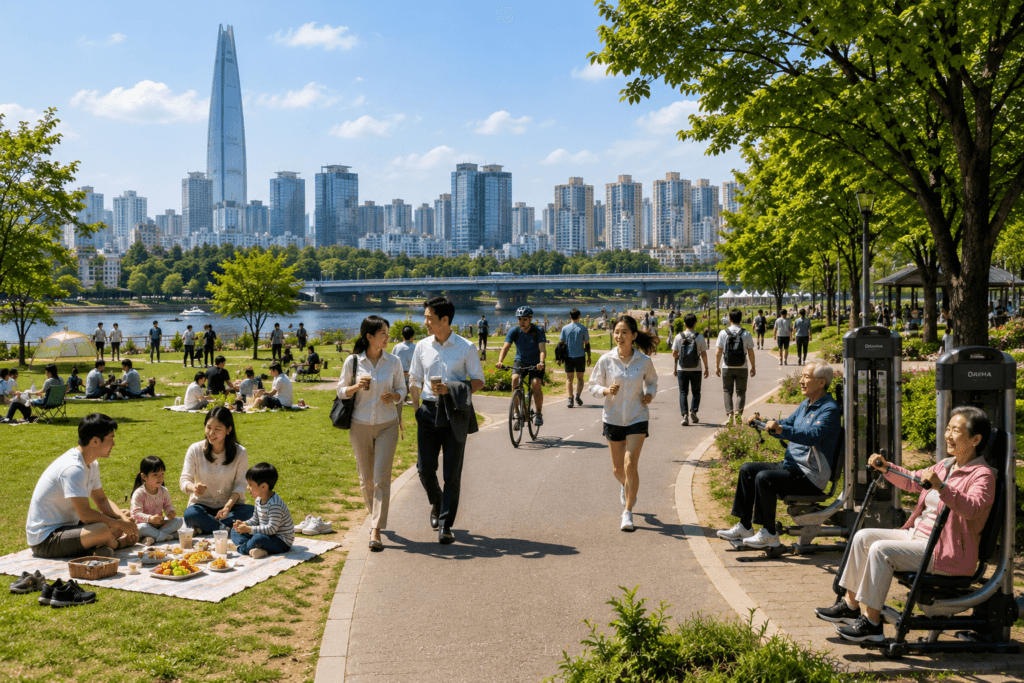
Walking Is Part of Everyday Life
Walking is perhaps the easiest habit to notice in Korea.
Whether commuting to work, shopping, visiting cafés, or meeting friends, people naturally spend time on foot.
Cities are designed to encourage walking.
Wide sidewalks.
Underground shopping streets.
River paths.
Neighborhood parks.
Safe pedestrian crossings.
Public transportation also contributes to this lifestyle because buses and subways usually involve additional walking before and after each ride.
Rather than viewing walking as exercise, many Koreans simply see it as a normal part of everyday life.
This is one reason why so many people remain physically active without following structured workout programs.
For a deeper look, read:
Why Koreans Walk So Much: The Hidden Health Benefit of Korean Cities
Nature Is Never Far Away
Although Korea is highly urbanized, nature remains surprisingly accessible.
Parks, rivers, forests, and mountains are integrated into daily life rather than separated from cities.
Many apartment complexes connect directly to walking trails.
Families spend afternoons in neighborhood parks.
Friends meet beside the Han River.
Retirees exercise outdoors every morning.
This connection with nature supports both physical and mental health.
People don’t always travel long distances to relax.
Often, the nearest park provides everything they need.
You can explore these traditions further in:
- Korean Park Culture: Why Parks Matter in Everyday Korean Life
- Why Koreans Love Spending Time Along the Han River
- Why Picnics Are So Popular in Korea
Together, these articles reveal why public outdoor spaces remain central to Korean lifestyle.
Outdoor Activity Is a Lifestyle, Not a Hobby
Exercise in Korea often happens outside rather than inside a gym.
Public parks include free fitness equipment.
Walking trails remain busy before sunrise and after sunset.
Cycling paths stretch for kilometers beside rivers.
Running clubs welcome beginners.
Mountain trails become crowded every weekend.
Because these activities are accessible and affordable, they become lifelong habits instead of temporary fitness challenges.
Visitors are often surprised to see grandparents hiking alongside university students or office workers jogging before work.
Movement is simply part of daily living.
To explore these activities individually, continue with:
- Outdoor Exercise in Korea: Why Koreans Stay Active All Year Round
- The Rise of Running Clubs in Korea
- Korean Cycling Culture: Exploring Cities on Two Wheels
- Why Koreans Love Night Walks
- Why Koreans Love Hiking
Each article highlights a different aspect of Korea’s active lifestyle.
Food Is About More Than Taste
Korean food is internationally famous, but its cultural meaning often goes unnoticed.
Meals are not simply opportunities to eat.
They are moments to gather, slow down, and care for one another.
Traditional ideas such as Yak-Sik-Dong-Won emphasize that food and medicine share the same purpose: maintaining long-term health.
Many everyday meals naturally include vegetables, fermented foods, soups, seasonal ingredients, and shared side dishes.
This philosophy influences how many Koreans think about wellness.
To learn more, read:
Korean Food Philosophy: The Secret of Yak-Sik-Dong-Won
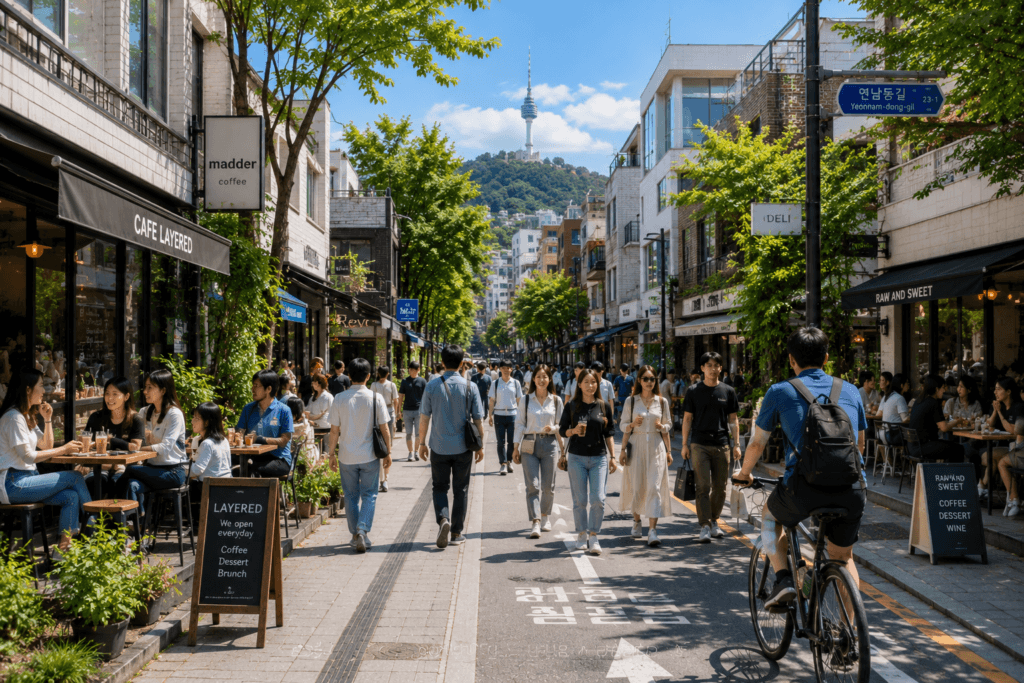
Cafés and Convenience Stores Reflect Modern Korean Life
Two places appear everywhere in Korea.
Cafés.
Convenience stores.
At first glance they may seem ordinary.
In reality, they reveal much about Korean society.
Cafés are no longer simply places to drink coffee.
Many people study there.
Work remotely.
Meet friends.
Read books.
Or quietly enjoy time alone.
Likewise, convenience stores have evolved far beyond quick shopping.
People eat meals there.
Recharge phones.
Wait for buses.
Purchase daily necessities.
Or simply rest during busy days.
These spaces have become small extensions of everyday living.
You can explore them further in:
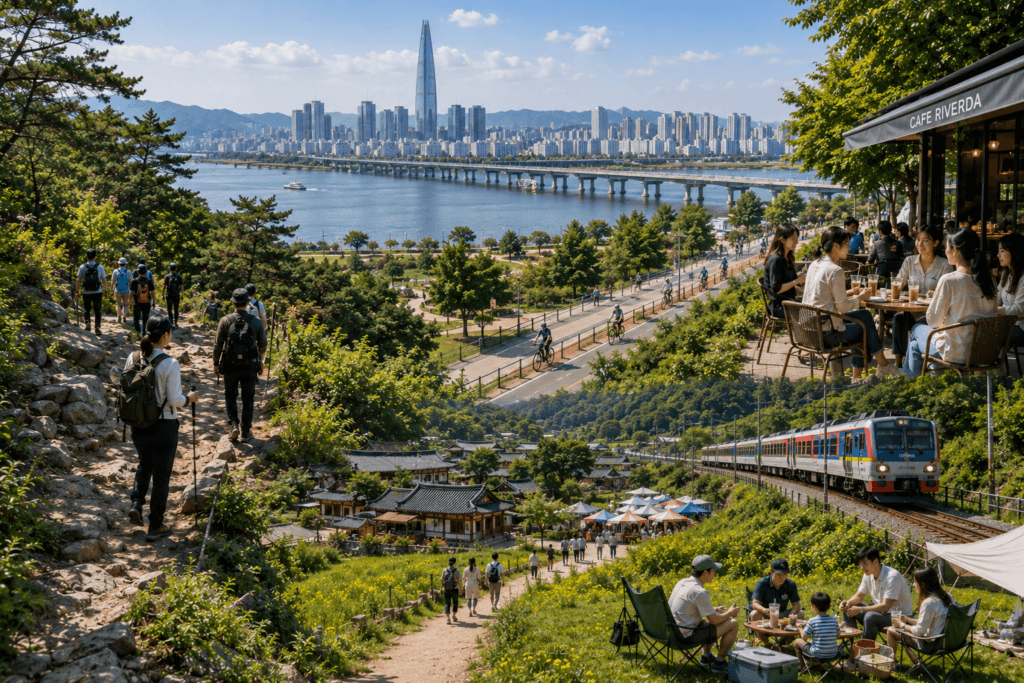
Weekend Escapes Create Balance
Despite busy work schedules, many Koreans actively make time to recharge.
Rather than waiting for long holidays, they often choose short weekend trips.
A mountain village.
A seaside town.
A riverside pension.
A lakeside café.
A forest trail.
These destinations provide enough distance from daily routines to refresh both body and mind.
Many trips last only one night, yet they offer valuable opportunities to reconnect with family, friends, and nature.
For a deeper look, continue with:
Weekend Getaways in Korea: Why Koreans Love Short Nature Escapes
Why the Korean Lifestyle Appeals to the World
The global popularity of Korean lifestyle is not built on one single trend.
It is the combination of many small habits working together.
Walking regularly.
Eating balanced meals.
Using public parks.
Meeting friends at cafés.
Taking short weekend trips.
Enjoying outdoor exercise.
Spending time beside rivers.
Climbing mountains.
None of these habits are extraordinary by themselves.
Together, however, they create a lifestyle that many people around the world find both inspiring and achievable.
Perhaps that is why Korean culture continues to attract global attention.
It offers a reminder that a healthier, more balanced life often begins with small, consistent choices rather than dramatic changes.
Conclusion
This Korean Lifestyle Guide shows that the country’s greatest strength is not found only in its entertainment industry or technological innovation.
It is found in ordinary life.
The routines that millions of Koreans repeat every day—walking through neighborhoods, sharing meals, relaxing in parks, hiking mountains, meeting friends at cafés, and escaping into nature on weekends—create a lifestyle built around balance rather than excess.
These habits may appear simple, but together they explain much of Korea’s global appeal.
As you explore the articles throughout this cluster, you’ll discover that every topic connects to the same idea: wellness grows through everyday actions.
Whether you’re planning a trip to Korea or simply looking for inspiration to improve your own daily routine, these traditions offer practical lessons that anyone can apply.
FAQ
What is the Korean lifestyle known for?
The Korean lifestyle is known for balancing work, wellness, community, outdoor activity, and healthy daily routines.
Why do Koreans walk so much?
Walkable cities, excellent public transportation, and pedestrian-friendly neighborhoods naturally encourage walking every day.
Why are parks important in Korea?
Parks provide spaces for exercise, family activities, relaxation, community interaction, and outdoor wellness.
Why do Koreans enjoy weekend trips?
Short domestic trips help people recharge, reconnect with nature, and balance busy work schedules.
Where should I start learning about Korean daily life?
This Korean Lifestyle Guide serves as the central hub for exploring Korean food philosophy, walking culture, parks, hiking, cafés, convenience stores, and wellness habits.
Core Lifestyle
- Korean Food Philosophy: The Secret of Yak-Sik-Dong-Won
- The Korean Morning Routine
- How Koreans Balance Work, Wellness, and Social Life
- The Ultimate Guide to Everyday Life in Korea
- Why Waiting in Line Is So Common in Korea
- Why Seasonal Festivals Bring Korean Communities Together
Outdoor Living
- Why Koreans Walk So Much
- Korean Park Culture
- Why Koreans Love Spending Time Along the Han River
- Why Picnics Are So Popular in Korea
- Outdoor Exercise in Korea
- Korean Cycling Culture
- The Rise of Running Clubs
- Why Koreans Love Night Walks
- Why Koreans Love Hiking