When audiences around the world praise Korean dramas, they often talk about the performances.
Viewers describe the acting as subtle, believable, and emotionally authentic. Whether it’s a quiet family conversation, a heartbreaking farewell, or a tense courtroom confrontation, Korean actors have earned a reputation for making even fictional moments feel remarkably real.
This raises an interesting question.
Why do Korean actors often feel so natural on screen?
The answer is not simply that they are talented.
Natural performances are the result of years of preparation, continuous training, collaboration, and an entertainment industry that places enormous value on character development.
Unlike the popular image of actors becoming overnight stars, most Korean performers spend years developing their skills before leading a successful drama. Many study acting at university, attend professional academies, participate in countless auditions, and continue refining their craft throughout their careers.
The training process extends far beyond memorizing dialogue.
Actors learn how to interpret emotions, analyze characters, understand relationships, work closely with directors, and communicate subtle feelings through body language, facial expressions, and silence as much as spoken words.
Understanding this process helps explain why Korean performances connect so deeply with audiences across different cultures.
If you’ve ever wondered why Korean dramas create such powerful emotional experiences, Why Korean Dramas Feel More Emotional Than Hollywood Shows explores how acting, writing, and directing work together to create that connection.
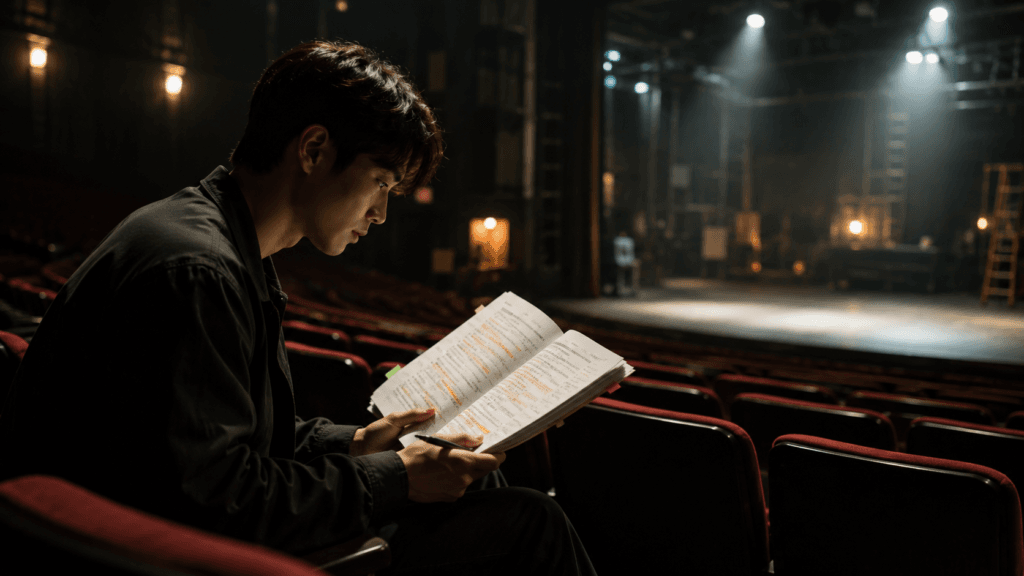
Becoming a Korean Actor Is a Long Journey
For many aspiring performers, the path begins years before a professional audition.
Some discover acting through school theater clubs.
Others attend private academies where they learn the fundamentals of performance, movement, and voice control.
Many eventually pursue formal education at universities known for their performing arts programs.
Yet education alone rarely guarantees success.
The Korean entertainment industry is highly competitive.
Thousands of talented actors compete for a limited number of roles each year, making persistence just as important as natural ability.
Early in their careers, many actors appear in student films, independent productions, commercials, web series, or supporting television roles.
These experiences allow them to develop confidence in front of the camera while building practical experience that cannot be learned in a classroom.
Rather than waiting for one life-changing opportunity, most actors gradually strengthen their careers through countless smaller performances.
This steady progression helps explain why experienced Korean actors often appear comfortable in a wide range of roles.
Training Goes Far Beyond Memorizing Lines
One of the biggest misconceptions about acting is that success depends primarily on remembering dialogue.
Professional actors know that dialogue is only one part of a performance.
Before filming begins, performers spend considerable time understanding who their characters are.
What motivates them?
What fears do they carry?
How would they react in moments of joy, anger, disappointment, or uncertainty?
Actors often build detailed personal histories for their characters, even if those details never appear in the final script.
Understanding a character’s past allows every expression and every decision to feel more believable on screen.
Physical preparation also plays an important role.
Actors study posture.
Walking styles.
Eye contact.
Speech patterns.
Small habits that reveal personality.
A confident executive moves differently from an inexperienced intern.
A veteran detective carries themselves differently from a university student.
These subtle physical choices help audiences believe that each character exists beyond the screenplay.
The result is acting that feels lived-in rather than performed.
Auditions Are About More Than Talent
Many international viewers imagine auditions as short performances judged almost entirely by acting ability.
In reality, casting decisions are usually much more complex.
Directors are looking for performers who fit the emotional tone of the story.
Casting teams evaluate whether actors can build believable chemistry with other performers.
Screenwriters may observe whether dialogue feels natural when spoken aloud.
Sometimes an actor delivers an outstanding audition but still isn’t selected because another performer better matches the character’s personality or the relationships already forming within the cast.
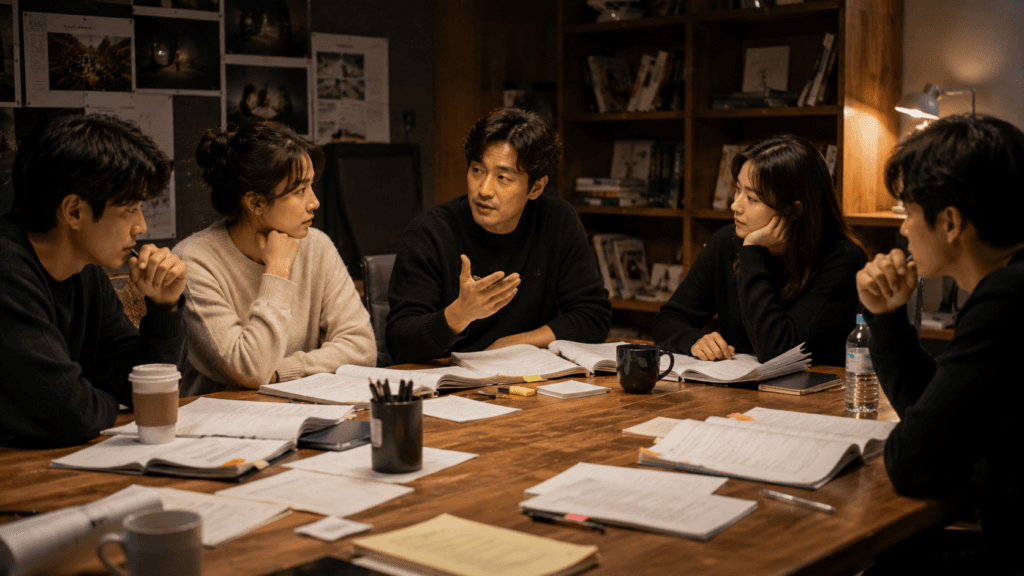
Script-reading sessions often become another important stage.
Here, actors, writers, and directors gather around a table to read scenes together before filming begins.
These meetings are collaborative rather than performative.
Dialogue may change.
Characters become more nuanced.
Unexpected chemistry between actors can influence later scenes.
This willingness to refine performances before filming contributes significantly to the natural conversations audiences later see on screen.
Why Korean Actors Feel So Natural on Screen
Natural acting rarely happens by accident.
It develops through preparation, observation, and trust between performers and directors.
Rather than emphasizing dramatic gestures in every emotional scene, many Korean actors focus on restraint.
Silence.
Small expressions.
Subtle changes in breathing.
A brief hesitation before speaking.
These quiet moments often communicate more than lengthy dialogue.
That approach fits the storytelling style found in many Korean dramas, where emotional tension builds gradually instead of relying on constant dramatic confrontation.
Actors also spend significant time discussing scenes with directors before filming.
Instead of simply asking, “What should I say?”
they often ask,
“What is my character feeling at this exact moment?”
Those conversations help performances remain emotionally consistent throughout an entire series.
This close collaboration between actors and directors is one reason viewers frequently describe Korean performances as authentic rather than theatrical.
Many of these performances are further strengthened by the production process itself. How Korean Dramas Are Made: Behind the Scenes explores how directors, cinematographers, editors, and production teams work together with actors to create the emotional realism audiences experience on screen.
Preparing for Emotionally Demanding Roles
Not every role can be approached in the same way.
A historical king, an emergency room doctor, a prosecutor, a professional athlete, and an ordinary office worker all experience the world differently. Convincing audiences of those differences requires far more than changing costumes.
Before filming begins, actors often spend weeks researching the lives of the people they are portraying.
Some observe real workplaces.
Others interview professionals.
Historical productions may involve studying etiquette, speech patterns, and traditional customs to better understand how people lived during a particular period.
For emotionally challenging roles, preparation becomes even more personal.
Actors may revisit difficult memories, study human behavior, or work closely with directors to understand a character’s emotional journey across an entire series.
This preparation allows emotions to develop naturally rather than appearing only when the script demands them.
Because Korean dramas often build relationships gradually, performers must carefully maintain emotional consistency from one episode to the next.
Every reaction needs to feel like a believable continuation of everything that came before.
Every Character Is Built Through Collaboration
Although audiences often associate memorable performances with individual actors, Korean dramas are highly collaborative productions.
A character begins with the writer.
The director interprets that vision.
The actor brings it to life.
Costume designers help express personality through clothing.
Hair and makeup teams subtly reflect changes in a character’s emotional state.
Cinematographers choose framing that strengthens emotional moments.
Editors determine the rhythm of each performance after filming has finished.
These departments constantly influence one another.
A rewritten scene may inspire a different camera movement.
A lighting adjustment may encourage a quieter performance.
A piece of music added during post-production can completely change how an audience interprets an actor’s expression.
Understanding this collaboration helps explain why many performances feel so complete.
Viewers are not seeing one person’s work.
They are experiencing the result of an entire creative team working toward the same emotional goal.
If you’re curious about how these creative departments work together from script to final edit, How Korean Dramas Are Made: Behind the Scenes follows the complete production process.
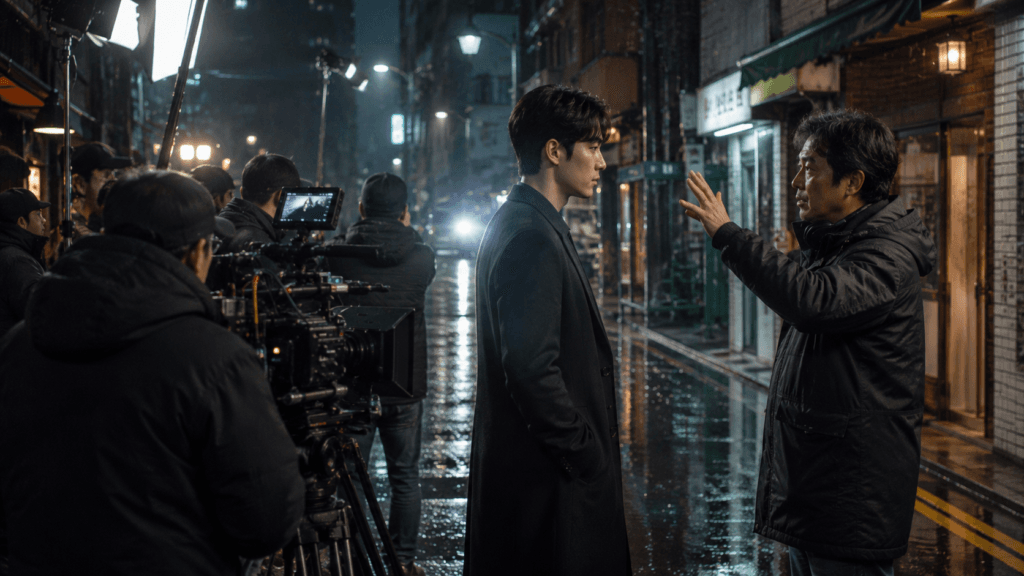
Why Korean Actors Connect With Audiences Worldwide
International recognition rarely happens overnight.
Most Korean actors spend years building experience before gaining widespread attention.
Yet when audiences around the world discover Korean dramas, they often notice something beyond technical skill.
The performances feel sincere.
Instead of overwhelming viewers with dramatic gestures, many actors communicate through restraint.
A pause before answering.
A nervous smile.
A glance that lasts only a second.
These details invite audiences to interpret emotions rather than having every feeling explained through dialogue.
That subtle style crosses cultural boundaries surprisingly well.
Regardless of language, viewers understand hesitation, relief, disappointment, hope, and affection when they are expressed honestly.
This emotional accessibility has become one of the defining strengths of Korean entertainment.
As Korean dramas continue reaching international audiences, actors are no longer recognized only for individual performances.
They are increasingly respected for the consistency and authenticity that define the industry as a whole.
That growing international reputation is closely connected to the worldwide success explored in Why Korean Dramas Dominate Netflix Global Rankings, where strong performances combine with compelling storytelling to attract global audiences.
Talent Continues to Grow Throughout a Career
One misconception about acting is that training ends once an actor becomes successful.
In reality, experienced performers often continue learning throughout their careers.
Many challenge themselves by accepting unfamiliar roles.
Some study new accents or dialects.
Others learn practical skills such as martial arts, musical performance, medical procedures, or sports to prepare for specific characters.
Each new project becomes another opportunity to expand their range.
This commitment to continuous improvement helps explain why many established Korean actors remain relevant across different genres for many years.
Rather than repeating the same character, they actively seek opportunities to grow.
Audiences benefit from that mindset.
Every new drama offers the possibility of seeing a familiar actor in a completely different light.
Conclusion
Exceptional performances rarely happen by chance.
They are built through years of preparation, disciplined training, creative collaboration, and an industry that values emotional authenticity as much as technical ability.
The Korean actor training system is not defined by one school, one method, or one agency.
Instead, it reflects a culture of continuous learning where performers develop their craft through education, auditions, rehearsal, research, and close collaboration with creative teams.
That process helps explain why Korean actors have earned the trust of audiences around the world.
When viewers become emotionally invested in a Korean drama, they are responding not only to talented performers but also to a creative system designed to support believable storytelling from the very beginning.
As Korean entertainment continues expanding internationally, that commitment to authentic performance is likely to remain one of its greatest strengths.
Frequently Asked Questions
Do Korean actors usually attend acting school?
Many do. Some study acting at universities or performing arts schools, while others receive training through private academies or entertainment agencies before beginning their professional careers.
How long does it take to become a successful Korean actor?
There is no standard timeline. Many performers spend years attending auditions, appearing in supporting roles, and developing experience before becoming leading actors.
Why do Korean actors seem so emotionally natural?
Their performances are shaped by extensive character preparation, close collaboration with directors, careful rehearsal, and a storytelling style that values subtle emotional expression.
Do actors continue training after becoming famous?
Yes. Many experienced actors continue developing new skills, researching different professions, and challenging themselves with diverse roles throughout their careers.
Is acting in Korea different from Hollywood?
While every production is unique, Korean dramas often emphasize emotional realism, character development, and close collaboration between writers, directors, and actors throughout the creative process.
Continue Exploring
If you enjoyed this article, you may also like: